Blog
How is Blue and White Porcelain Fired to Perfection?

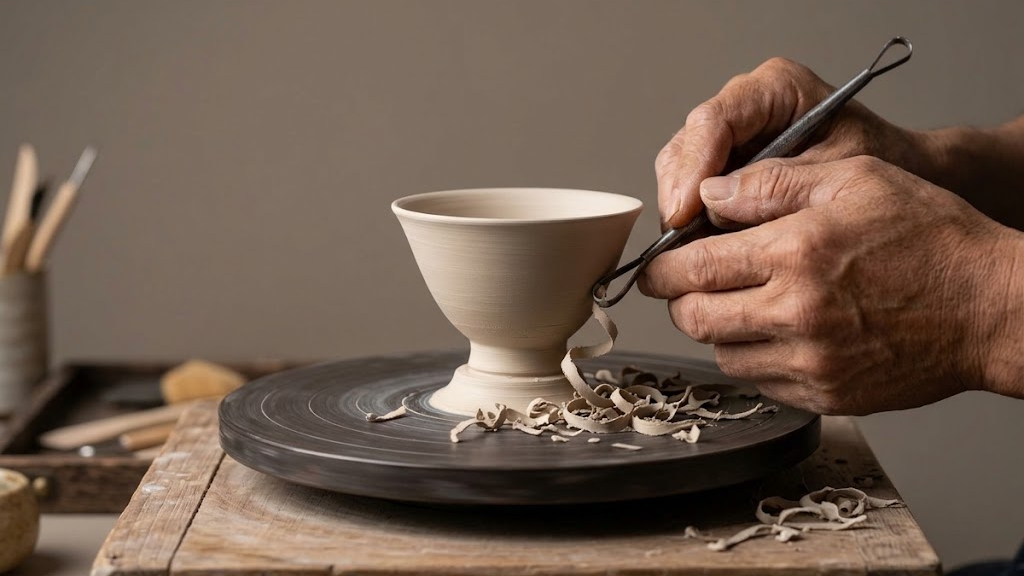
Table of Contents
For centuries, collectors and traditional tea masters have been captivated by that striking contrast: the vibrant cobalt blue against a pure, translucent white. But how does an ordinary lump of clay and grey mineral transform into a brilliant, sapphire-like masterpiece of blue and white porcelain?
The answer lies in the precise control of chemical composition, exquisite hand-craftsmanship, and extreme firing temperatures. From selecting the perfect raw materials to mastering the complex conditions inside the kiln, the firing process of chinese porcelain fully embodies the wisdom of the ancients.
This guide will detail the entire process from clay to the finished product, revealing the masterful techniques that bring these timeless works of art into existence.
The Raw Elements Behind Chinese Blue and White Porcelain
Sourcing the Perfect Kaolin Clay
The foundation of any high-quality blue and white porcelain tea set is kaolin—a pure, white clay mineral.
During the high-temperature firing process, kaolin maintains structural stability and will not easily deform or melt.
This characteristic allows ceramic products to withstand the test of high temperatures, achieving a sturdy texture and excellent physical properties.
The refractoriness of kaolin can reach 1,770°C, meaning that even at extremely high temperatures, it maintains its original shape and performance, providing a reliable guarantee for the use of ceramic products in high-temperature environments.
According to the American Ceramic Society, it is exactly this special mineral composition that makes true hard-paste porcelain superior to regular stoneware, fulfilling the strength requirements needed to create thin-walled teaware.
The Secret of Cobalt Blue Pigment
Before firing, the color of blue and white china is not the familiar blue we know, but rather a shade of grey.
This is because the raw material for blue and white porcelain is cobalt oxide, a natural mineral that inherently carries a grey tone when painted onto the bisque (unfired clay).Blue and white porcelain is an underglaze color, so before it goes into the kiln to be fired, it requires a layer of glaze. At this stage, its color remains similar to that of the bisque.
Finally, after being fired at a high temperature of 1,300 degrees and undergoing high-temperature oxidation, it emerges from the kiln as the blue and white porcelain we see every day.
Shaping and Glazing: Preparation Before the Kiln
Hand-Throwing and Precision Trimming
Truly exquisite craftsmanship is reflected in the manual shaping of the vessel.
When the clay body is semi-dry, artisans place it on the potter’s wheel and shave the walls thinner layer by layer using a trimming knife, relying entirely on tactile feel and sound.
A masterful handmade thin-walled vessel often has a wall thickness of less than 1 millimeter. The weight reduction of the entire piece relies on the uniformity achieved by shaving it knife by knife. If it is too thin, it will collapse or break; if it is too thick, it loses that delicate, translucent effect.
To learn more about glazed ceramics, please read: Glazed vs Unglazed Ceramic Teacups: Which Is Right for You?
Underglaze Painting Techniques
Blue and white porcelain utilizes the “underglaze” painting technique.
Underglaze painting involves first drawing with pigments on the surface of the unfired (or bisque-fired) clay. Once the painting is complete, a transparent glaze is applied over the entire piece, and it is finally placed into the kiln for a single high-temperature firing (typically 1200-1350°C).
Once fired, the pigment is firmly sealed beneath the glaze layer. The surface feels as perfectly smooth as standard white porcelain, with absolutely no “raised painting” to be felt.
In this way, those vibrant patterns will never fade, deteriorate, or peel off, ensuring the highest food safety standards for daily use.
Into the Fire: How is Blue and White Porcelain Fired?
The Crucial 1,300°C Temperature Threshold
To thoroughly answer how is blue and white porcelain fired, one must understand the high-temperature environment inside the kiln.
The temperature must be precisely controlled at a critical threshold of approximately 1,300°C (2,370°F).
At precisely this temperature, a process known as “vitrification” occurs: the silica in the kaolin clay completely melts, eliminating all pore structures and transforming the clay into a dense, glass-like substance.
Simultaneously, the transparent glaze melts and perfectly bonds with the underlying cobalt pigment, permanently fixing the patterns in place.
Oxidation vs. Reduction Atmosphere
The vibrancy of the blue depends entirely on controlling the oxygen levels inside the kiln. To achieve a deep, pure sapphire color, potters create a “reduction atmosphere.”
By restricting the entry of oxygen in a high-temperature environment, the fire directly extracts oxygen from the cobalt oxide and the clay. This chemical reduction allows the pigment to present its most vibrant blue.
If there is too much oxygen in the kiln (an oxidation atmosphere), the cobalt cannot reduce properly, causing the color to become muddy, turning black or dark grey.
In-depth research by the Metropolitan Museum of Art on Ming dynasty porcelain shows that mastering this reduction atmosphere was the most remarkable technical achievement of ancient Chinese potters.
The Legacy of Jingdezhen Kilns
Wood-Fired vs. Modern Gas Kilns
The firing method greatly affects the final appearance of the blue and white porcelain.
Gas Kilns: Allow for the free adjustment of gas and air intake, easily switching between oxidation and reduction firing atmospheres with medium temperature control precision.
The color development is rich in layers, and it can fire a grainy clay texture or subtle kiln transformations, leaving the teapot body clean without wood ash.
Wood-Fired: Features natural fire marks, organic wood ash glazes, metallic lusters, and glaze tears.
The temperature and flame direction are completely uncontrollable. The flames randomly lick the teapot body, making the texture and color of every single piece entirely unique.
Experiencing the Craft: Blue and White Porcelain in Daily Life
The Elegance of a Blue and White Porcelain Tea Set
The benefits brought by the strict high-temperature firing process go beyond just a beautiful appearance; they create a material perfectly suited for traditional tea brewing.
A high-quality blue and white porcelain tea set is completely non-porous, so it will not absorb the essential oils or aromas of the tea leaves.
Whether you are using a blue and white china teapot to brew a fragrant green tea or an aged Pu-erh, this high-density ceramic material ensures that every steeping presents the truest flavor of the tea.
At the same time, this teaware is completely lead-free and meets food safety standards.
OURIOO Recommends:
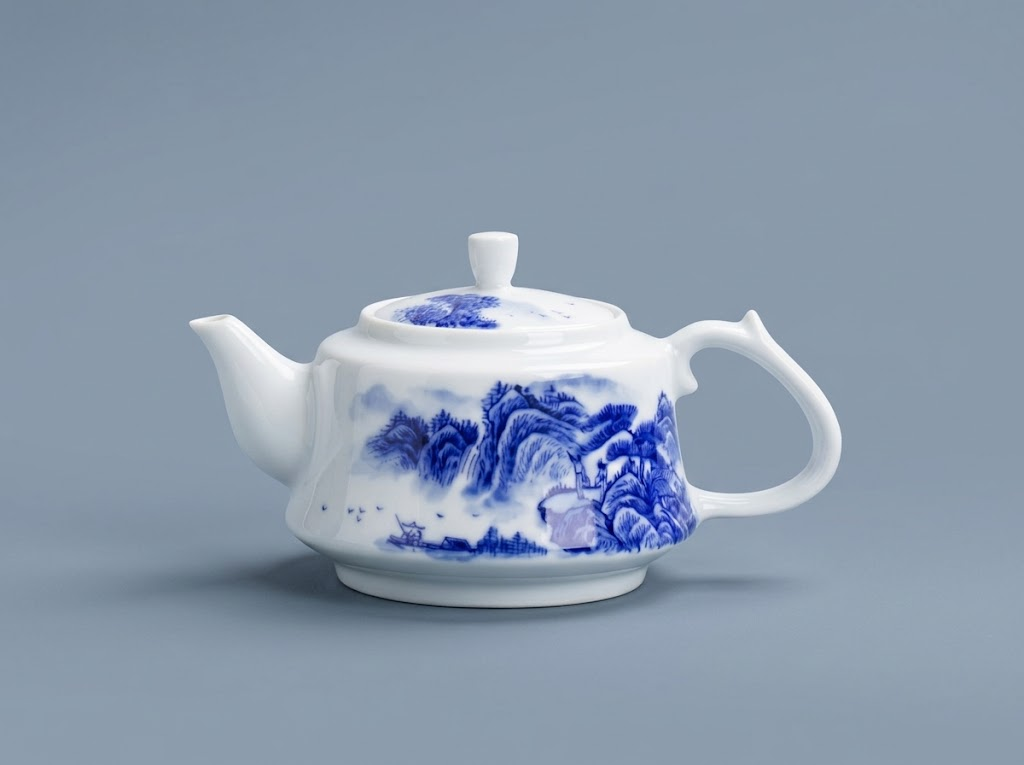
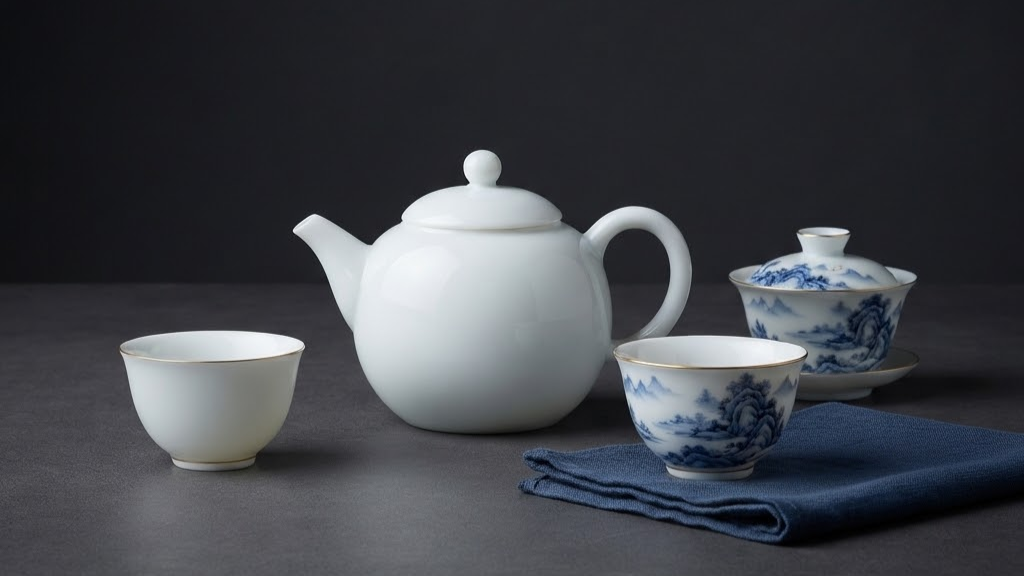
Blue And White China Teapot-Traditional Teapot
Premium Material: Crafted from authentic, pure kaolin clay.
High-Fired: Fired at 1360°C for extreme durability and a jade-like luster.
Artisan Design: This 220ml chinese teapot features stunning hand-painted cobalt landscapes.
Smart Details: A built-in seven-hole filter guarantees a smooth, clean pour.
Aging Potential: The unglazed rim naturally develops a rich “bronze edge” patina over time.
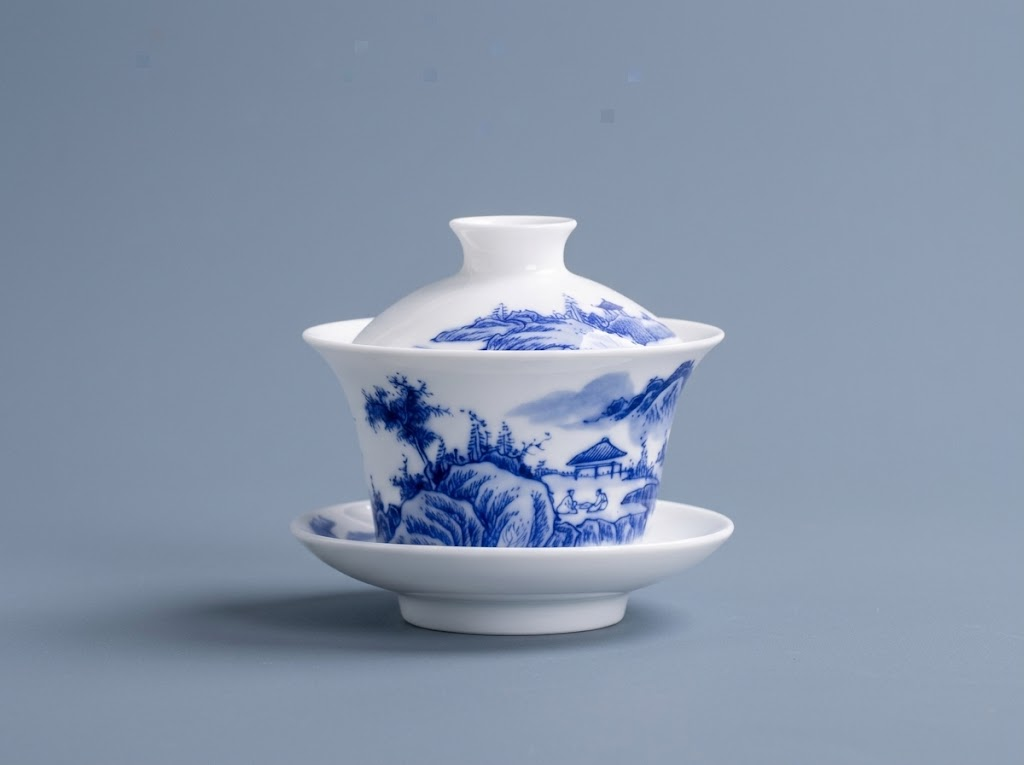
Celadon Gaiwan-Vintage Blue And White Porcelain Teaware
Understated Elegance: Features a refined matte finish that mimics natural jade.
Vintage Appeal: The calm, earthy base tone highlights detailed glaze decorations.
Traditional Charm: This 150ml vintage-style gaiwan beautifully develops a unique patina with daily use.
Sensory Delight: Its velvety texture offers a tactile sensation reminiscent of silken jade.
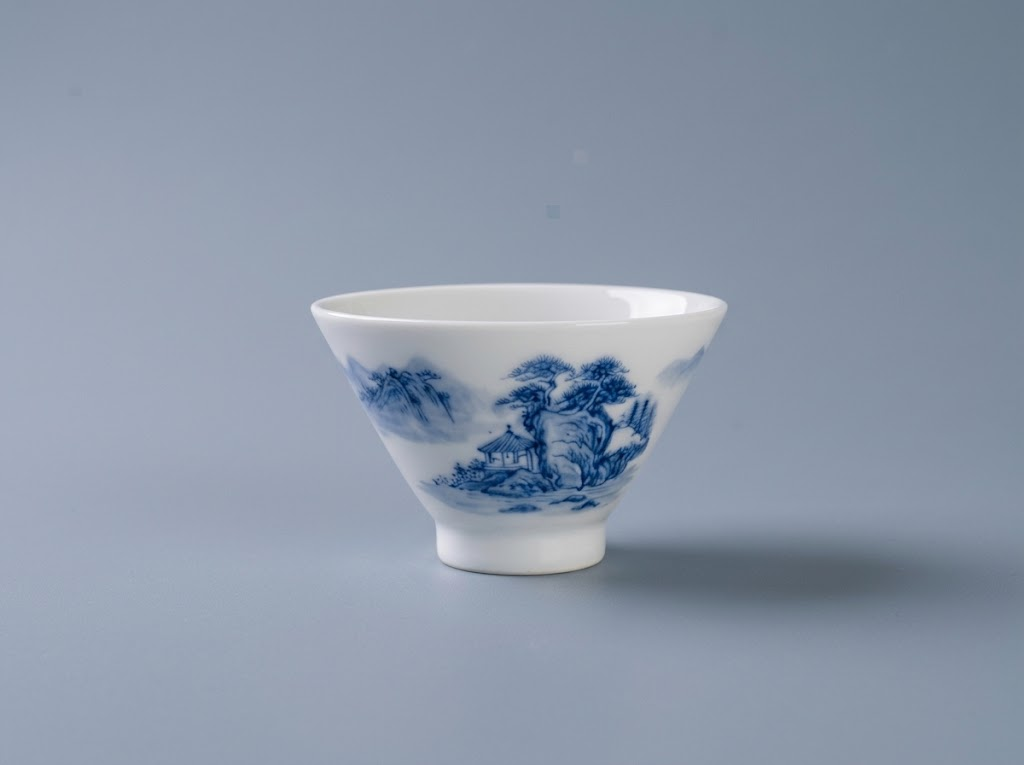
Blue and White China Tea Cups – Mountain Ceramic Teacup
Exceptional Quality: Fired at an intense 1380°C.
Elegant Craftsmanship: These 80ml ceramic teacups boast striking translucency.
Perfect Grip: The lightweight, thin-walled design fits comfortably in your hand.
Timeless Aesthetic: Classic mountain and water motifs bring calm sophistication to your tea table.
Savoring Authenticity with a Jingdezhen Gaiwan
For those who enjoy a traditional gongfu tea ceremony, the teaware used directly dictates the quality of the tasting experience.
Using an authentic jingdezhen blue and white porcelain gaiwan set brings numerous benefits.
The dense porcelain walls formed by high-temperature firing possess excellent heat retention, ensuring that the water temperature remains stable, which helps fully extract the complex flavors of high-mountain Oolong or black tea.
Additionally, the smooth glazed surface effectively gathers and reflects the tea aroma, allowing the drinker to fully appreciate the scent even before the first sip of gongfu tea.
OURIOO Recommends:
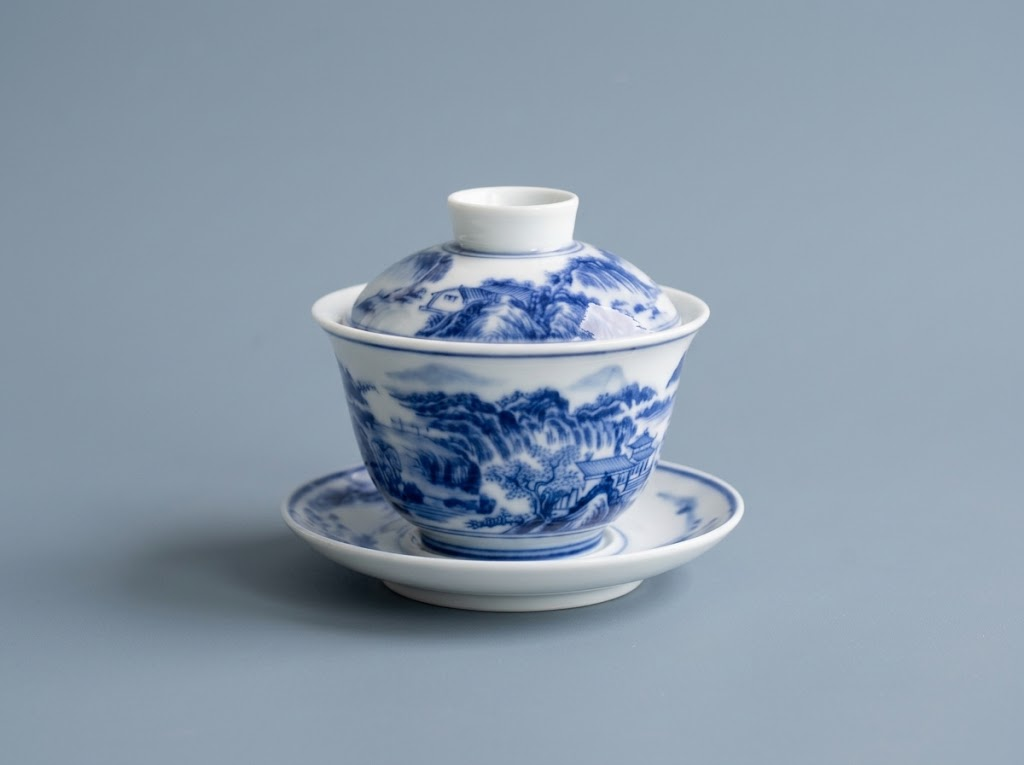
Sancai Glazed Porcelain Gaiwan-Blue And White Landscape
Ultimate Density: Fired at 1380°C for a dense body with zero water absorption.
Pristine Flavor: The glass-like surface ensures no scent residue between different brews.
Authentic Craft: This 180ml porcelain gaiwan strictly adheres to Jingdezhen traditions.
Artistic Depth: Intricate blue-and-white shading perfectly mimics classic Chinese ink paintings.
Conclusion
Whether you are looking for a complete gaiwan tea set for traditional ceremonial occasions, or you want to select a beautifully shaped chinese teacup for your daily tea-drinking life, we invite you to browse the OURIOO Designer Series. Let this time-honored art form enter your home.
FAQ
Is blue and white porcelain rare?
While genuine antique pieces from ancient dynasties are exceedingly rare, high-quality, handcrafted blue and white porcelain is still actively produced by skilled artisans today.
How is porcelain made?
Porcelain is crafted by shaping refined kaolin clay, applying pigments and glaze, and firing the vessel in a kiln at extreme temperatures around 1,300°C (2,370°F) to achieve complete vitrification.



One thought on “How is Blue and White Porcelain Fired to Perfection?”