Blog
Guide to Tea Processing: Steamed, Pan-Fired, Oven-Dried & Sun-Dried Teas

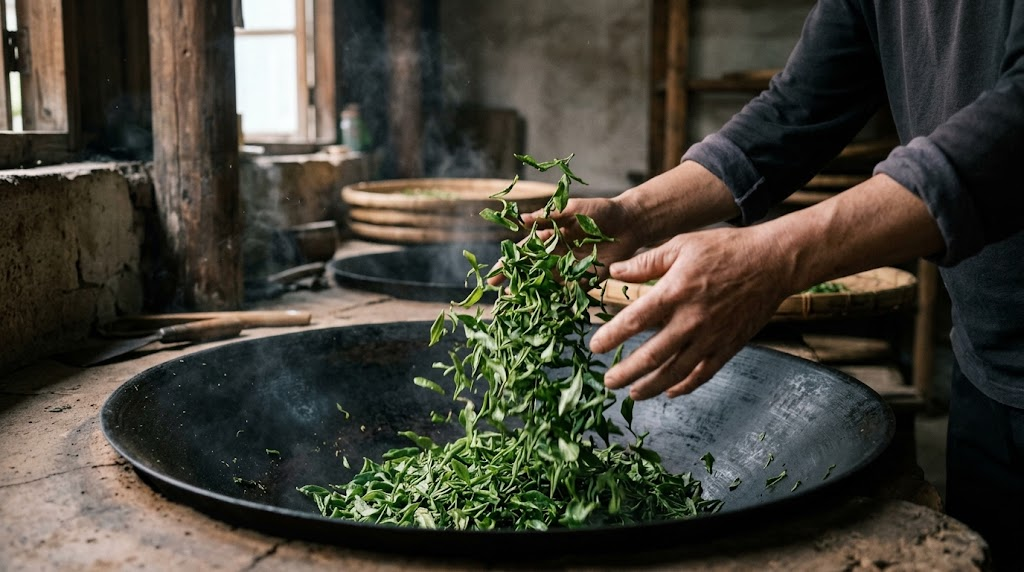
Table of Contents
Have you ever wondered why a delicate Japanese Sencha tastes so different from a robust Chinese Longjing tea, even though they both originate from the same tea plant? The secret lies in the exquisite tea processing craftsmanship. Specific techniques such as “kill-green” for de-enzyming and drying are the crucial factors that determine the quality of loose leaf tea.
In this guide, we will detail the tea-making process and teach you how to choose the right teaware to fully unleash the true potential of your tea leaves.
How Drying Methods Shape Your Tea Leaves
What is “Kill-Green” (Shaqing) in Loose Leaf Tea Production
“Kill-green” is a critical step in the production process of green and yellow teas.
The essence of “kill-green” in tea processing is to dissipate the moisture and grassy odor in the leaves, softening them for easy rolling and shaping, while also facilitating the formation of good aromas later on.
According to World Tea News, “kill-green” serves three purposes:
Deactivating the enzymes in the tea leaves to maintain the vibrant green quality of green tea.
Removing the low-boiling-point grassy odors, allowing the tea to radiate a fresh fragrance.
Evaporating some moisture to soften the dried tea leaves for easier shaping later on.
Why the Drying Process Matters for Flavor and Aroma
The drying process is designed to accurately reduce the internal moisture of the tea to a safe and optimal level, thereby cleverly locking in the original natural aroma and unique flavor of the loose leaf tea.
There are various drying methods, including but not limited to pan-firing, oven-drying, and sun-drying.
During the drying process, excessively high temperatures can cause the tea to burn, destroying its original aroma and nutritional components. Conversely, if the temperature is too low or the time is too long, excessive moisture may remain in the tea leaves, which not only affects the shelf life but can also lead to issues like mold.
For certain specific types of tea, special processing techniques such as aroma enhancement or roasting are also incorporated during the drying process.
The aroma enhancement process can further stimulate and elevate the aromatic layers of gongfu tea; roasting, on the other hand, controls the unique caramel or fruity notes of the tea.
Steamed, Pan-Fired, Oven-Dried vs. Sun-Dried: Key Differences Explained
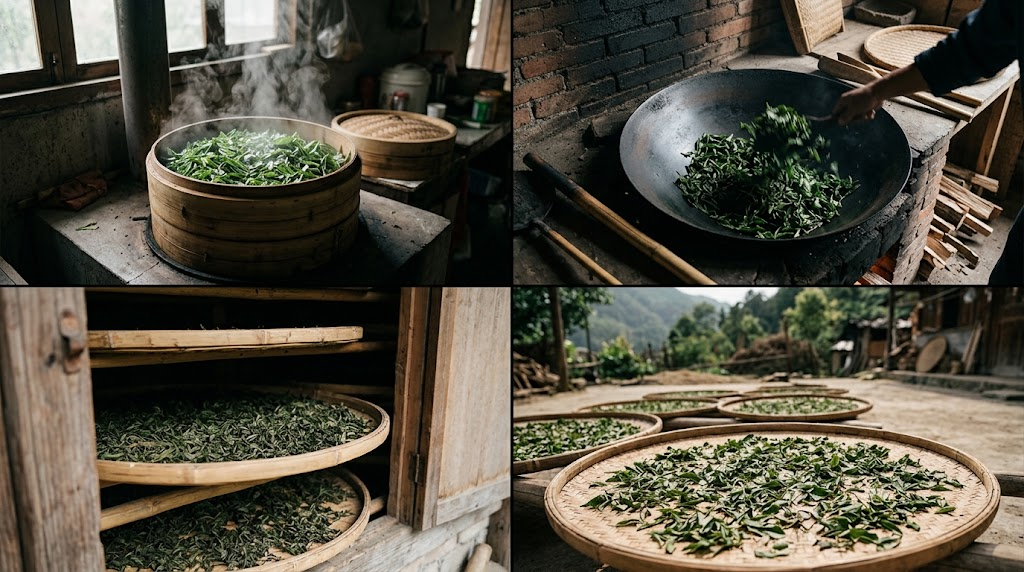
Steamed Teas: Vibrant Colors and Grassy Notes
By rapidly deactivating the enzymes in freshSteamed Teas: Vibrant Colors and Grassy Notes leaves at a temperature of around 100°C, this technique preserves the vibrant green color and nutrients of the tea to the greatest extent, inhibiting oxidation.
Teas treated this way (such as Sencha or Enshi Yulu) feature dark green dried tea leaves, a light green tea liquor, and pale green infused leaves.
Pan-Fired Teas: The Nutty Profile of Traditional Chinese Teas
Its core technique is “pan-firing,” where tea masters use iron woks or tumbling drums at high temperatures to firmly lock in the tea’s freshness.
This is not just a drying process, but the key to aroma transformation—high temperatures stimulate soaring nutty and chestnut fragrances.
Teas pan-fired in an iron wok (like West Lake Longjing) typically boast a shiny grey-green color, a bright yellow-green liquor, and glowing yellow infused leaves.
Oven-Dried Teas: Crisp, Delicate, and Flora
Oven-drying controls the moisture content of the tea through baking.
It utilizes charcoal fires or drying machines for low-temperature, slow baking; this gentle process maximizes the retention of the tea’s natural shape and fresh spirit.
Oven-dried tea leaves (like Huangshan Maofeng) are crisp on the palate and intensely aromatic.
As noted by Serious Eats, these delicate teas require precise temperature control to avoid destroying their unique aromas.
Sun-Dried Teas: Earthy, Natural, and Time-Honored
Sun-drying is a drying technique that relies on the sun.
Because the sun’s temperature during the drying process is relatively low and the duration is longer, more natural substances are preserved.
Sun-dried loose leaf tea (such as raw Pu’er) has a robust flavor, is highly resistant to multiple steepings, and carries a uniquely warm, sun-baked aroma.
Their slow oxidation process creates unique
health benefits, widely documented in archives like NCBI’s tea polyphenol research.
How to Choose the Right Teaware for Different Processed Teas
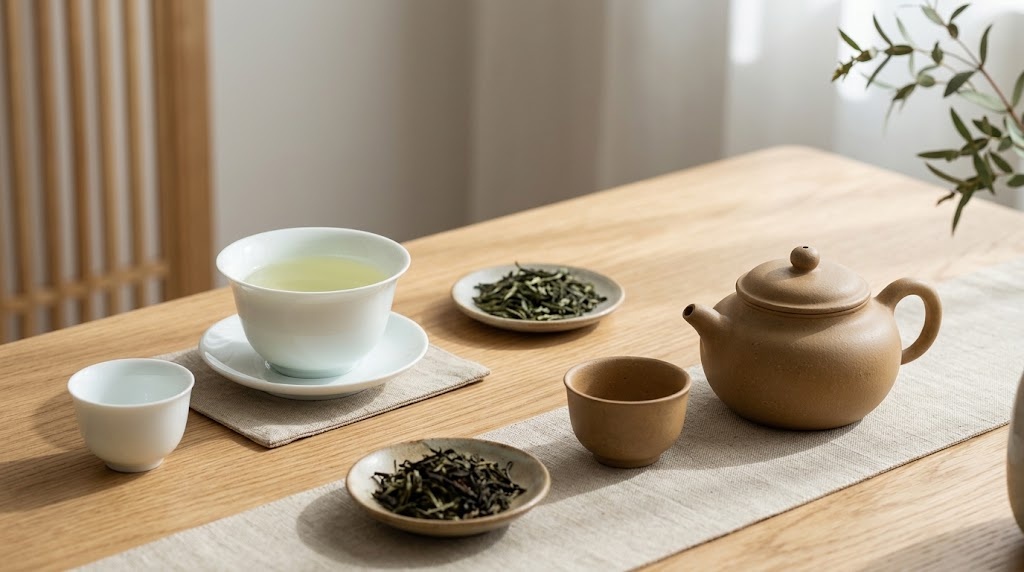
Brewing Steamed and Oven-Dried Teas in a Porcelain Gaiwan
Those delicate teas that need to be produced via steaming or oven-drying require vessels that can dissipate heat quickly.
High-density porcelain is completely non-porous, so it will not absorb the subtle aromas of the tea leaves.
Furthermore, the wide-mouth design of a gaiwan prevents the tea from being overcooked.
For the perfect visual experience, the high-quality white porcelain of our Blue Peony Ceramic Tea Sets beautifully highlights the vibrant green liquor, with hand-painted details celebrating the “one meeting, one moment” philosophy.
If you prefer superior heat retention without flavor interference, our Ceramic Gaiwan for Gongfu Tea is fired at over 1300°C, featuring a dense, stable body and a unique natural crystalline snowflake glaze.
Expert Tip: Clean porcelain gently with baking soda or white vinegar—never harsh dish soap. Elevate your Gongfu ritual by exploring our premium porcelain teaware today.
For more: How to Use Gaiwan Tea Set: Best Guide to Brewing Gongfu Tea
Enhancing Pan-Fired and Sun-Dried Teas with a Zisha Teapot
Pan-fired teas exude a captivating toasty aroma, while sun-dried teas possess a rich, earthy profile. These unique flavors of the loose leaf tea are best expressed in an environment that can effectively retain heat.
The porous structure of Yixing Zisha clay offers excellent heat retention, ensuring the water temperature remains optimal, thereby allowing the taste of the tea to be perfectly released in a Yixing teapot.
For intimate sessions, the highly breathable Duan Ni clay of our 100ml Handmade Pumpkin Teapot expertly preserves the nuanced flavors of Longjing or Pu’er while developing a stunning glossy patina with daily use.
For those seeking classic elegance, our Ruyi Xishi Zisha Teapot combines premium Da Hong Pao and Zi Ni clays with a precision embedded lid to flawlessly seal in aromas, featuring an upgraded ball-hole filter for a smooth, crystal-clear pour.
Expert Tip: Never use soap on Zisha clay, as it absorbs chemical flavors; simply rinse with boiling water. Deepen your tea appreciation and browse our authentic Zisha teapot collection now.
For more: How to Season a Yixing Clay Teapot: A Step-by-Step Guide
FAQ
Does steaming or pan-firing make green tea healthier?
Both processing methods retain excellent health benefits, but steamed teas generally preserve slightly more heat-sensitive nutrients like Vitamin C and chlorophyll, while pan-fired teas offer a warming, robust profile.
How long do sun-dried loose leaf teas last compared to oven-dried teas?
While most oven-dried green teas are best consumed within a year for maximum freshness, sun-dried teas like raw Pu’er can age and actually improve in flavor complexity for decades if stored properly.


