Blog
The Best Guide on How to Make Tea in a Teapot


Table of Contents
Brewing tea is more than just pouring hot water over leaves; it is a precise art. Mastering how to make tea in a Chinese teapot comes down to three core elements: choosing the right teapot material, using premium loose leaf tea, and precisely controlling water temperature and steeping time.
I saw someone on Reddit asking how to brew a decent pot of tea. This guide will break down professional-level tea brewing steps in detail, helping you steep the perfect cup with optimal flavor right at home.
Choosing the Right Vessel: Does the Type of China Teapot Matter?
For tea enthusiasts wanting the ultimate tasting experience, the type of teapot is crucial. Different materials directly impact heat retention and the final flavor profile of your tea liquor.
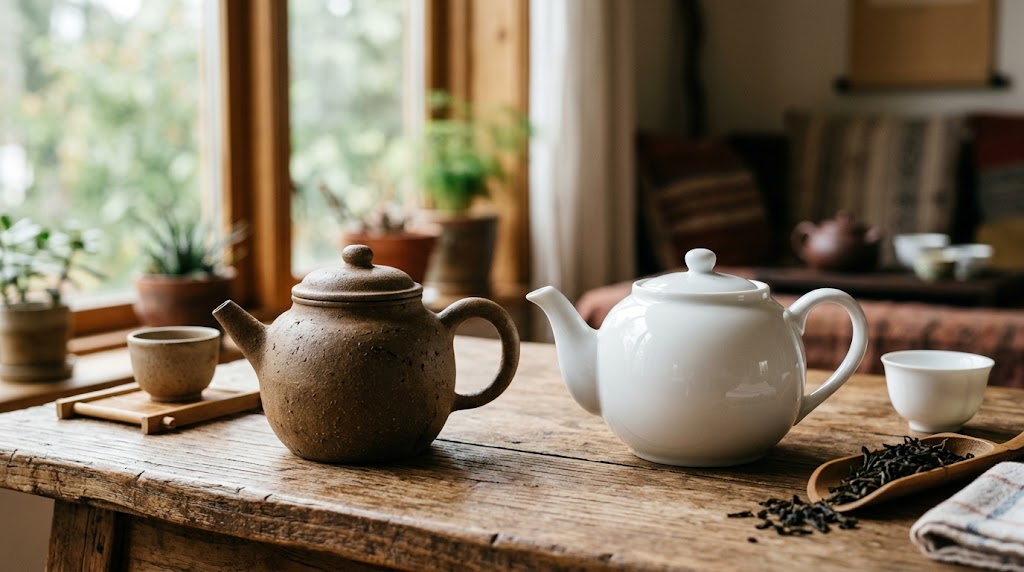
The Charm of Ceramic and Traditional Yixing Teapot
Ceramics include both pottery and porcelain, distinguished by their materials and firing temperatures—both factors are essential. Strictly speaking, Yixing clay (Zisha) is a type of pottery, falling between standard pottery and porcelain as a semi-sintered fine “stoneware.”
Best for: Those who focus on presenting the “original flavor” of the tea.
Compared to Yixing clay, ceramic tea sets offer a much richer variety of shapes and vibrant colors, appealing to a broader range of aesthetics that Yixing clay teapot cannot match.
Standard ceramic teaware is often wheel-thrown, semi-handcrafted with molds, or slip-cast, resulting in high production efficiency and great value.
Its chemical inertness minimizes any interference with the tea’s flavor. This makes it especially suitable for tasting new teas or developing tea blends, allowing you to accurately judge the raw material’s quality and craftsmanship.
- Traditional Yixing Teapot (Zisha):
Best for: Seasoned tea drinkers seeking deep tea energy and profound experiences.
It boasts excellent flavor retention, ensuring the tea doesn’t lose its original taste while imparting no strange odors from the vessel itself. It perfectly gathers the aroma, delivering excellent color, scent, and taste.
With long-term use, a Yixing clay teapot develops a beautiful “patina”, giving the tea a unique “aged flavor.” This taste memory that evolves over time is exactly why many veteran tea lovers are obsessed with it.
The lid of a purple clay teapot is porous and absorbs steam, preventing water droplets from forming, dropping back in, and disturbing the tea, which also helps accelerate the tea’s natural fermentation.
To learn about the craftsmanship of Yixing ware teapots, please read: The Art of Zisha Teapot Making——What No One Tells You
Cast Iron vs. Glass Teapot
- Cast Iron Teapots:
Cast iron teapot is a traditional Japanese tea pot (Tetsubin), featuring classic Nanbu ironware patterns like grids, dragon scales, lines, and cherry blossoms, offering a rustic color and delicately antique designs.
When boiling tea over a flame, they release divalent iron ions that are easily absorbed by the human body, providing a mild iron-supplementing effect.
The iron content softens the water, restoring and enhancing the tea’s natural aroma.
Thanks to the sturdy iron material, they offer excellent sealing and strong, even heat conductivity, providing superb heat retention for the water inside the cast iron tea pot.
To learn about the differences between Chinese and Japanese teapots, please read: Chinese Teapot vs. Japanese Teapot: 4Differences You Need to Know
- Glass Teapots:
Glass has no pores and poor water absorption, meaning it will never absorb the flavors of floral teas. You can fully enjoy the tea’s intrinsic aroma every time, making a clear glass tea pot convenient for brewing hundreds of different herbal blends.
The fully transparent texture allows you to visually appreciate the graceful stretching of tea leaves and flowers during the steeping process, offering a strong artistic and romantic vibe.
With their elegant shapes and modern appearance, glass teapots are not just practical teaware but also beautiful works of art.
Glass is incredibly smooth; it doesn’t easily harbor dirt or let tea stains adhere, requiring only a simple rinse with clean water.
Essential Elements for Steeping Loose Leaf Tea

High-Quality Loose leaf Tea vs. Tea Bags
To brew a great pot of tea, the physical form of the tea leaves dictates the ceiling of its flavor.
- Loose Leaf Tea:
You can visually distinguish the quality of the tea when purchasing, avoiding stale or low-value leaves.
You can easily adjust the amount of tea leaves according to your personal preference when brewing.
Premium loose leaf tea usually consists of larger, intact leaves, which better reflect the tea’s true mouthfeel and retain its complete aroma and flavor profile.
To find out how much tea to use per cup, please read: How Much Loose Leaf Tea Per Teacup?
- Tea Bags:
Leaf size heavily impacts the overall taste. Tea bags are typically filled with dust and fannings from whole leaves; their flavor is weaker, as the broken and smaller leaves have already lost much of their essential oils and aroma.
Due to the limited space inside a standard tea bag, larger leaves cannot fully expand during steeping, preventing them from releasing their full flavor. They are only suitable for a very quick steep.
Tea bags are better suited for herbal teas, beginners exploring different basic flavors, or making large batches of iced tea.
The Crucial Role of Water Quality and Temperature
Never use boiling water directly on all types of tea. Teas with different oxidation levels have varying cell wall thicknesses:
Pouring 100°C (212°F) boiling water directly over delicate green tea will instantly destroy its amino acids and release excessive polyphenols and caffeine, resulting in a bitter, unpalatable brew.
Conversely, if you use low-temperature water to steep dark tea or Oolong tea, the water cannot penetrate their thick leaves, resulting in a flat and weak flavor.
Using pure filtered water and strictly matching the specific water temperature required for each tea type is a mandatory lesson for advanced tea drinkers.
Step-by-Step: How to Make Tea in a Teapot Like a Pro
Step 1: Pre-warm Your Teapot
The act of warming the cup and teapot is not only traditional tea ceremony etiquette but also the crucial first step in scientific tea brewing.
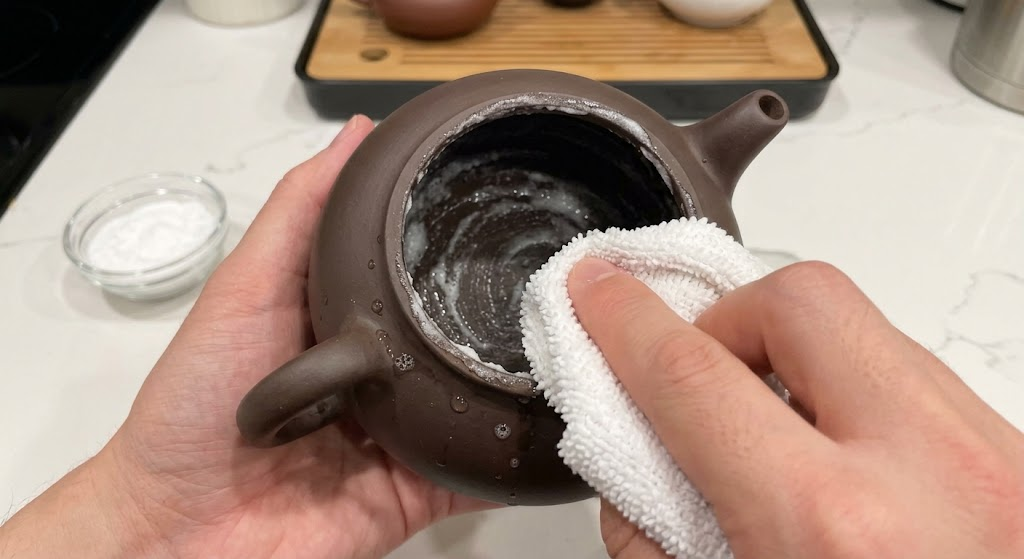
Pottery and Yixing teaware have a lower density and higher porosity compared to porcelain, making them prone to absorbing odors. Pre-warming allows off-odors to dissipate with the heat and water stains to evaporate, keeping the teaware dry so the tea flavor remains exceptionally pure.
Simultaneously, pre-warming raises the initial temperature of the teaware—a difference you’ll feel noticeably in winter. For example, if you place dry Oolong tea into a pre-warmed teapot, cover it, gently shake it, and then open the lid, you will immediately be greeted by a comforting, vibrant aroma.
Step 2: Measure the Perfect Amount of Tea Leaves
A precise tea-to-water ratio is the key to controlling the brew’s strength.
- Green Tea:
1:50 ratio (1g tea to 50ml water). Green tea is fresh and tender, rich in tea polyphenols; a ratio that is too high easily leads to bitterness. For bud-heavy green teas (like Longjing or Bi Luo Chun), the ratio can be adjusted to 1:60 for a crisper, more refreshing taste.
1:40 ratio (1g tea to 40ml water). Black tea is very forgiving. If you prefer a robust flavor like I do, you can adjust it to 1:30. For a lighter taste, adjust to 1:50. When adding milk or honey, a slightly stronger ratio is recommended for a richer, smoother mouthfeel.

Oolong Tea:
1:20 ratio (1g tea to 20ml water). Oolong is a semi-oxidized tea with abundant aroma and deep flavor. A high ratio is strictly required to stimulate its full characteristics. Tieguanyin, Da Hong Pao, and Dancong all perfectly suit this ratio.
- Pu-erh Tea:
Raw Pu-erh: 1:30 (1g tea to 30ml water). Ripe Pu erh tea: 1:25 (1g tea to 25ml water). Raw Pu-erh has a cooling nature and strong taste; too high a ratio can irritate the stomach. Ripe Pu-erh is mild and warm; a slightly higher ratio highlights its rich, mellow texture. For aged teas, you can slightly increase the amount of leaves.
- Herbal Tea:
1:100 ratio (1g herbal tea to 100ml water). Herbal teas have a light, sweet aroma and don’t require heavy dosing. For mixed blends (e.g., rose + goji berries, chrysanthemum + cassia seeds), the total amount should not exceed 8g to prevent muddled flavors.
Step 3: Pour the Water and Master the Steeping Time
| Tea Type | Ratio | Water Temperature | Steeping Time |
| Black Tea | 1 tsp / cup | 93-100°C (200-212°F) | 3-5 Minutes |
| Green Tea | 1 tsp / cup | 70-80°C (158-176°F) | 2-3 Minutes |
| Oolong Tea | 1 tsp / cup | 85-96°C (185-205°F) | 3-5 Minutes |
| White Tea | 1.5 tsp / cup | 70-85°C (158-185°F) | 4-5 Minutes |
Pro Tip: If you are unsure, use a lower water temperature and a shorter steeping time. You can always extend the steeping time to increase flavor, but you can never make a bitter tea taste sweet again.
Conclusion & Tasting Etiquette
After mastering the steps of teapot brewing, the way you drink it can equally elevate your experience. To better gather the aroma and feel the temperature of the liquor, it is highly recommended to pour your brew into Chinese tea cup when serving. Holding the rim of the cup with your thumb and index finger not only prevents burning your hands but also allows you to focus more deeply on the Oriental tea charm brought by every single sip.
Want to learn more maintenance tips for specific teaware? Feel free to leave a comment below, or browse our traditional tea sets and teaware store for the latest inspiration!
FAQ
How long do you brew tea in a teapot?
Generally, steep green tea for 2-3 minutes, black and oolong teas for 3-5 minutes, and white/herbal teas for 4-5 minutes. Always remove the leaves promptly to prevent bitterness.
How to use a teapot with an infuser?
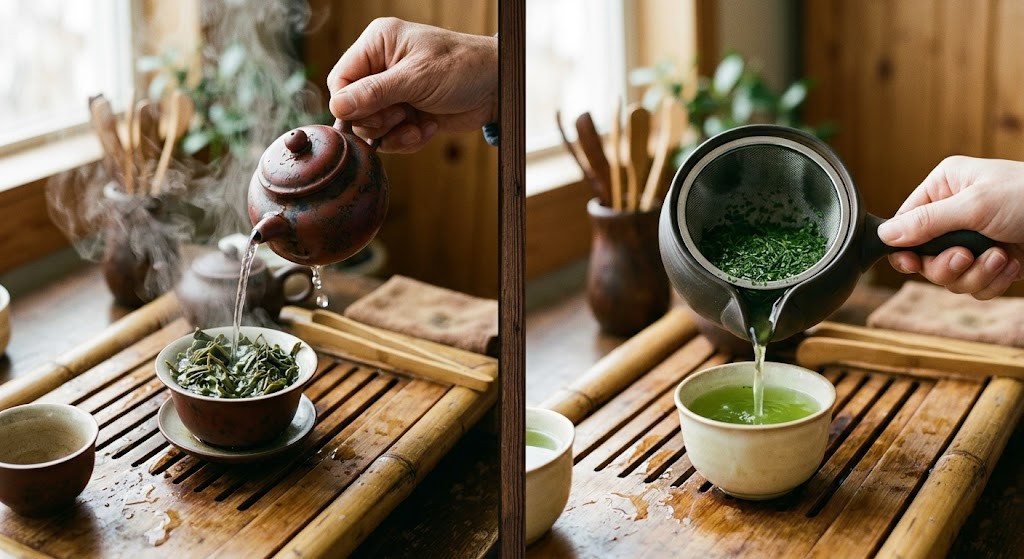
Place loose leaves into the infuser basket, insert it into the teapot, and pour hot water over the leaves. Once steeped, remove the infuser immediately to stop the brewing process, pour, and enjoy.



4 thoughts on “The Best Guide on How to Make Tea in a Teapot”