
Blog
How Can I Clean the Inside of My Teapot?

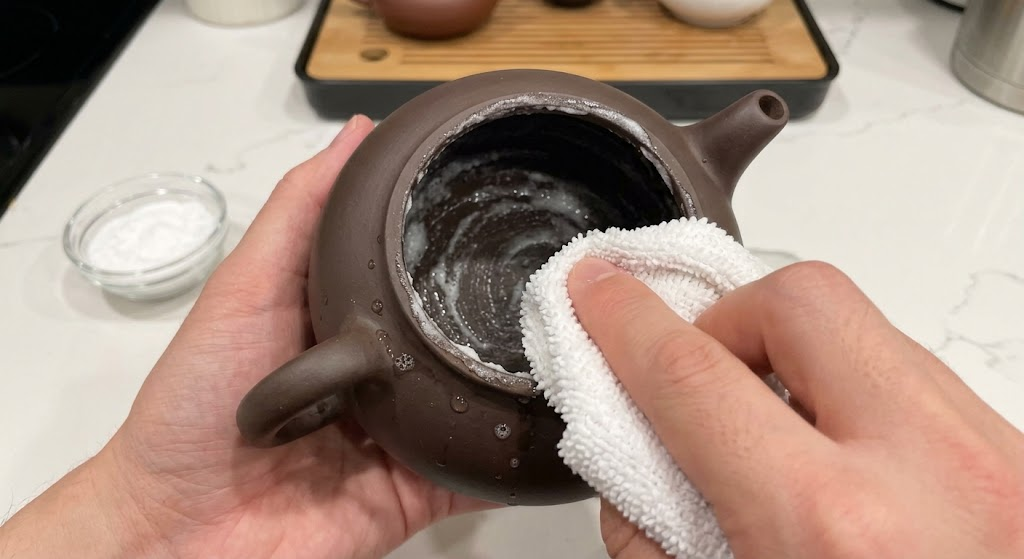
Table of Contents
If you are troubled by a dark and cloudy interior in your teapot, or if your daily brew always carries a bitter aftertaste, you have come to the right place to learn how to clean a tea pot.
Cleaning the inside of a teapot is not as simple as a quick rinse. Let’s dive into the causes of internal tea stains and explore how to safely remove stubborn tea stains based on your teapot’s material.
Why Is the Inside of Your Teapot So Hard to Clean
Before you start scrubbing, it is important to understand what you are truly fighting against. Spoiler alert: it is not just “dirt”.
The Science of Tea Stains (Tannins) and Flavor Build-Up
That stubborn brown film on the inside walls of your tea pot is primarily caused by tannins.
Scientific research indicates that drinking water contains minerals and trace amounts of harmful heavy metal ions, such as cadmium, mercury, and arsenic.
When water is heated, as the temperature rises and the water becomes concentrated to a certain extent, these substances precipitate out.
When brewing tea, especially over a long period, these tannins combine with minerals in tap water (such as calcium and magnesium) through oxidation.
When the remaining tea leaves are exposed to oxygen, these polymerized polyphenols precipitate and cling tightly to the inner walls of the tea pot.
Over time, this forms a hard oxidized layer, commonly known as “tea rust” or tea stains.
Why You Should Never Use Dish Soap Inside Your Teapot
Dish soap not only fails to wash away old tea stains, but it also leaves residue in the internal pores, ruining the taste of your next brew.
Dish detergents primarily target grease and are completely ineffective against the tannins in tea stains; moreover, their scent is harder to dissipate than toothpaste.
The tea pot will absorb the chemical smell of the dish soap. Once it seeps in, the brewed tea will have a strange odor that is hard to eliminate, affecting the tea’s aroma.
An Yixing Zisha teapot is the most taboo for dish soap because Zisha has a unique double-pore structure that easily absorbs odors. Once the smell of dish soap seeps in, the brewed Gongfu tea will have an odd odor that is difficult to dissipate.

How Can I Clean the Inside of My Teapot Based on Its Type
Not all teapots are the same. The cleaning method you choose must match the material of your teapot to avoid irreversible damage.
Glazed Porcelain & Ceramic: Safe Ways to Remove Brown Rings
For teapots with glazed interiors, we recommend the non-toxic Baking Soda soaking method.
Mix a small amount of baking soda with water to form a paste, dip a sponge into it, and wipe gently in a circular motion.
The mild alkalinity of baking soda can neutralize the acidic components of tea stains, and its fine particles can physically strip away the attachments.
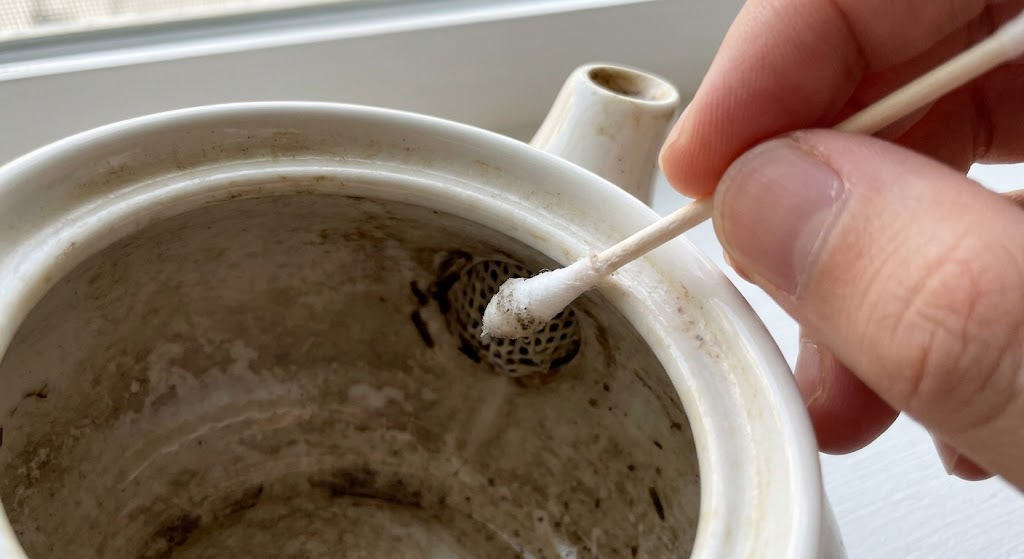
When dealing with narrow areas like the tea pot spout, you can use a cotton swab to assist with cleaning.
After cleaning, be sure to rinse thoroughly with hot water.
To understand how glazes affect the tea broth, please read: Porcelain vs Ceramic Teacups, Which Is the Best?
Unglazed Yixing Zisha: Why the “Stains” Are Actually a Good Thing
The “tea stains” inside an Yixing Zisha teapot han wa literally or any classic shape are actually “Chashan (Patina)”. Use a soft brush to clean the tea leaves inside, rather than destroying that layer of patina.
Zisha clay has a unique double-pore structure, and hot water can “open” the pores of the Zisha clay.
After brewing, simply use a soft tea brush or a clean microfiber cloth to sweep away the loose tea leaves, and then rinse with boiling water.
Do not use excessive force, as it will leave marks on the pot body and indirectly affect the patina.
If you encounter tea stains that are difficult to clean, prepare some edible baking soda or salt, and pour an appropriate amount into the pot.
Then pour in warm water, wait for about ten minutes, and gently brush the inside of the pot with a soft brush, and you will see the tea stains flow out as yellow water.
To learn how to prepare a Zisha teapot for its first use, please read: How to Season a Yixing Clay Teapot: A Step-by-Step Guide
Glass Teapots: Getting Rid of Cloudy Films Inside
The inside of glass teapots is the most prone to becoming cloudy. We recommend soaking and wiping with white vinegar, baking soda, or citric acid, which can remove stains without damaging the glass.
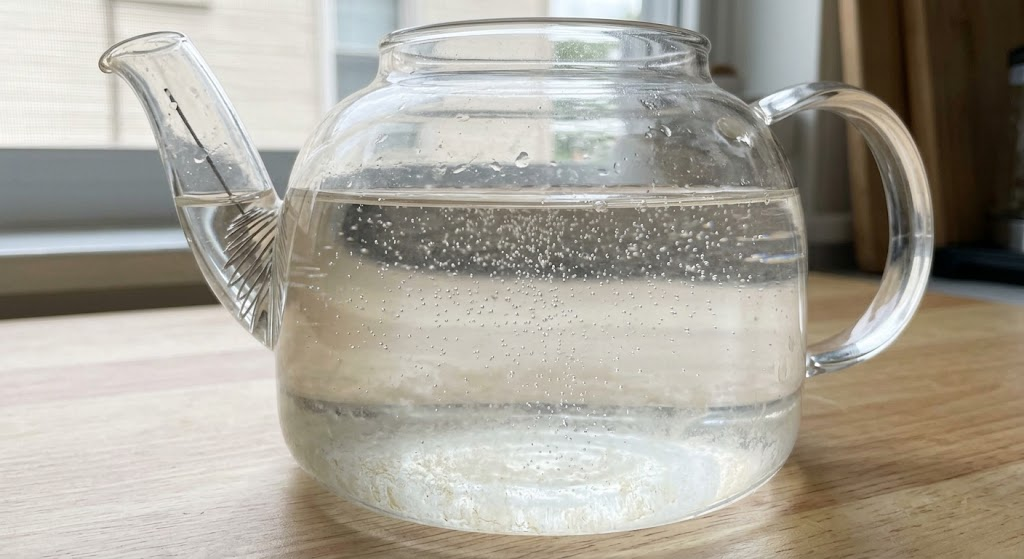
White vinegar soak: Mix white vinegar and water in a 1:1 ratio, pour into the pot, and soak for 1-2 hours. The acetic acid can break down calcium and magnesium deposits.
Baking soda scrub: Mix baking soda with water to form a paste, use a sponge to wipe the tea stains, let sit for 15 minutes, then rinse. This is suitable for moderate tea stains.
Citric acid dissolve: Dissolve food-grade citric acid in warm water, pour it into the pot, and let it sit for 30 minutes. This has a significant effect on white limescale.
After cleaning, be sure to rinse thoroughly with clean water to avoid any residue affecting the tea flavor.
To learn more about cleaning teapots, please read: What Is The Best Way to Clean a Teapot?
How to Clean Hard-to-Reach Areas Inside the Teapot
The body of the tea pot is easy to clean, but the hidden corners are where bacteria and bitterness hide.
Unclogging the Spout (The Hidden Trap for Stains)
Use a cotton swab dipped in toothpaste or baking soda paste to deeply wipe the inner wall of the spout, then rinse clean with water.
The teapot spout is a place where tea residues easily accumulate, which not only obstructs the water flow but also causes the tea to taste off.
You can use a cotton swab or a dedicated soft spout brush dipped in baking soda paste or a small amount of natural toothpaste to go deep into the spout, gently rotate to scrub the inner walls, and then rinse with boiling water to remove residue.
Cleaning the Built-in Strainer and Infuser Holes
For the built-in ball-hole/flat-hole tea strainers inside traditional Chinese teapots, use a toothpick or fine needle to pick out clogged tea residues.
When tea leaves clog these small holes, never use force to remove them.
You should use a toothpick or a fine needle to gently poke and remove the clogged tea leaves, washing the strainer.
However, be careful not to use excessive force to avoid damaging the delicate clay filter.
The Step-by-Step Baking Soda Method for Deep Interior Cleaning
For glazed ceramic, glass, and stainless steel tea pot models that need a complete reset, please follow this simple standard operating procedure.
Step 1: Boiling Water and Baking Soda Soak
Add 2 to 3 tablespoons of baking soda directly into the empty teapot.
Fill the teapot to the brim with boiling water.
The baking soda will react with the stains and bubble.
Let the mixture soak for at least 2 hours, or overnight if the stains are particularly stubborn.
Step 2: Gentle Wiping (No Abrasive Sponges!)
Pour out most of the water, leaving only a small amount of the baking soda solution at the bottom.
Gently wipe the inner walls with a soft microfiber cloth or a non-scratch sponge.
Never use steel wool or abrasive scouring pads, as they will permanently scratch the glaze or glass.
Step 3: Thorough Rinsing and Air Drying
Rinse the inside of the teapot repeatedly with hot water until the water is completely clear and no powder residue remains.
Conclusion
The key to properly cleaning the inside of a teapot is understanding the material of your teaware, and abandoning harsh dish soaps in favor of natural cleaners like baking soda and hot water.
Is your teapot heavily stained and hard to wash? Or are you looking to upgrade your teaware? Please leave a comment below, or browse our premium selection of traditional Chinese teapots to help you brew the perfect cup of tea!
FAQ
How to deep clean a ceramic teapot?
To deep clean a ceramic teapot, fill it with boiling water and two to three tablespoons of baking soda, let it soak for at least two hours, gently wipe the interior with a soft microfiber cloth, and rinse thoroughly with hot water.
How long will tea stay hot in a teapot?
Tea typically stays hot in a teapot for 30 to 60 minutes depending on the material, with thicker ceramic or Yixing clay teapots retaining heat significantly longer than glass.