Blog
The Ultimate Gongfu Tea Brewing Guide


Table of Contents
Looking to elevate your daily tea drinking into a mindfulness practice? The traditional Chinese Gongfu tea ceremony is the ultimate way to extract the deepest, most complex flavors from whole-leaf teas.
In this comprehensive guide, we will walk you through the philosophy behind Gongfu tea, the essential traditional Chinese teaware you need, and an easy-to-follow, step-by-step brewing process, allowing you to easily master this elegant art right in your living room.
What is Gongfu Cha? Understanding the Gongfu Tea Ceremony
The word “Gongfu” means a skill that requires time, patience, and focus to practice and master.
When this term is applied to the tea ceremony, “Gongfu Cha” refers to the techniques of brewing, preparing, and the specific way of tasting tea. The “Gongfu” naturally reflects in the brewing process. From lighting the fire and boiling water to the clean and swift high pour, the entire set of movements is smooth, continuous, and graceful.
In 2022, “Traditional tea processing techniques and associated social practices in China” was officially inscribed on the UNESCO Representative List of the Intangible Cultural Heritage of Humanity, marking it as a cultural treasure shared globally.
The Philosophy Behind the Brew: Mindfulness in a Cup
For many Westerners exploring Eastern wellness philosophies, Gongfu tea provides the perfect practice for mindfulness.
This ceremony requires you to slow down and engage all your senses. It transforms simple “thirst-quenching” into a deep relaxation ritual for both sight and smell.
You are not merely brewing a beverage, but hitting the pause button on your life to experience the layers of nature slowly blooming in your cup.
Gongfu Style vs. Western Tea Brewing: What’s the Difference?
The fundamental difference lies in the tea-to-water ratio and steeping time.
Western brewing usually involves placing a small amount of tea in a large volume of water and steeping for several minutes.
In contrast, the essence of Gongfu tea lies in a high tea-to-water ratio and short, multiple steepings.
This combination extracts different compounds with each brew, revealing flavor profiles and layers that would become muddled with long steeping.
| Aspect | Western Brewing | Gongfu Brewing |
| Tea-to-Water Ratio | 1:50 to 1:100 | 1:15 to 1:25 |
| Steeping Time | 3-5 minutes | 10-60 seconds |
| Number of Infusions | 1-2 times | 5-15+ times |
| Vessel Capacity | 240-480 ml (8-16 oz) | 60-150 ml (2-5 oz) |
| Water Temp | Usually boiling water | Precisely controlled |
Essential Gear for Your First Gongfu Tea Set
The charm of Gongfu tea relies heavily on professional teaware. Choosing the right tea pot, tea cups, and accessories is the first step to unlocking the true potential of your tea leaves.
The Brewing Vessel: Gaiwan vs. Zisha Teapot (Yixing Clay)
Gaiwan: The most versatile authentic Chinese teaware. A 100-120 ml (3.4-4 oz) porcelain Gaiwan suits most tea types and allows you to observe the leaves. It lets you visually appreciate the unfurling posture of the tea, and thin-walled porcelain offers excellent heat dissipation.
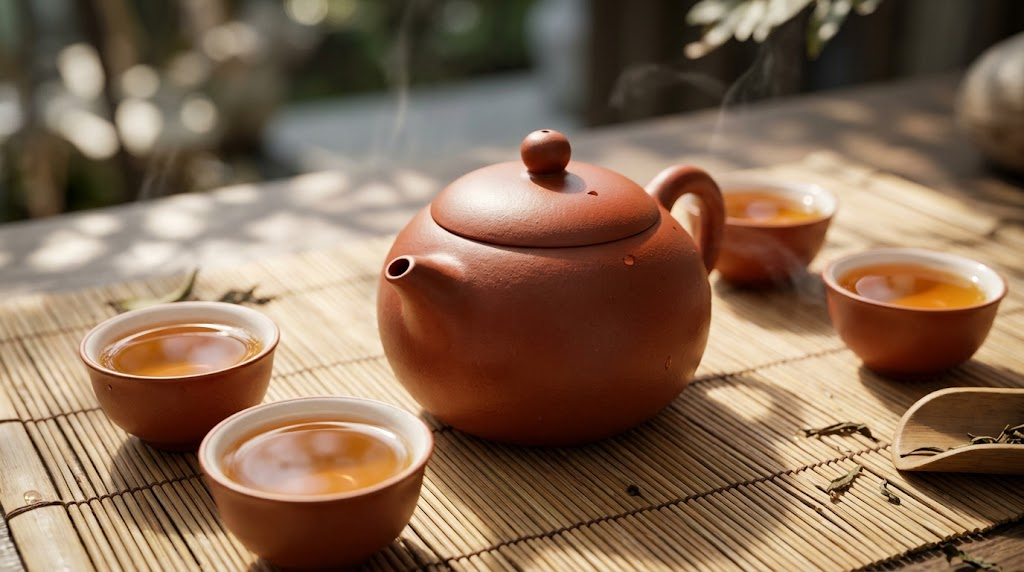
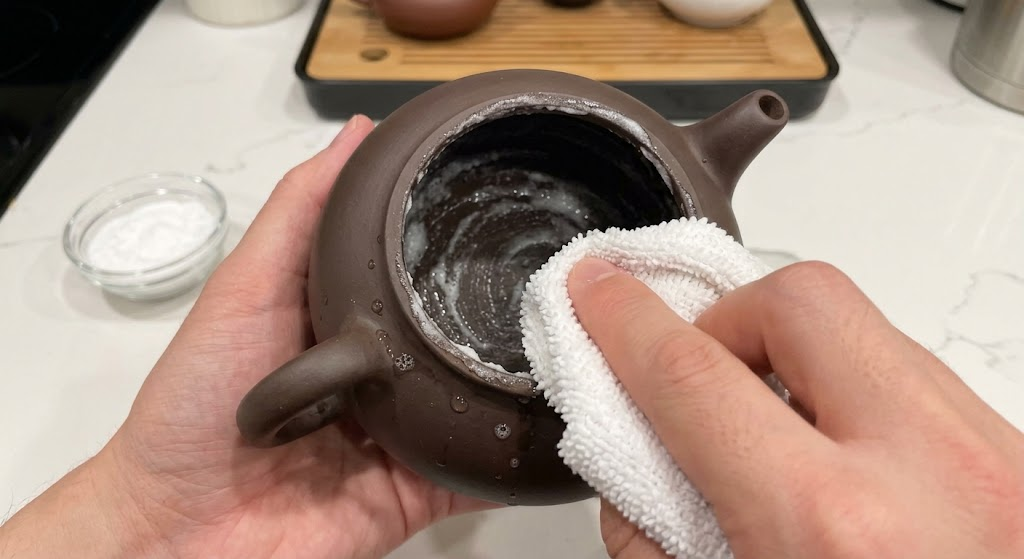
Yixing Zisha Teapot: Crafted from unglazed purple clay. This unglazed pottery absorbs tea oils over time, forming a patina that enhances the tea’s flavor. Each Chinese teapot is specifically dedicated to one type of tea, and it is recommended to start with a capacity of 80-150 ml (2.7-5 oz).
A study published in the National Center for Biotechnology Information (NCBI / PubMed) shows that compared to other materials, tea brewed in Yixing Zisha teapots contains higher levels of beneficial compounds like catechins and lower caffeine content.
The resulting tea liquor is also less bitter and more aromatic. Because of this unique absorption property, one Zisha teapot is best reserved strictly for one specific type of tea.

Tasting Cups: The Elegance of Handleless Cups
Authentic Chinese tea tasting cups do not have handles.
This design cleverly “forces” you to pinch the rim with your fingers, ensuring the tea liquor is at a safe, drinkable temperature before it touches your lips.
The standard for selecting premium tea tasting cups follows a four-word rule: small, shallow, thin, and white. Small so it can be finished in one sip; shallow so water doesn’t pool at the bottom; a color like white jade to highlight the tea’s color; and as thin as paper so the tea’s aroma can rise.
Small cups (30-50 ml / 1-1.7 oz) concentrate the aroma and promote slow, deliberate sipping.
A complete Gongfu tea set often includes tall aroma cups (snifter cups) and wide-mouthed tasting cups.
Other Must-Have Accessories for the Ceremony
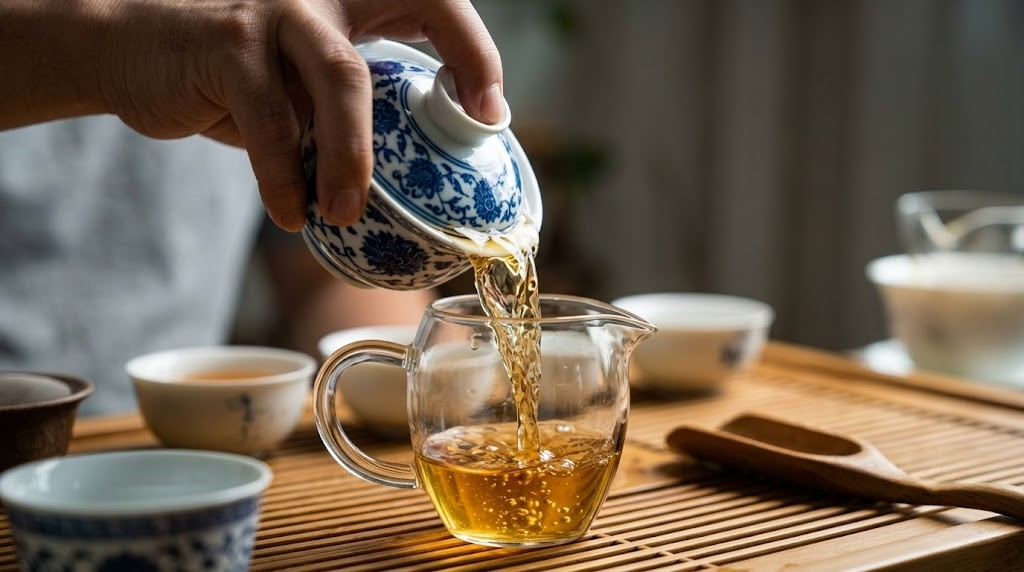
Fairness Cup: Made of glass or porcelain, a container for distributing tea. It ensures consistent strength for every cup of tea and instantly stops the extraction process.
Gongfu Tea Tray: Made of bamboo or wood, it catches spilled water and adds a sense of ceremony.
Tea Needle: Used to pry open compressed tea cakes.
Tea Scoop: For accurately measuring tea leaves.
Tea Strainer: To filter fine tea dust.
Tea Towel: To keep the tea table neat and tidy.
The Step-by-Step Gongfu Tea Brewing Guide
Before starting, be sure to use high-quality filtered water or mountain spring water. The minerals in the water play a decisive role in extracting the aromatic compounds from the tea leaves.

Step 1: Warming the Teaware
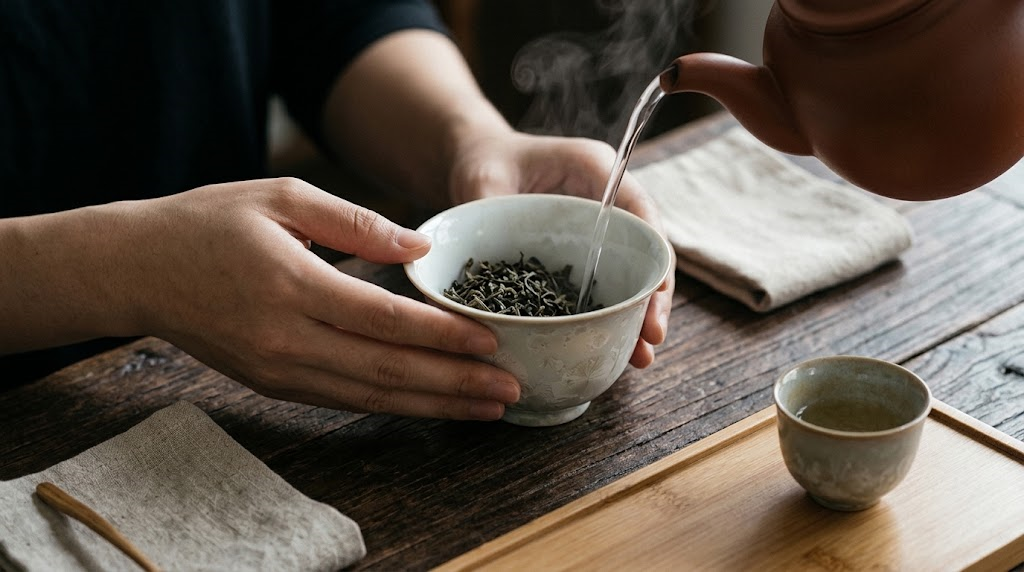
You must first warm the teaware with hot water for Gongfu tea. This is not only part of tea-serving etiquette but also maintains the water temperature and stimulates the tea’s aroma. Cold vessels will absorb heat and affect extraction.
Boil water and pour it into the Chinese Gaiwan/teapot.
Swirl the water, then pour it into the Fair cup.
Pour the water from the Fairness Pitcher into the tasting cups.
Discard this water used for warming the cups.
Step 2: Waking Up the Leaves
Place the tea leaves into the vessel, cover with the lid, gently shake it, and then smell the dry tea aroma. This helps determine the freshness of the leaves.
Why wash the tea? This allows the tea aroma to be initially released (this wash water is usually used to pour over decorative tea pets).
Pour hot water over the tea leaves.
Wait 3-5 seconds.
Immediately discard this tea liquor.
Most teas only need to be rinsed once. Aged Pu erh tea may need to be rinsed twice.
Step 3: Nailing the Tea-to-Water Ratio and Temperature
Gongfu tea demands precision. Taking a 100 ml (approx. 3.4 oz) Gaiwan as an example:
Oolong Tea: 5-7 grams (0.18-0.25 oz)
Pu-erh Tea: 6-8 grams (0.21-0.28 oz)
White Tea: 4-6 grams (0.14-0.21 oz)
Black Tea: 4-5 grams (0.14-0.18 oz)
To learn how much tea to put in a cup, read: How Much Loose Leaf Tea Per Teacup?
Temperature Guide:
Light Oolong: 85-90°C (185-194°F)
Roasted Oolong: 90-96°C (194-205°F)
Raw Pu-erh: 90-96°C (194-205°F)
Ripe Pu-erh: 96-100°C (205-212°F)
White Tea: 80-85°C (176-185°F)
Black Tea: 90-96°C (194-205°F)
Step 4: Pouring and Serving with Etiquette
When pouring the tea liquor into the Fairness Pitcher, try to keep a “low pour,” bringing the spout close to the rim of the pitcher to prevent the tea from cooling too quickly and to avoid creating bubbles. Then, evenly distribute the tea liquor to the guests.
When someone pours tea for you, keep your index and middle fingers together and gently tap the table two or three times to show silent gratitude.
To learn how to achieve a perfect pour from a teapot, please read: Guide to Perfect Yixing Teapot Pour: Stop Dripping and Sputtering
Conclusion
Are you ready to begin your mindful journey through tea?
Owning a handy set of teaware is half the success of the experience. Dive deeply into the world of traditional Chinese teaware today.
Pick out your favorite porcelain Gaiwan, tasting cups, and complete Gongfu tea set, and let today’s cup of tea become a brand new starting point for your lifestyle aesthetics.
FAQ
How do I hold a Gaiwan without burning my fingers?
Pinch the flared edge of the bowl with your thumb and middle finger, and lightly press the lid knob with your index finger to easily pour the tea. Do not overfill the water; filling it to 70% capacity is just right.
How many times can I steep the same tea leaves?
High-quality whole-leaf tea can usually be steeped 5-10 times or more. The magic of Gongfu tea is revealed here. Every single brew presents new characteristics:
1st & 2nd Steep: 15-20 seconds
3rd Steep: 20-25 seconds
4th Steep: 25-30 seconds
5th Steep & Beyond: Add 5-10 seconds to each subsequent steep.



6 thoughts on “The Ultimate Gongfu Tea Brewing Guide”