Blog
How to Use Gaiwan Tea Set: Best Guide to Brewing Gongfu Tea

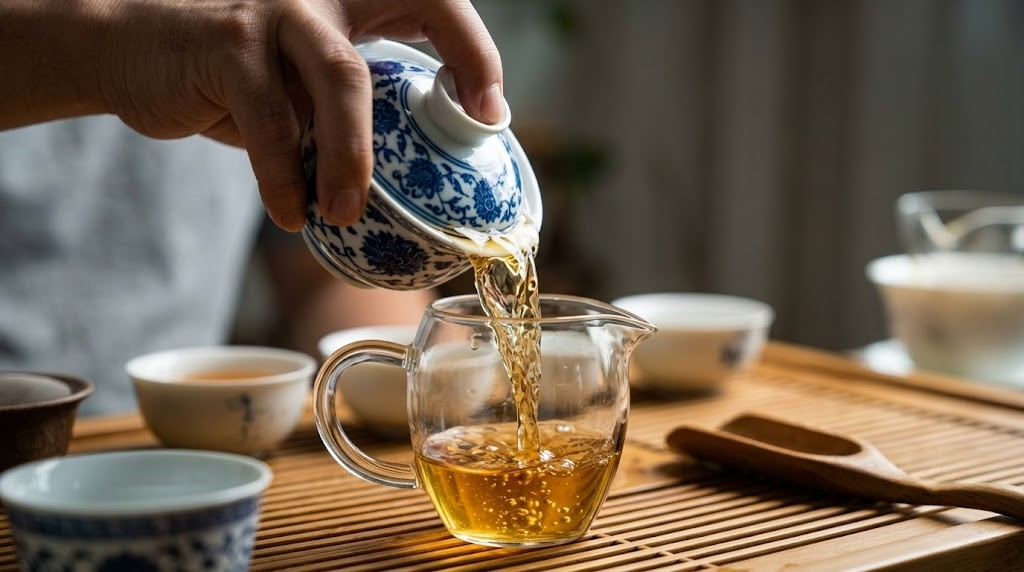
Table of Contents
If you want to experience the purest and most authentic flavor of high-quality loose-leaf tea, putting down your standard Western teapot is your first step. A traditional gaiwan tea set—the most representative piece of Chinese teaware in the traditional Chinese Gongfu tea ceremony—is absolutely your top choice. Although it may seem intimidating to handle at first glance, learning how to use a gaiwan is a transformative experience for any tea lover.
In this comprehensive guide, we will break down exactly what gaiwans are, why teaware experts prefer it, and provide a foolproof step-by-step tutorial on how to hold, pour, and brew like a tea master without burning your fingers.
What Is a Gaiwan and What Is It Used For?
The Anatomy of a Gaiwan Tea Set (Lid, Bowl, and Saucer)
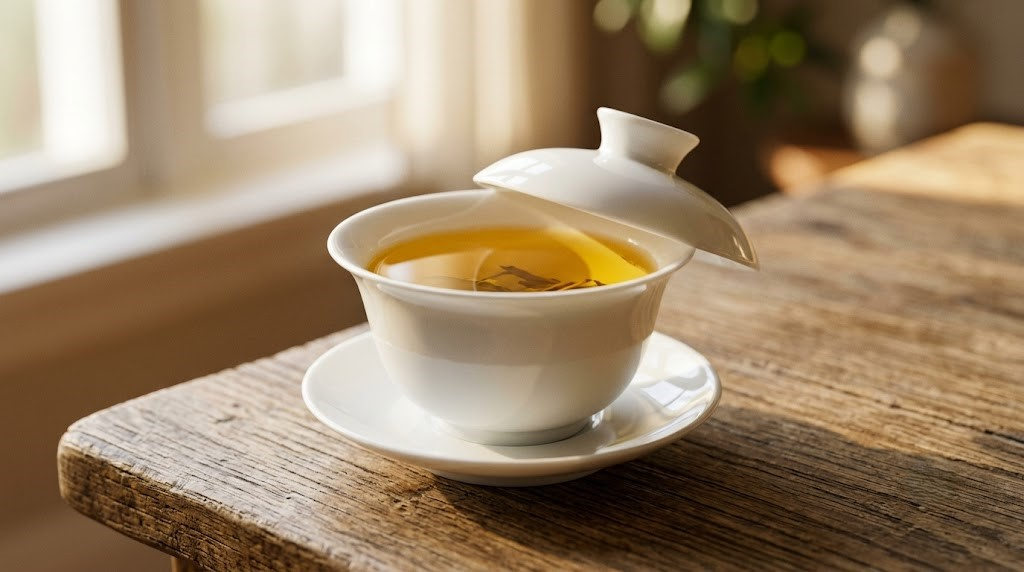
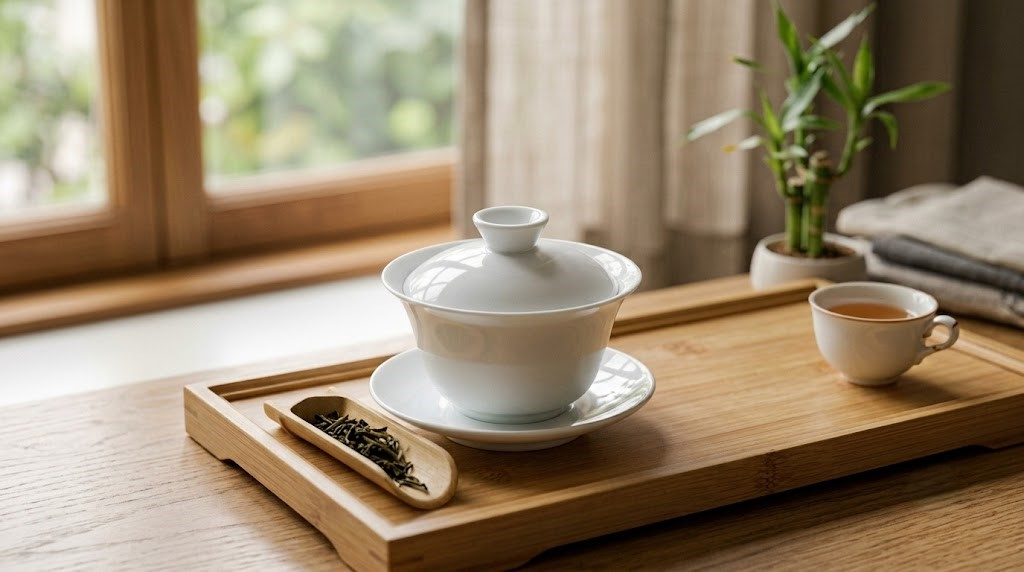
A traditional gaiwan is a handleless Chinese tea brewing vessel consisting of three independent parts: the lid, the bowl, and the saucer (tea boat).
Also known as the “Sancai Bowl” or “Sancai Cup,” the lid represents heaven, the saucer represents earth, and the bowl represents humanity. Therefore, it possesses the three powers of heaven, earth, and humanity, implying the harmony between the universe and mankind.
The materials mainly include Ru kiln, Celadon, and blue-and-white porcelain. A gaiwan tea set is often used in combination with a fairness pitcher (gongdao bei) and a tea strainer, making it suitable for both solo drinking and group tasting.
Why Tea Lovers Prefer a Gaiwan Tea Set Over a Traditional Teapot
While teapots are great for casual daily brewing, a traditional gaiwan tea set offers unparalleled control and versatility. Here is why tea connoisseurs highly recommend a gaiwan over other teaware:
Absolute Brewing Control
Teapots can be picky about tea leaves, but a Chinese gaiwan accommodates any tea. The arched design of the lid and the wide opening of the bowl perfectly meet your tasting needs for smelling the aroma and observing the color.
When brewing with a gaiwan, you can freely adjust the pouring angle, speed, and height according to your needs, allowing the tea leaves to roll exactly how you expect.
Restoring Authentic Aroma
A gaiwan set is a master at preserving the tea’s aroma. When I used a Zisha clay teapot in the past, I always felt that some of the fragrance was absorbed by the pot.
A gaiwan tea set does not easily absorb tea scents, allowing the original flavor of the tea to be better showcased. You can also freely examine the wet leaves to appreciate the color, fragrance, taste, and shape of each brew.
I have experienced it firsthand—the tea liquor brewed with a gaiwan is fresh, sweet, and rich in layers of taste, truly leaving an endless aftertaste.
If you would like to learn more about how the gaiwan affects tea aroma, please read: How Gaiwan Shape Changes Tea Flavor?
Fast Pouring Speed
A gaiwan can achieve a rapid, unobstructed pour. This instant separation of tea liquor and leaves effectively prevents over-steeping and bitterness—a common flaw of ordinary teapots with slow pouring speeds.
Easy Cleaning
A gaiwan tea set has no narrow spouts or hidden filters. A simple rinse and wipe are all it takes to keep it as shiny as new, completely eliminating the hidden health risks caused by tea stain accumulation.
Teapots, especially Zisha clay pots, have high cleaning requirements and tedious processes due to the habit of seasoning the pot.
I once had quite a bit of tea scale hidden inside my teapot due to incomplete cleaning. I eventually switched to a gaiwan tea set, which feels much cleaner and more hygienic.
How to Hold and Strain a Gaiwan Without Burning Your Fingers
The Classic Three-Finger Technique (Step-by-Step)
For beginners, the biggest obstacle is handling hot water in a teaware vessel without a handle. The secret lies in only touching the parts of the gaiwan that remain cool: the flared rim extending outward and the tall button (knob) on the lid.
Classic Three-Finger Technique
Step 1: Always use your most flexible, accustomed, and strongest hand.
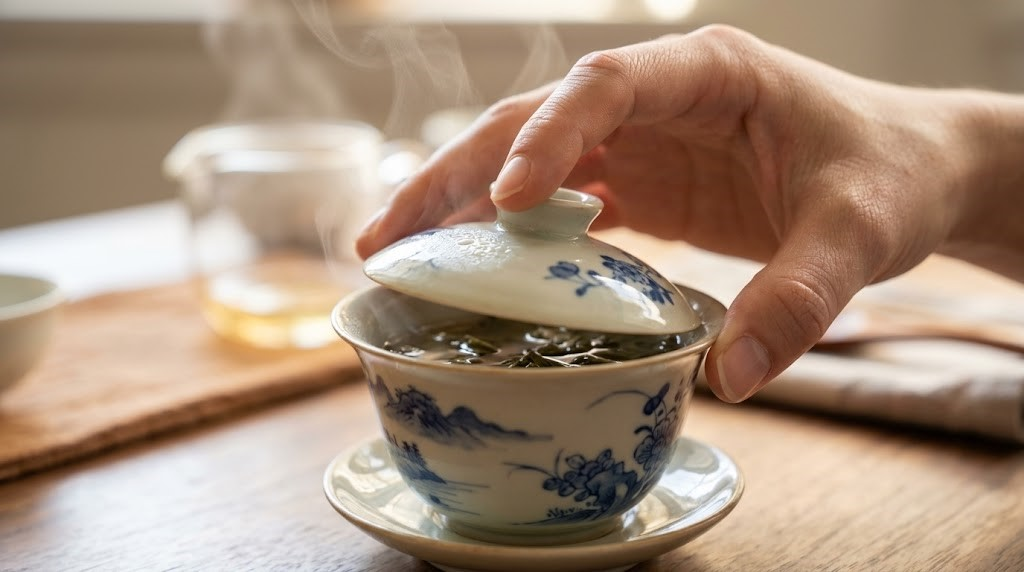
Step 2: Grip the flared rims on both sides with your thumb and middle finger, and gently rest your index finger on the lid knob. Be careful to touch it lightly; do not push your index finger into the hollow of the knob.
Step 3: The contact points of the three fingers on the gaiwan should form a straight line, and the force should be applied along this line.
Step 4: After gripping with your thumb and middle finger, apply pressure. Press lightly with your index finger to ensure the lid does not slip off.
Step 5: When pouring the tea liquor into the fairness pitcher, pay attention to adjusting the pressure of your index finger. The center of gravity of the gaiwan must shift forward to pour the tea out steadily.
Creating the Perfect Slit for Pouring
Before lifting the gaiwans, tilt the lid slightly toward your wrist to create a crescent-moon-shaped gap between the lid and the bowl.
A gap width of 0.1-0.2 inches is ideal. This both filters the tea leaves and prevents hot steam from burning your fingers.
When pouring tea, keep your upper arm still and rotate your wrist inward by about 45 degrees. This motion is more stable and requires less effort.
Pro-Tips to Prevent Heat Transfer and Burns
Size is Crucial
For small hands and slightly weaker grips: 3.4-4.4 fl oz gaiwans (diameter of about 3.1-3.5 inches, height of about 2.7-3.0 inches).
For large hands, strong grips, high tea consumption, and frequent brewing: gaiwans between 5.1-8.5 fl oz (diameter of about 3.7-4.1 inches, height of about 3.1-3.5 inches).
With a properly sized porcelain gaiwan, your fingers can easily master the grip. The thumb, index finger, and middle finger each take their proper position, while the other fingers flare out slightly. This posture makes it difficult to get burned.
Do Not Overfill
Do not fill the gaiwan tea cup too full with water; 70% full is the optimal water level. Beginners can choose a gaiwan with a wider rim, as this type of teaware conducts heat more slowly. The wider the empty space left at the top of the bowl, the lower the temperature at the edges.
When encountering high-temperature tea liquor, you can first gently shake the gaiwan tea set clockwise twice to let the heat escape from the gap before pouring.
How to Brew Tea in a Gaiwan Tea Set
Step 1: Prepare the Teaware
Gaiwan tea set, fairness pitcher, tasting tea cups, tea strainer, tea utensils (Six Gentlemen of Tea), tea tray, kettle, tea towel, tea lotus (cha he), tea caddy, and coasters.
Step 2: Warm the Cups and Clean the Teaware
Before brewing tea in a gaiwan tea set, you need to rinse the tea bowl with boiling water. The main purpose is to clean the teaware while raising the internal temperature of the gaiwan. This helps to retain the original flavor of the tea liquor during brewing without affecting the overall aroma and taste.
Step 3: Appreciate and Add the Tea
Place an appropriate amount of tea leaves on the tea lotus for guests to observe the shape and color of the tea. Use a tea tool to transfer the tea into the gaiwan tea set, adding the right amount of leaves based on the gaiwan’s capacity.
Step 4: Pour the Water
After putting the tea into the bowl, it is time to pour the water. Pour boiling water into the bowl in a circular motion to ensure every single tea leaf is fully moistened. The rule for pouring height is to ensure the gaiwan’s lid will not be submerged.
Step 5: Steeping
Inject an appropriate amount of boiling water into the gaiwan, use the lid to stir the tea leaves inside so they can fully expand, then cover it and wait for 10-15 seconds before pouring. Avoid steeping too long, which makes the tea liquor taste bitter. After pouring the water and covering the lid to steep for a moment, you can pour it out. Discard the first wash into the waste water bowl, and pour the second brew into the fairness pitcher first.
Step 6: Serve the Tea
Tilt the lid to leave a gap just large enough for the water to flow out. Quickly tilt the bowl to pour the tea into the fairness pitcher. Hold the pitcher and pour the tea into individual tasting cups. Fill the cups to 70%; filling a cup to the brim is considered a hint for the guest to leave.
Step 7: Taste the Tea
Return to your seat and drink the tea you just brewed. First, observe the color and shape, then pick up the cup to smell the aroma, and finally sip the liquid to appreciate the flavor profile.
Start Your Gongfu Tea Journey
Mastering a gaiwan tea set requires a little practice, but the rewards are immense. Once your muscles form the memory, you will never want to use any other method to brew high-quality loose-leaf tea. This is a mindful and interactive process that elevates drinking tea from a simple habit to a highly enjoyable ritual.
If you are ready to put these techniques into practice, you need reliable teaware. Explore elegant, perfectly proportioned gaiwans and tea cup —featuring optimal rim curves and temperature-control designs—and start your Gongfu tea journey today.
FAQ
Can I use a gaiwan for all types of tea?
Yes! A porcelain gaiwan is non-porous and does not absorb flavors. This makes it the perfect universal brewing vessel for everything from delicate green teas to robust black teas and Tieguanyin oolongs.
What is the best gaiwan size for a beginner?
A 100ml to 130ml (3.4 to 4.4 fl oz) gaiwan is highly recommended for beginners. It is much easier to maneuver with one hand and helps you master the three-finger pouring technique without dropping the vessel.