Blog
What Are the Different Types of Yixing Teapots?

Table of Contents
In this comprehensive guide, we will detail the characteristics of various Yixing clay types, analyze classic Yixing teapot shapes, and teach you how to pair an authentic Yixing teapot with the right tea. Whether you are a Gongfu tea beginner or an experienced collector, understanding these details is key to elevating your tea-tasting experience.
Understanding Zisha: The Magic Behind Yixing Clay Types
The essence of a Chinese Yixing clay teapot lies in its material: Zisha. According to ceramics experts and historical records (such as those documented by the Ceramic Arts), genuine Yixing Zisha clay has a unique double-pore structure. This structure allows the clay teapot to “breathe,” thereby absorbing the aromatic compounds from the tea leaves while softening the water quality.
Zini (Purple Clay): The Versatile Classic
Zini is the most common clay for a Zisha teapot and is the ultimate representative of optimal breathability.
It has a higher quartz content, with coarse and loosely distributed particles, forming larger and well-connected pores after firing.
When using a Zini teapot to brew highly fermented teas like ripe Pu-erh and dark tea, it can better release the mellow taste and aged aroma.
Even after long steeping times, a purple clay teapot can keep the tea liquor fresh, making it highly suitable for beginners.
Zhuni and Hongni (Red Clay): High Aroma Preservers
If you love highly fragrant teas, then red clay is the perfect choice for you.
The breathability of Hongni and Zhuni is relatively weaker.
Hongni and Zhuni teapots are better at gathering aroma, making them suitable for brewing high-aroma teas such as Tieguanyin and Dancong Oolong.
However, the lack of breathability also means that prolonged steeping can easily cause the tea liquor to become astringent, so you need to pay more attention to the brewing rhythm when using them.
Duanni (Yellow/Green Clay): Excellent Heat Retention
Duanni is a natural paragenetic ore (a mixture of Zini and green clay). After firing, it presents stunning shades of yellow, beige, or pale green.
Naturally formed by mixing multiple clays like Zini and Hongni, Duanni also boasts excellent breathability.
Its granular structure is loose, with a moderate proportion of pores.
Using a Duanni teapot to brew white tea or lightly fermented oolong tea can preserve the crispness of the tea leaves while avoiding the bitterness caused by high-temperature steeping. The breathability of a Duanni teapot makes it resistant to retaining mixed odors, allowing one yixing teapot to brew multiple types of tea.
Classic Yixing Teapot Shapes for Gongfu Tea Rituals
Yixing teapots are mainly divided into five categories: round ware, square ware, ribbed ware, nature-inspired (plastic) ware, and bail-handle ware. The shape of an Yixing clay teapot not only holds aesthetic value but also affects water flow, heat distribution, and how the tea leaves unfurl.
To learn about Zisha teapot making, please read: The Art of Zisha Teapot Making——What No One Tells You
Xi Shi Teapo: The Graceful Beauty
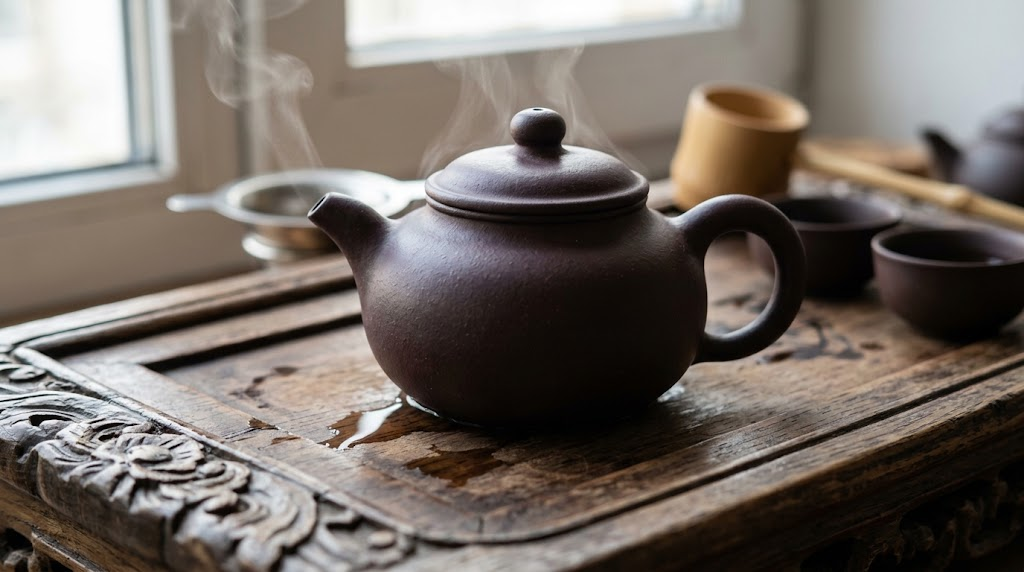
The shape of the Xi Shi teapot is inspired by the female breast; the teapot body is full and round, with smooth and soft lines.
Structure: Truncated lid design, inverted egg-shaped body, subtle straight spout, and an inverted ear-shaped handle.
Craftsmanship: The gap between the lid and the rim should be controlled within 0.5mm, and the spout diameter should be no less than 3mm.
Clay: The Zhuni Xi Shi teapot is the most classic. A Zini Xi Shi teapot looks more composed, while a Duanni Xi Shi teapot leans towards elegance.
Capacity: Usually 100-250ml, belonging to small-capacity yixing teapots. A capacity of <80ml easily scalds the hands when pouring, while >250ml loses its delicate charm.
- OURIOO Recommend:
Ruyi Xishi Teapot For Zisha Teapot Lovers
Material: High-quality Zini natural Zisha clay.
Capacity: 230 ml
Key Features: This classic Xi Shi teapot is engraved with exquisite “Ruyi” patterns. Its unique embedded lid design ensures excellent air-tightness, while the upgraded filtration system makes the tea flow smoother.
Xi Shi Teapot For Yixing Purple Clay Teapot Lovers
Material: Rare and invaluable 30-year-aged Yellow Dragon Mountain Zini.
Capacity: 220 ml
Key Features: Features an innovative 7cm wide-mouth design (1.8 times larger than a traditional teapot), making it easy to fill and clean. This yixing teapot is equipped with a sturdy snap-fit lid and a dual-angle spout, ensuring a flawless, drip-free brewing experience.
Shi Piao Teapot: The Geometric Masterpiece
Structure: The teapot body uses an isosceles triangle as its framework, the spout features a “straight cannon tube” design, and the handle is an inverted ear shape.
Craftsmanship: Fully handmade forming technique, with the gap between the lid and rim not exceeding 0.5mm.
Clay: Traditional Shi Piao teapots mostly use Zhuni or Zini. Zhuni has a high shrinkage rate but a warm, lustrous color; Zini has a strong granular texture, appearing more rustic and substantial.
Capacity: The “golden capacity” of a Shi Piao teapot is usually around 180–250ml, balancing aesthetics and practicality.
- OURIOO Recommend:
Shipiao Chinese Yixing Clay Teapot In Red Clay
Material: Pure authentic red clay (refined through a hundred-mesh fine sand process).
Capacity: 150 ml
Key Features: Inspired by the timeless classic “Ziye Shipiao” shape, this design uses a wide-mouth narrowing structure, acting as an “aroma funnel” to effectively enhance the tea’s fragrance. Equipped with a direct-flow spout and an ergonomic “flying handle,” it ensures excellent stability.
Fang Xing & Ribbed Teapots
For collectors pursuing the pinnacle of Zisha craftsmanship, square and ribbed teapots are undoubtedly the best Yixing teapots to collect.
Square teapots: Square teapots demand extremely high precision in angles, and the shrinkage rate must be strictly controlled during the firing process. They exude a sense of power and precision.
Ribbed design (Jinwen ware): The shapes of these teapots are inspired by various forms in nature, such as melons, fruits, chrysanthemums, or lotus petals.
The yixing teapot surface features vertical ribs extending from the handle all the way to the base.
This craftsmanship is highly demanding because, no matter the angle, the lid must perfectly align with the ribs of the teapot body.
How to Pair Your Authentic Yixing Teapot with the Right Tea
The golden rule for Yixing teapots is: One pot for one type of tea. Because the clay absorbs the tea’s oils, mixing different types of tea will destroy the original flavor of the tea.
To know how to choose a Zisha teapot, please read: How to Choose a Yixing Clay Teapot (Without Buying a Fake)
Best Teapots for Oolong and Tieguanyin
We recommend Zhuni for high mountain oolong to gather the aroma.
For highly fragrant teas like Tieguanyin, Da Hong Pao, or Taiwanese high mountain oolong tea, Zhuni and Hongni are undoubtedly the best yixing teapots.
Because Zhuni and Hongni have higher density and lower porosity, the tea’s aroma can radiate upwards better, allowing every hint of floral and fruity notes to be fully presented on the taste buds. Come and explore OURIOO tea leaves!
Ideal Zisha Teapots for Pu erh and Black Tea
We recommend Zini or Duanni paired with Pu-erh/black tea, which offers heat retention and enhances the mellowness of the tea liquor.
For aged Pu-erh teas like ripe Pu-erh, or mellow black teas (like Dianhong), using Zini and Duanni for drinking is the most suitable.
The thick walls and good breathability of a Zisha clay teapot can effectively eliminate the roughness and harshness of the tea leaves.
Meanwhile, the excellent heat retention of the yixing teapot helps to stimulate the rich, sweet, and soft resonance in the tea.
To learn how to make tea in a teapot, please read: The Best Guide on How to Make Tea in a Teapot
Caring for Your Teapot: Seasoning and Daily Maintenance
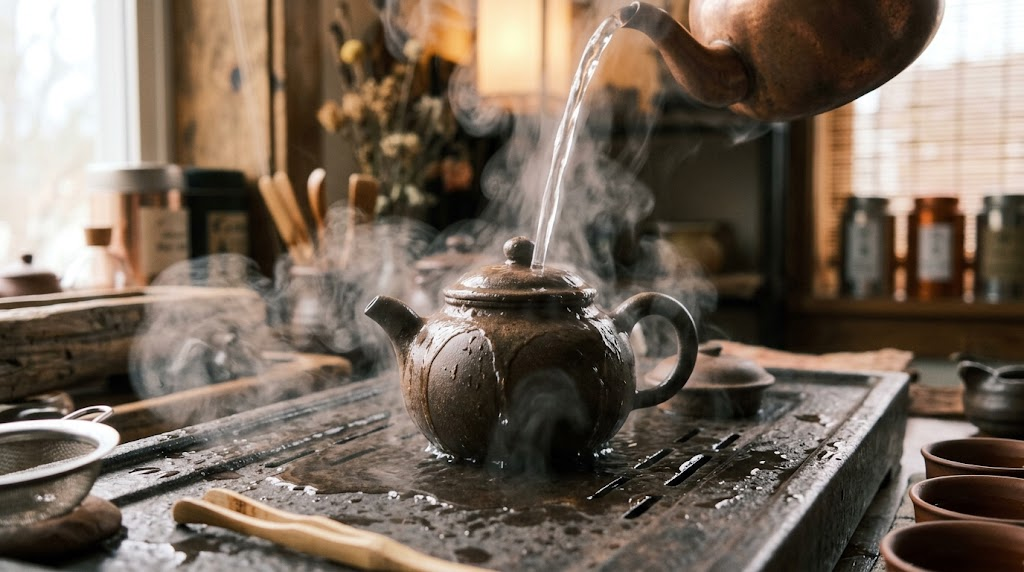
How to Season a New Yixing Clay Teapot
Rinse: First, rinse the teapot body, inside the pot, and the lid with clean water.
Soak: Soak the Yixing clay teapot in warm water for 1-2 hours.
Boil: Use an earthenware or stainless steel pot, add enough clean water to submerge the teapot, bring to a boil over high heat, and then simmer on low heat for 30 minutes.
Cool: Turn off the heat and let the teapot naturally cool in the water.
For more details, please read: How to Season a Yixing Clay Teapot: A Step-by-Step Guide
Essential Cleaning Rules (Why You Should Never Use Soap)
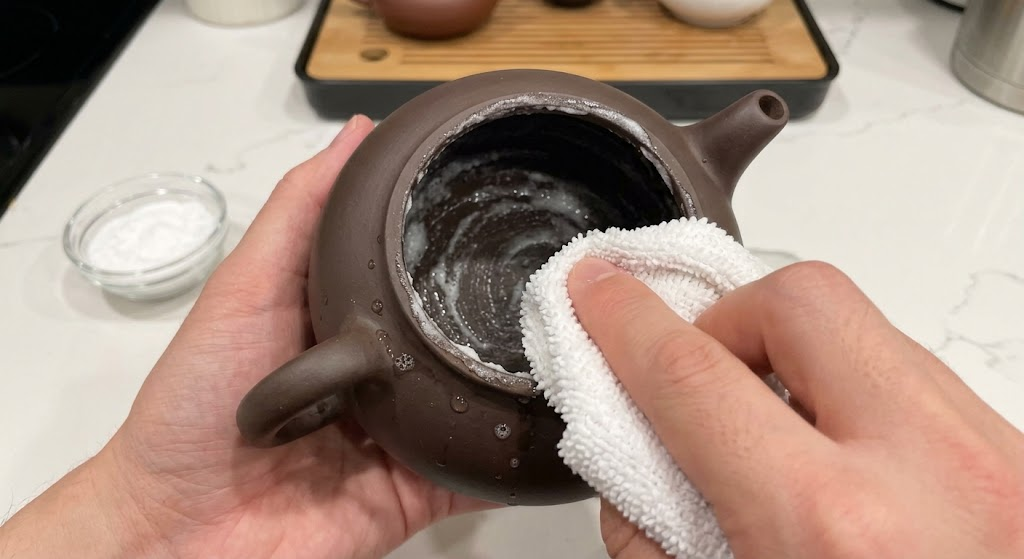
Never use dish soap, detergents, or rough sponges to clean Yixing teapots.
Because the porosity of Zisha clay is very high, these cleaning agents will be absorbed by the clay, permanently ruining the taste for future tea brewing.
After the tea session, simply rinse the teapot thoroughly with boiling water, and gently wipe the exterior of the teapot with a clean, soft tea towel.
Do not put the lid on afterwards; just let the inside of the teapot air dry completely.
Conclusion
Ready to start your own Yixing tea art journey? At OURIOO, we work directly with highly skilled artisans to bring you 100% fully handmade Yixing teaware. Browse the OURIOO Yixing teapots now to find the perfect teaware for your daily tea-tasting needs.
FAQ
What are the different types of Chinese teapots?
Besides the most famous Yixing Zisha teapot, Chinese teapots mainly include Jingdezhen porcelain teapots suitable for all types of tea, glass teapots ideal for visual enjoyment, and Chaozhou red clay teapots traditionally used for brewing Dancong.
Why are Yixing pots so expensive?
The reason an authentic Yixing teapot is so expensive is that it uses extremely scarce original-mine Zisha clay, and it must be crafted entirely by hand over a large amount of time by experienced artisans.