
Blog
What Is The Best Way to Clean a Teapot?


Table of Contents
The best way to clean a teapot depends entirely on its material, but for everyday maintenance, a simple, prompt rinse with hot water is universally effective. For stubborn stains on glazed ceramics or glass, a paste of baking soda and warm water works wonders; while unglazed vessels require strictly following chemical-free care methods.
In this ultimate guide, we will break down exactly how to protect your teapot—and your tea—from harmful buildup.
Why Routine Cleaning is Crucial for Your Tea Pot
Maintaining a clean tea pot is not just about aesthetics; it is a fundamental part of the brewing process. Neglecting tea pot cleaning can fundamentally alter the tasting notes of your favorite loose-leaf teas.
The Impact of Tannin Buildup on Taste
Tea tannins are natural polyphenols found in tea leaves. While tannins contribute to the body of the tea, excessive tannin buildup inside your tea pot will enhance unwanted astringency.
This occurs because tannins have a high affinity for binding with proteins in your saliva, creating a dry, puckering sensation in your mouth. For unfermented tea leaves, such as green tea or raw Pu-erh, heavy tannin residue on the tea pot walls will mask the brew’s natural crispness and delicate layers.
Want to learn the proper brewing techniques for your teaware? Read: The Best Guide on How to Make Tea in a Teapot
Preventing Hard Water Scaling and Mineral Deposits
When tea is left in a cup or tea pot for extended periods, the natural polyphenols (especially tannic acid) combine with calcium and magnesium ions present in hard tap water, gradually adhering to the tea pot’s surface.
Initially, this forms a thin, slightly bitter film, but over time, it turns into highly visible, dark brown limescale.
According to testing by the Good Housekeeping Institute, limescale buildup makes it difficult for delicate flavor compounds to dissolve fully, severely diminishing the taste and texture of your tea.
The key to prevention and cleaning lies in prompt rinsing, regular deep cleaning, and choosing the right method for your specific tea sets.
The Best Way to Clean a Teapot: Everyday Maintenance
You do not need a rigorous deep clean after every brewing session. In fact, the best tea pot cleaning routine is the simplest one.

The Simple Warm Water Rinse Method
The golden rule of tea preparation is to wash your teaware immediately after drinking.
While the tea set is still warm, discard the spent leaves and thoroughly rinse the vessel with warm water.
Because the tea scale has not yet dried and solidified, a gentle rinse is usually enough to wash away the vast majority of residue.
Why You Should Avoid Harsh Dish Soaps
Using standard liquid dish soap to clean a tea pot might seem convenient, but it can actually ruin your tea-tasting experience.
Dish soap is primarily formulated to cut through heavy grease, meaning its effectiveness against stubborn tea scale is highly limited.
Furthermore, the chemical ingredients in dish soap are corrosive to Yixing clay teapot; they will erode the surface patina, causing it to lose its natural luster.
Besides that, chemical residues from dish soap not only ruin the aroma and flavor of your tea but also pose hidden health risks.
How to Remove Stubborn Tea Stains from a Tea Pot (Deep Cleaning Hacks)
If your tea pot is heavily stained, here are the safest and most effective deep-cleaning hacks.
The Baking Soda and Warm Water Trick
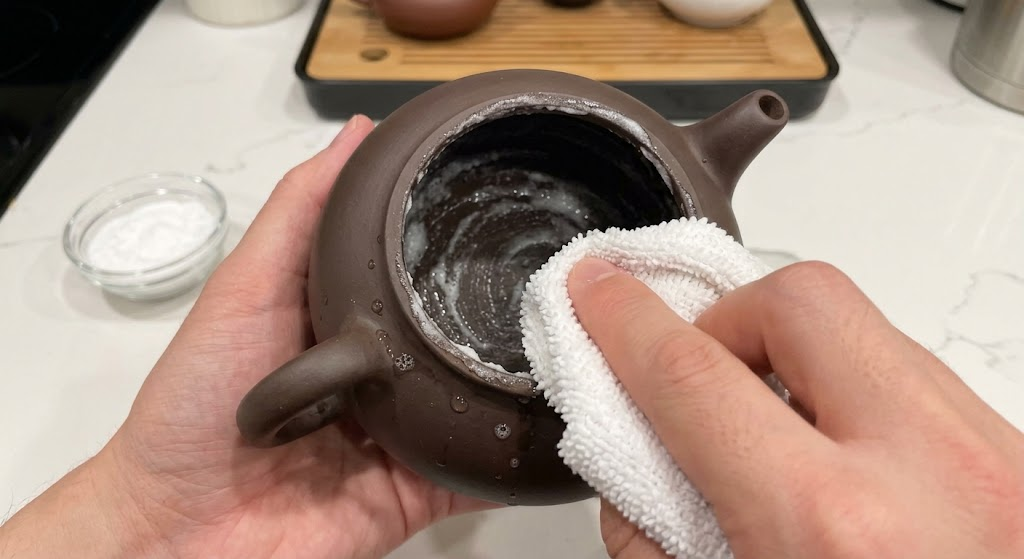
Baking soda mixed with warm water is highly effective for porcelain, glass, and stainless steel teapots. It is a natural and gentle stain remover and deodorizer.
You can mix baking soda with a few drops of warm water to create a thick paste for wiping, or dissolve it in warm water for a longer soak.
Note: Never use this method on Yixing teapots or unglazed pottery.
Using White Vinegar for Hard Water Stains
White vinegar is ideal for removing hard water scale from porcelain, glass, or stainless steel teapots.
The acidic nature of white vinegar effectively tackles limescale and mineral deposits.
After soaking, be sure to thoroughly rinse the teaware with plenty of clean water to ensure no lingering acidic smell affects your tea’s flavor.
Denture Tablets: The Secret Weapon for Stubborn Stains
Denture cleaning tablets are a secret weapon against stubborn stains in hard-to-reach areas.
They are especially suitable for deep, narrow cups or the blind spots of tea pots, working wonderfully for porcelain, glass, and metal tea pot.
The foaming action lifts away stubborn stains without damaging the material.
Simply drop a tablet into a tea pot filled with warm water, let it soak for a few hours, and then rinse thoroughly.

Material Matters: Cleaning Specific Types of Teapots
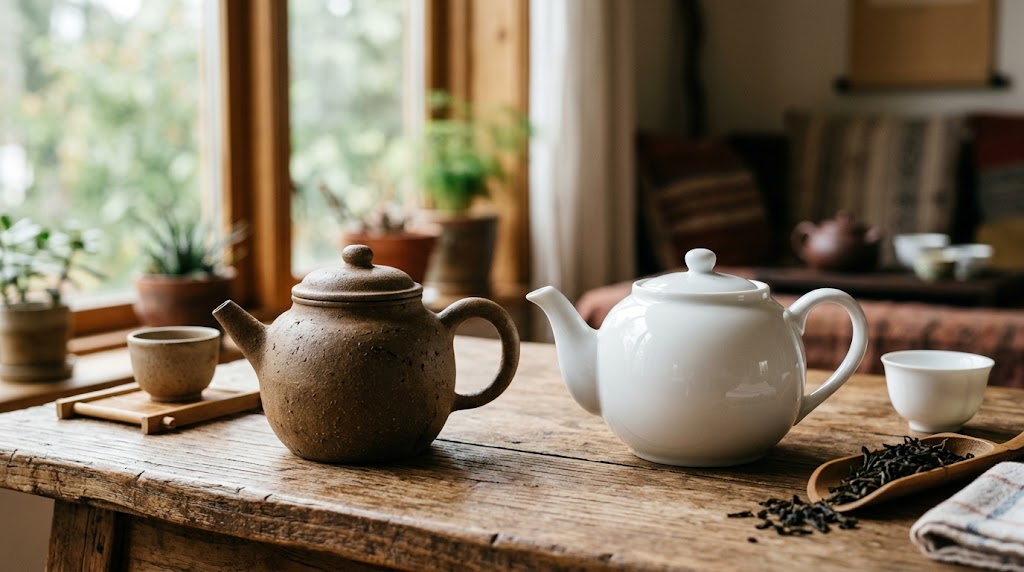
A “one size fits all” approach will damage specialty traditional Chinese tea set. Here is the correct cleaning method based on your tea pot’s material.
Porcelain and Ceramic Teapots (Including Gaiwan Tea Set)
Porcelain and glazed ceramic teapots, including our porcelain Gaiwan, feature a smooth, glass-like outer glaze. The goal of cleaning is to dissolve dirt without scratching this delicate finish.
Light stains: A small amount of mild dish soap and a soft cloth will clean it easily.
Dark, long-term tea stains: Mix baking soda with a little water to form a paste, apply it to the stains with your fingertips or a soft cloth, and rub gently.
Very thick tea scale: Mix white vinegar and warm water in a 1:2 ratio, soak the Gaiwan set or tea pot for half an hour, and then wipe clean.
Want to know the difference between these two classic vessels? Read: Gaiwan vs. Teapot: Which Vessel Is Right for You?
How to Care for a Yixing Teapot
If you are accustomed to brewing Gongfu tea with an Yixing teapot or coarse pottery, you must strictly follow the “one pot, one tea” rule—and absolutely never use dish soap.
Because Zisha clay has a unique double-pore structure, it will absorb the smell of the detergent.
For tea residue accumulated inside a Zisha teapot, first pour boiling water inside and out to heat the pot and open the pores.
Then, use a very soft tea brush or a soft-bristled toothbrush to gently brush away the tea debris under warm, running water.
Finally, place the tea pot in a safe place with the lid off to let it air dry completely.
Curious about the traditional craftsmanship behind these pieces? Read: The Art of Zisha Teapot Making
Cast Iron Teapot (Tetsubin) Rust Prevention
Never use lemon to boil water in a Japanese cast iron teapot—this will strip the protective coating and cause severe rusting!
Cast iron teapots easily rust in humid environments, so you must ensure both the inside and outside are wiped bone-dry after use.
Keep your cast iron teapot away from corrosive liquids like salt water, vinegar, or acidic juices, which readily cause chemical reactions with the iron.
To prevent rust, you can apply a thin layer of cooking oil or a specialized rust inhibitor to the surface of the cast iron teapot to form a protective film that isolates it from air and moisture.
For existing scale, use a targeted method: soak in a white vinegar solution (1:10 ratio for 2-4 hours), then scrub.
Want to understand the stylistic and functional differences? Read: Chinese Teapot vs. Japanese Teapot: 4 Differences You Need to Know
Glass and Stainless Steel Teapots

- Glass Teapot:
On a glass tea pot, even the slightest tea stain is highly visible.
Because glass has high hardness, you can safely wash it with a baking soda paste and lemon juice.
Simply drop some lemon juice into warm water and let the glass tea pot soak to restore its crystal-clear shine.
For intricate designs, you can sprinkle some toothpaste into warm water for an overnight soak; it will rinse perfectly clean the next day.
- Stainless Steel Teapot:
Stainless steel is durable but prone to water spots.
For complex stainless steel teapots, soaking them overnight in warm water with a small amount of baking soda will effortlessly remove water spots.
Conclusion
Understanding how to clean a tea pot properly is the easiest way to elevate your daily tea-drinking experience. Whether you want to preserve the rich, seasoned patina of an authentic Yixing clay teapot or keep a porcelain Gaiwan looking pristine, skipping harsh detergents in favor of natural, material-specific cleaning methods will ensure your teaware lasts a lifetime.
Do you have any time-saving tea pot cleaning hacks? Feel free to share your thoughts or your own Gongfu tea routines in the comments below!
FAQ
Can I put my teapot in the dishwasher?
Generally, no.
Strong detergents and high temperatures can damage the surface of porcelain, cause fragile ceramics to crack, and completely destroy the seasoned protective layer of unglazed clay or cast iron teapots.
How do I get rid of the musty or moldy smell in a teapot?
For glazed teapots, soaking them in an equal mix of white vinegar and hot water will kill mold spores and eliminate odors.
For porous clay teapots, you can gently boil the teapot in a clean pot of boiling water to draw out impurities.