Blog
Overglaze vs Underglaze Porcelain: What’s the Difference for Your Teaware?

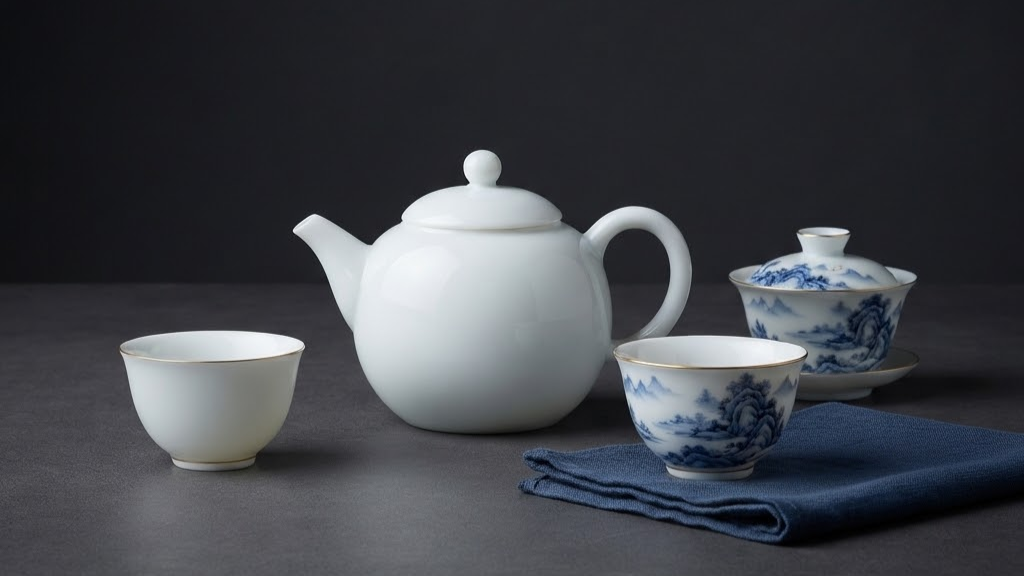
Table of Contents
The decoration and firing methods of ceramic products directly affect their content of harmful substances such as lead and cadmium, scratch resistance, and service life.
In this guide, we will detail the specifics of both techniques, evaluate product safety based on relevant regulatory standards, and help you select the tea set best suited for your collection.
What is Underglaze Porcelain?
Underglaze is a traditional ceramic decoration technique. It involves applying pigments directly onto the raw clay body before coating it with a glaze layer, resulting in soft colors as well as safety and hygiene. Major underglaze styles include blue-and-white, linglong, underglaze multicolor, and incised ceramics.
To learn more about the production of blue-and-white porcelain, please read: How is Blue and White Porcelain Fired to Perfection?
How Underglaze is Made (The Firing Process)
This technique involves painting on the clay body with pigments after the form is shaped, then applying a transparent or light-colored glaze, and firing at a high temperature of 1200–1400 degrees Celsius.
- Direct Painting: Creating directly on the greenware, requiring only painting with pigments followed by glazing, and then firing in a kiln at around 1200°C to 1300°C.
- Glazing and High-Temperature Firing: When painting underglaze designs on bisqued ware, the clay body is first fired into bisqueware at 800°C, and after painting and glazing, it is fired again in a kiln at approximately 1200°C to 1300°C.
- Vitrification Treatment: At such extremely high temperatures, the pottery clay and glaze completely vitrify (fuse together), securely locking the pigments beneath a glass-like surface.
Key Characteristics and Durability
The colors are glossy and smooth, with continuous permeation and everlasting vibrancy.
Underglaze blue tones (such as blue-and-white) produce a unique bleeding effect through the refraction of the glaze layer, which is difficult for overglaze to imitate.
Extremely high food safety with zero risk of heavy metal (such as lead and cadmium) leaching. You can learn more about ceramic material standards through The American Ceramic Society.
Best Uses for Underglaze Teaware
Underglaze porcelain—such as traditional blue-and-white porcelain—is the ideal choice for daily-use porcelain tea sets and teapots that require frequent washing, good heat retention, and easy maintenance.
OURIOO Recommended:
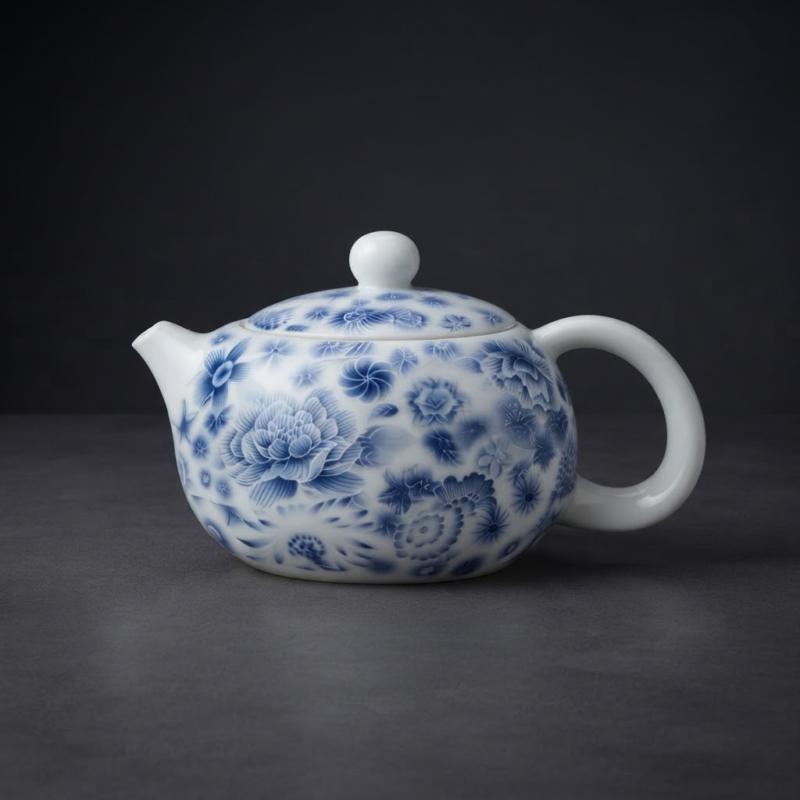
Blue And White China Teapot-Silver Filigree White Porcelain Teapot
Handcrafted using the intricate “silver thread inlay” technique to make the peony pattern more vivid and lifelike.
Made from premium high-temperature mutton-fat jade porcelain material with absolute zero water absorption.
The teapot body features an ergonomic design with spherical filter holes and a narrow mouth designed to collect aromas (Capacity: 210 ml).
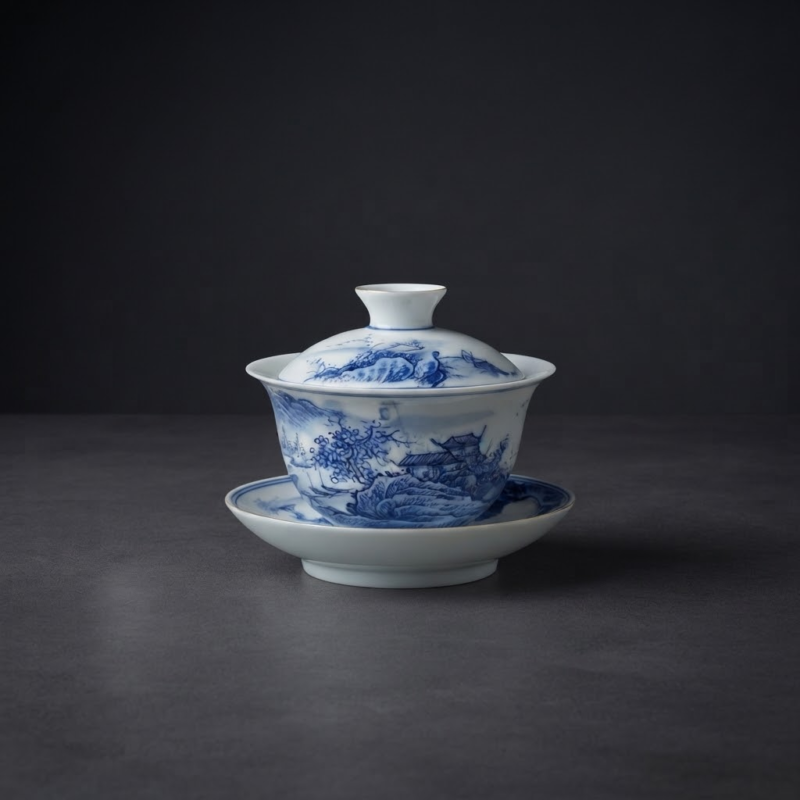
Underglaze Blue Landscape Gongfu Tea Gaiwan
Crafted from premium high-white clay, utilizing the traditional “liubai” (blank space) hand-painted technique to depict landscape patterns.
The rim of the Gaiwan is flared, offering both easy gripping and excellent heat resistance.
Embodies the classic “Three Talents” structural philosophy. Capacity: 120 ml.
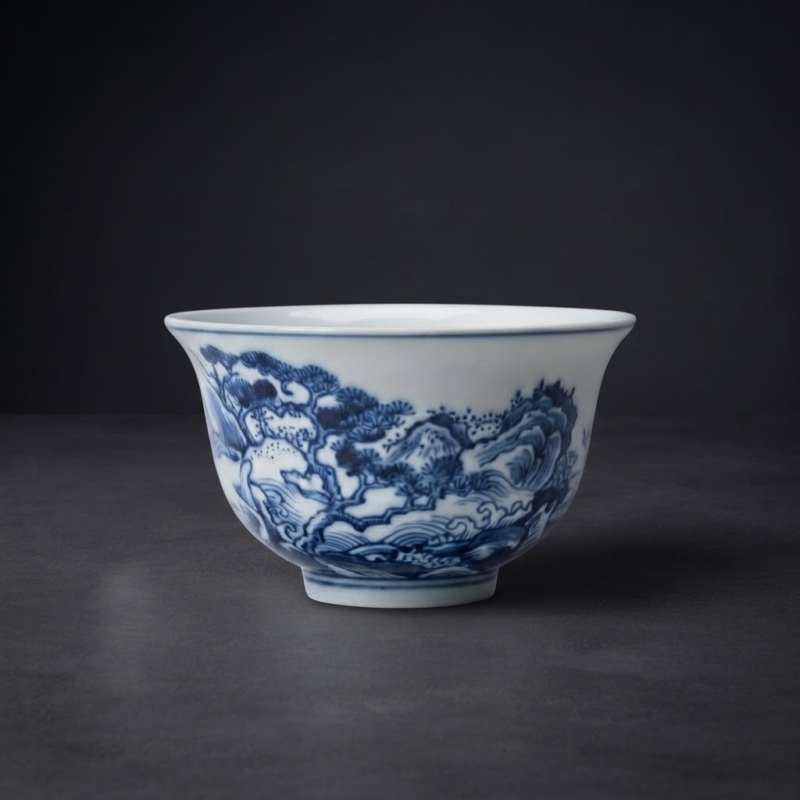
Underglaze Blue And White Porcelain China Teacup
Fired in a 1350℃ reduction flame, the surface exhibits a unique duck egg blue luster.
Both interior and exterior are adorned with colorful patterns, with a distinctive hallmark at the bottom.
Its shape is designed for optimal comfort, suitable for daily mindful sipping (Capacity: 135 ml).
The Art of Overglaze Porcelain: Beauty and Elegance
Overglaze is a technique where various decorative pigments are applied onto the surface of porcelain that has already completed its glazing and firing processes. The most representative overglaze porcelain types include overglaze red, Songjiacai, wucai, famille rose, and enamel porcelain.
The Overglaze Creation Technique
Overglaze involves painting with pigments onto already fired white-glazed or colored-body porcelain, followed by a secondary firing at 600–900 degrees Celsius.
- Body Firing: First shaping the porcelain clay into the desired form, followed by glazing. Fired into a white porcelain body using a kiln at around 1200°C to 1300°C.
- Surface Painting: The pigments are painted on the porcelain surface, then covered with a transparent glaze and fired, resulting in vibrant and diverse colors.
- Secondary Low-Temperature Firing: The second firing typically ranges between 600°C and 900°C. This temperature is sufficient to melt the enamel materials, firmly bonding the various colors with the outer glaze layer.
To learn about the difference between glazed and unglazed, please read: Glazed vs Unglazed Ceramic Teacups: Which Is Right for You?
Aesthetic Appeal and Design Detail
Low-temperature firing prevents pigments from easily oxidizing or discoloring, thus presenting more layers of color and delicate textures.
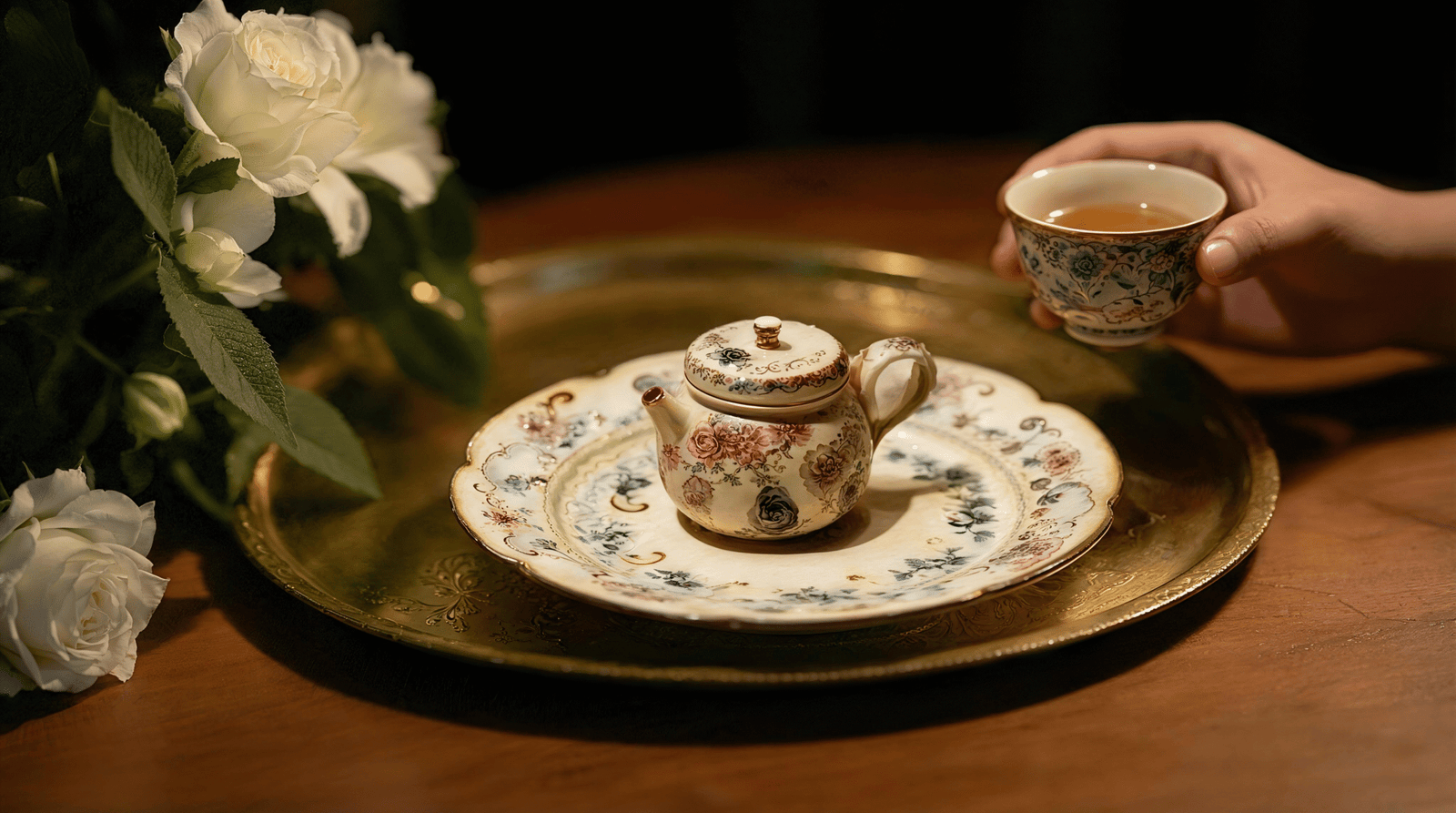
Extremely rich colors, strong three-dimensional effect, with exceptional expression for gold rims or complex multi-color patterns (commonly seen in vintage or palace-style tea sets).
Durability and Care Considerations
The patterns sit above the glaze; the color layer of overglaze is exposed and prone to friction, acid-base corrosion, or high temperatures during use, leading to color fading or peeling.
After long-term use, the surface of overglaze teaware may develop scratches, affecting its overall appearance.
Which is Better for Your Collection?
To help you evaluate the durability of porcelain and ceramic teaware and select safe porcelain tea sets, here is a direct comparison based on key performance indicators:
| Feature | Underglaze Porcelain | Overglaze Porcelain |
| Firing Temperature | High (1200°C – 1400°C) | Secondary low fire (600°C – 900°C) |
| Pigment Location | Sealed beneath the transparent glaze | Resting on top of the fired glaze |
| Food Safety & FDA Compliance | Extremely high; zero heavy metal leaching risk | Requires strict regulatory compliance; avoid low-grade imports |
| Scratch & Fade Resistance | Permanent; dishwasher and utensil-safe | Moderate; prone to surface wear with abrasive cleaning |
| Aesthetic Style | Smooth, classic, cobalt blue, subtle depth | Vivid, multi-colored, metallic gold rims, highly ornate |
| Best Suited For | Daily-use teapots, gaiwans, and family tea sets | Special occasions, collector displays, artistic appreciation |
For authoritative industry testing results, you can refer to professional publications such as Ceramic Industry Magazine.
How to Tell the Difference When Buying Porcelain Teaware
Knowing how to identify glaze types online or offline prevents you from purchasing items that look like daily utility teaware on the surface but are actually just decorative pieces.
The Touch Test (Texture and Surface)
Touched with a finger, the underglaze surface is completely smooth with a glass-like texture.
Some complex overglaze styles (such as gold tracing or enamel) reveal micro-relief textures under side lighting.
Visual Inspection Tips for Online Shoppers
When buying porcelain teaware online, be sure to carefully check product specifications.
Confirm whether it has food-grade certification, whether it is suitable for microwave or dishwasher use, and examine images that clearly display the product’s surface texture.
To know how to clean teaware, please read: What Is The Best Way to Clean a Teapot?
Choosing the Perfect Porcelain for Your Tea Ritual
Ready to build your ultimate tea space? Browse our carefully curated OURIOO Designer Series now and find the perfect companion for your next tea journey.
FAQ
When to use overglaze teaware?
Overglaze teaware is best reserved for special occasions, such as celebrations or artistic appreciation, where brilliant colors and metallic lusters are more important.
Is underglaze just colored slip?
No, underglaze is achieved by applying liquid metal oxide pigments or dyes onto unglazed or freshly glazed ceramic bodies, whereas colored slip is a liquid colored clay mainly used for shaping or overall coloring prior to glazing.