Blog
Porcelain vs Ceramic Teapot: Which is Better for You?

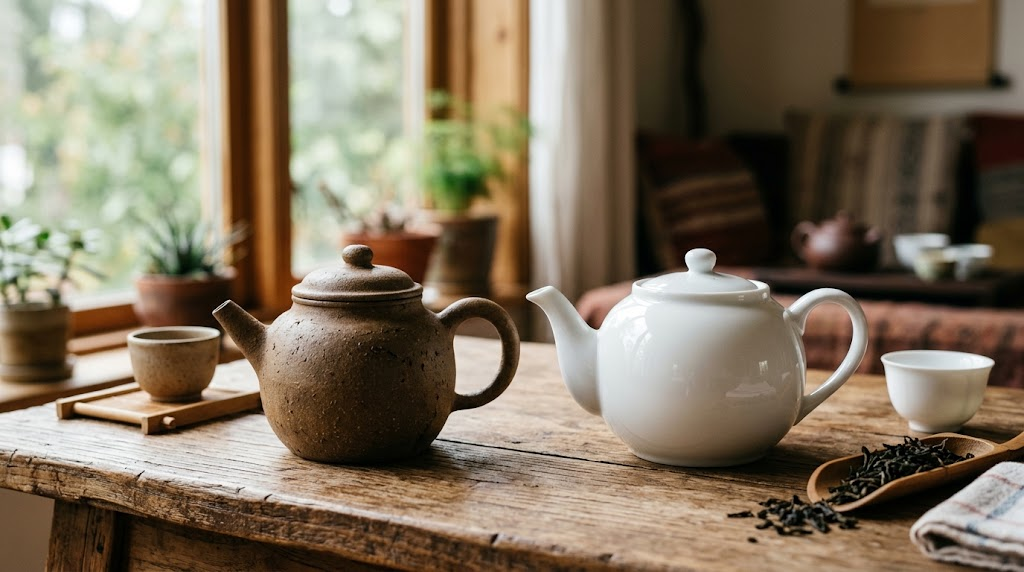
Table of Contents
Still struggling with whether to choose a porcelain teapot or a ceramic teapot for your daily tea drinking? As a traditional Chinese teapot master and the founder of OURIOO, I have dedicated years to studying how different clay materials interact with tea leaves. In fact, the tea pot you choose will have a significant impact on the flavor, aroma, and temperature of the tea. The core differences between the two lie in the clay material, firing temperature, and glaze, which together determine the porosity and heat retention of the teaware.
In this comprehensive guide, we will delve into the debate of porcelain vs ceramic teapots to help you find the best tea pot for loose leaf tea that you love.
Understanding the Basics: Ceramic vs Porcelain Teapot
The core differences between a ceramic and china teapot lie in the raw materials, firing temperature, and glaze. These determine their breathability, water absorption, and hardness, which also affect the taste of the brewed tea and suitable brewing scenarios.
What is a Ceramic Teapot?
A ceramic tea pot retains micro-pores, is highly breathable, and can absorb tea aromas; it conducts heat slowly, offering excellent heat retention.
- Material: A ceramic tea pot uses standard clay, such as the famous Yixing clay teapot. The texture is relatively coarse, with a water absorption rate between 3% and 12%.
- Firing Process: Typically fired at 800-1100°C, retaining a certain porous structure.
- Characteristics: Great heat retention, especially suitable for Pu erh tea and dark tea that require steeping.
- Cultural Symbolism: Pottery is closer to the philosophy of simplicity and rustic nature.
What is a Porcelain Teapot?
A porcelain teapot has a glazed surface with fully sealed pores, making it non-odor-absorbing and easy to clean; it conducts heat quickly, allowing precise water temperature control.
- Material: A porcelain tea pot is fired using kaolin clay, with a fine and white body, and a water absorption rate of less than 0.5%.
- Firing Process: Requires high-temperature firing above 1200°C, completely vitrifying the body.
- Characteristics: Fast heat transfer, ideal for brewing green tea, white tea, and other teas that focus on freshness.
- Cultural Symbolism: Porcelain represents the elegance culture.

How to Tell the Difference?
- Tap gently: If it produces a crisp sound, it is porcelain; if it makes a slightly deeper, muffled sound, it is a ceramic tea pot.
- Shine a flashlight on the vessel: If it is semi-translucent or has a transparent feel under the light, it is porcelain; if there is no translucency, it is pottery.
- Weigh it in your hand: For items of the same size, porcelain has a higher density than pottery, so a ceramic tea pot is lighter, while a porcelain tea pot is heavier.
Heat Retention & Flavor: Matching Your Tea Pot to the Tea
Why Bold Teas Love a Ceramic Teapot
The thick walls of a ceramic tea pot provide excellent heat retention, making it suitable for brewing robustly flavored teas that require high temperatures.
Ceramic teapots usually feature micro-pores, allowing the tea liquor to moderately contact the air during brewing. This reduces the excessive extraction of bitter substances, releases the tea aroma more evenly, and results in a smoother taste.
Clay has good absorption for off-flavors. After long-term use, a “tea mountain” (patina) will gradually form on the inner wall of the tea pot, further optimizing the purity of the tea liquor.
The moderate thermal conductivity of a ceramic tea pot prevents sudden drops in water temperature. For instance, Oolong tea requires water temperatures above 95°C to stimulate its aroma; a ceramic tea pot can slow down heat loss and maintain a high temperature for a longer time, which helps the tea leaves unfurl and release their fragrance.
For dark teas or aged teas that require steeping, the even heat dissipation of a ceramic tea pot can also prevent the tea from overheating and tasting over-cooked.
Want to know how to brew tea like a pro? Read: The Best Guide on How to Make Tea in a Teapot
Why Delicate Teas Shine in Porcelain
A porcelain teapot does not absorb odors (non-porous) and dissipates heat relatively fast. It perfectly preserves the fresh fragrance of green tea and white tea, avoiding “cooking” the tea.
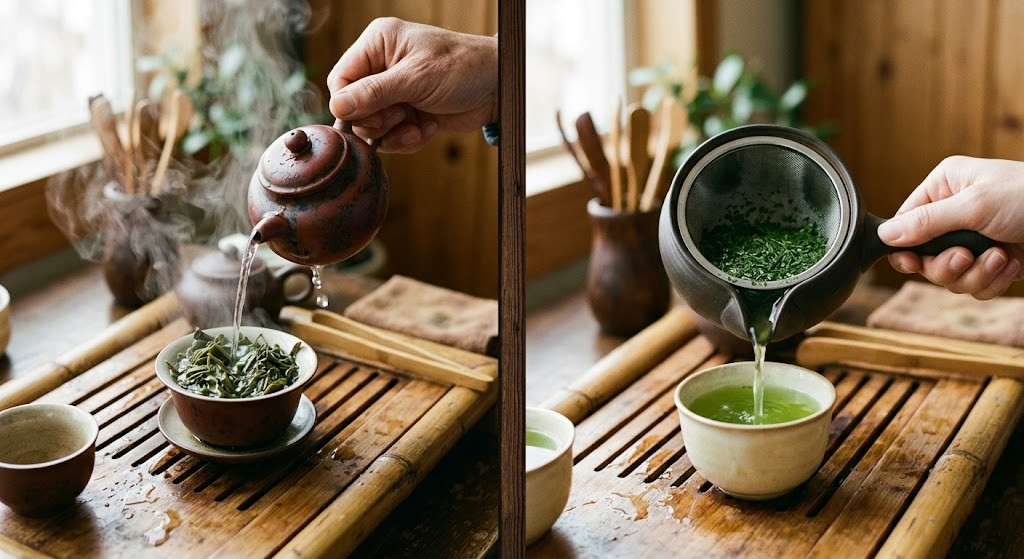
Green tea and white tea both require lower temperature water for brewing. Since a china teapot dissipates heat quickly, you can better control the temperature and prevent the tea from over-steeping.
Moreover, the smooth surface of a porcelain tea pot will not absorb the tea’s aroma, completely retaining the crispness and original flavor of the tea itself.
Key Features to Consider: Tea Pot Infusers & Aesthetics
The Convenience of a Tea Pot with Infuser

For modern tea drinkers, convenience is crucial.
A ceramic teapot with infuser (usually made of food-grade stainless steel or the same ceramic material) is an absolute perfect choice.
It allows you to easily brew premium loose leaf tea in a loose leaf tea pot without worrying about tea leaves leaking into your cup, perfectly blending the traditional Gongfu tea brewing method with the busy daily life of modern people.
Aesthetics and Glaze: Traditional vs Modern Designs
The style of your tea pot should complement your home decor.
The rustic, unglazed, natural look of a traditional ceramic teapot perfectly matches bohemian, rustic, or wabi-sabi styles.
Meanwhile, the classic luster of a white porcelain or bone china teapot can easily elevate the aesthetic of a modern minimalist or classic European kitchen.
Exploring Alternatives: Glass vs Porcelain Teapot & Cast Iron
Glass vs Porcelain Teapot: The Visual Experience
If comparing a glass tea pot with a porcelain tea pot, the glass tea pot is visually superior.
If you are brewing blooming tea, then a glass tea pot is undoubtedly the best choice, as enjoying the process of the tea leaves unfurling is a pleasure in itself.
However, the heat retention of a glass tea pot is very poor, and compared to a sturdy and elegant porcelain tea pot, a glass one is much more prone to breaking.
Cast Iron vs Ceramic Teapot: The Heavyweight Match
Cast iron teapots (Tetsubin) are famous for their durability and outstanding heat retention. However, they are extremely heavy and prone to rusting if not dried properly.
A ceramic tea pot, on the other hand, is much more suitable for daily use: they are lighter, easier to maintain, and possess equally excellent heat retention without the demanding upkeep of a metal tea pot.
Want to know the difference between a Chinese teapot and a Japanese one? Read: Chinese Teapot vs. Japanese Teapot: 4Differences You Need to Know
Final Verdict & Care Guide
Porcelain vs Ceramic Teapot: Summary for US Tea Lovers
Porcelain teapots can authentically restore the true flavor of the tea, while ceramic teapots will soften the tea liquor and add a mineral flavor.
If you want to brew aged teas like Pu erh or black tea, you can choose a ceramic teapot, as its pores help the tea liquor breathe and transform.
If you want to brew fragrant teas like green tea or white tea, you can choose a porcelain tea pot to prevent the aroma from being absorbed and diluted.
General choice: Thin-walled Zhuni (red clay) pottery can be used for Oolong tea, while white porcelain is suited for black tea to beautifully display the liquor color.
Want to learn more about how to choose teacups? Read: Porcelain vs Ceramic Teacups, Which Is the Best?
How to Clean a Teapot
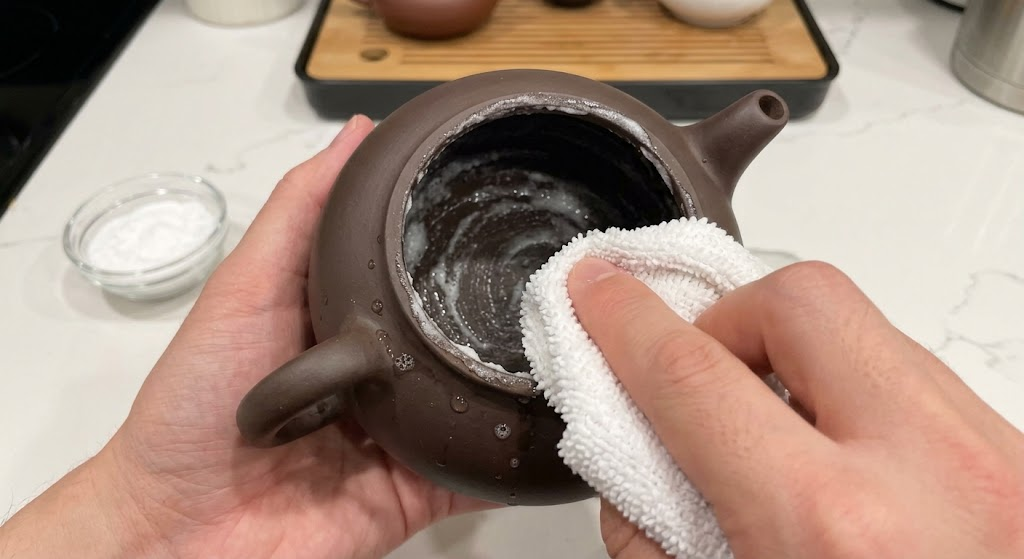
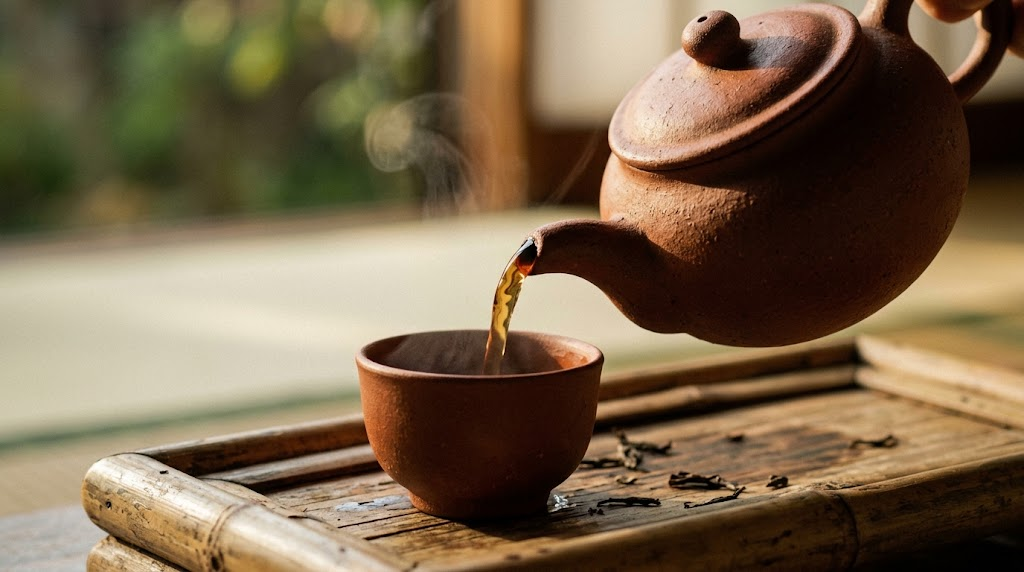
A ceramic teapot requires dedicating one pot to one type of tea to develop a patina. Avoid using dish soap, which destroys the pore structure.
A porcelain teapot is highly versatile, can be used for mixed brewing, and leaves no tea stains after steam sterilization.
Common taboos: Sudden cooling and heating will cause cracking, and leaving water inside for a long time easily produces scale.
Want to know how to clean the inside of your tea pot? Read: How Can I Clean the Inside of My Teapot?
Conclusion
Elevating your tea drinking experience starts with choosing the right vessel. Whether you are drawn to the rustic elegance of a clay ceramic teapot or prefer the refined grace of a white porcelain teapot, choosing high-quality tea pots can completely refresh your daily tea drinking experience.
Ready to upgrade your tea table? Browse OURIOO traditional teaware to find the perfect tea pot to pair with your next cup of tea.
FAQ
Which material is best for a tea pot?
The best material depends on your brew: choose unglazed ceramic for bold teas like Pu-erh that need heat retention, and non-porous porcelain for delicate green or white teas to preserve their fresh aromas.
Can you boil water in a porcelain teapot?
No, you should never heat a porcelain teapot directly on a stovetop as the direct heat will cause it to crack; always use a separate kettle to boil your water before pouring it into the tea pot to steep.