Blog
Gaiwan vs. Teapot: Which Vessel Is Right for You?


Table of Contents
Whether you are just starting to explore Gongfu tea brewing or looking to improve your daily tea brewing setup, choosing the right tea vessel is a crucial step. For every tea enthusiast, deciding between a gaiwan and a teapot is a necessary rite of passage. Although both are indispensable tools in the traditional Chinese tea ceremony, they offer vastly different brewing experiences, heat retention capabilities, and learning curves.
In this guide, we will detail the structural differences between a gaiwan and a teapot, explain the science behind heat control, and help you decide which loose leaf tea vessel truly deserves a spot on your tea tray.
What’s the Difference? (Gaiwan vs. Teapot Overview)
What Is a Gaiwan? The Anatomy of the Classic Chinese Lidded Bowl
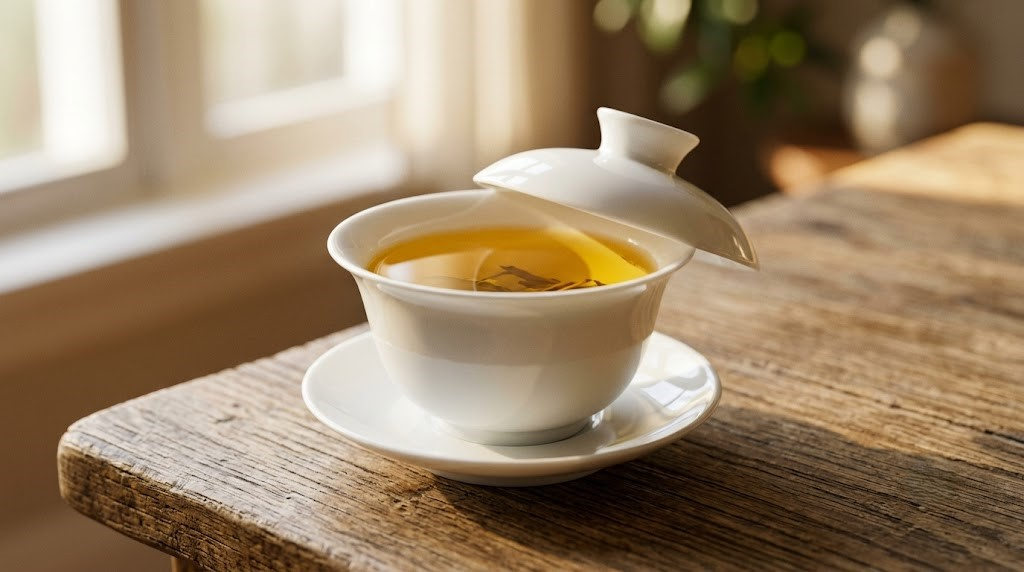
A gaiwan literally translates to “lidded bowl,” consisting of three parts: a bowl, a lid, and a saucer. The gaiwan shape features a unique design, mostly crafted from porcelain, with its classic flared shape—wider at the top and narrower at the bottom, allowing the lid to rest slightly inside the bowl.
Often hailed by tea lovers as the “universal teaware,” a gaiwan can be used to brew any type of loose leaf tea. The only drawback might be that beginners using a gaiwan can easily burn their fingers, and without proper control, the gaiwan can be easily tipped over.。
- White Porcelain Gaiwan: The ultimate all-rounder for beginners. It does not absorb aromas or flavors, is easy to clean, perfectly restores the original taste of the tea, and is universally suitable for all tea types.
- Celadon Gaiwan: Known for its warm, jade-like glaze, it is visually appealing and highly ornamental, making it particularly suitable for brewing green tea and yellow tea.

The Western & Eastern Teapot: From Western Teapots to Yixing Clay
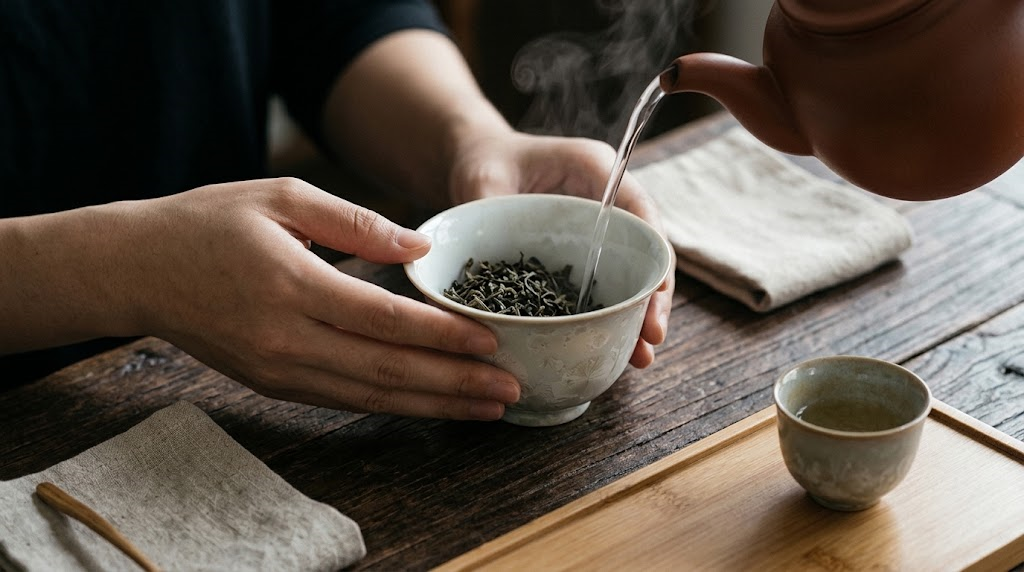
A teapot consists of a body and a lid. Common designs include overhead handle (lifting beam) and side-handle teapots.
Teapot shapes are highly varied, and the body is often decorated with exquisite patterns. When we talk about teapots, it is important to distinguish between Western and Eastern styles.
- Western Teapots: Mostly made of glass, porcelain, or metal, generally with a capacity of 500ml or more. They are suitable for immediate sharing among multiple people. The tea leaves can steep in the water for a long time, maintaining a stable concentration.
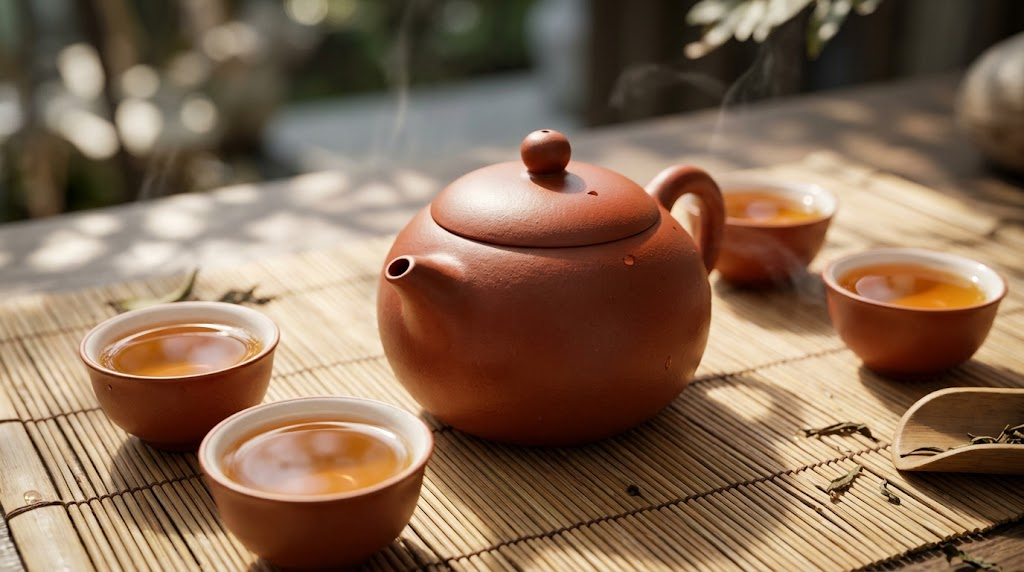
- Eastern Teapots: Mostly Yixing Zisha teapots or small porcelain pots, with a capacity of around 80-200ml. They are better suited for solo drinking or sharing among 1-3 people. Gongfu tea relies on fast pouring and multiple infusions to extract complex and evolving flavors.
Gaiwan vs. Teapot: A Side-by-Side Performance Comparison
Heat Retention & Temperature Control
- Gaiwan: The wider opening and thinner walls allow heat to dissipate more quickly; the aroma can also waft out along with the steam.
This rapid heat dissipation is actually very beneficial for delicate teas (like green tea or white tea) because these teas can easily become bitter if over-steeped at high temperatures.
To learn more about gaiwan wall thickness, please read: Gaiwan – Thick or Thin? How to Choose for Your Tea Ceremony
- Teapot: The enclosed space provides excellent heat retention, allowing the heat and aroma to be preserved for a longer time.
Compared to thin porcelain, clay teapots keep the water temperature extremely stable. This sustained high heat helps fully release the rich flavors of tightly rolled oolong teas and aged black teas.
Flavor Neutrality vs. Clay Seasoning

- Gaiwan: Mostly made of porcelain, primarily celadon and white porcelain. Celadon and white porcelain materials do not absorb any oils, aromas, or tannins.
They perfectly present the rich and diverse aromas of the tea leaves, making them ideal for brewing highly aromatic teas.
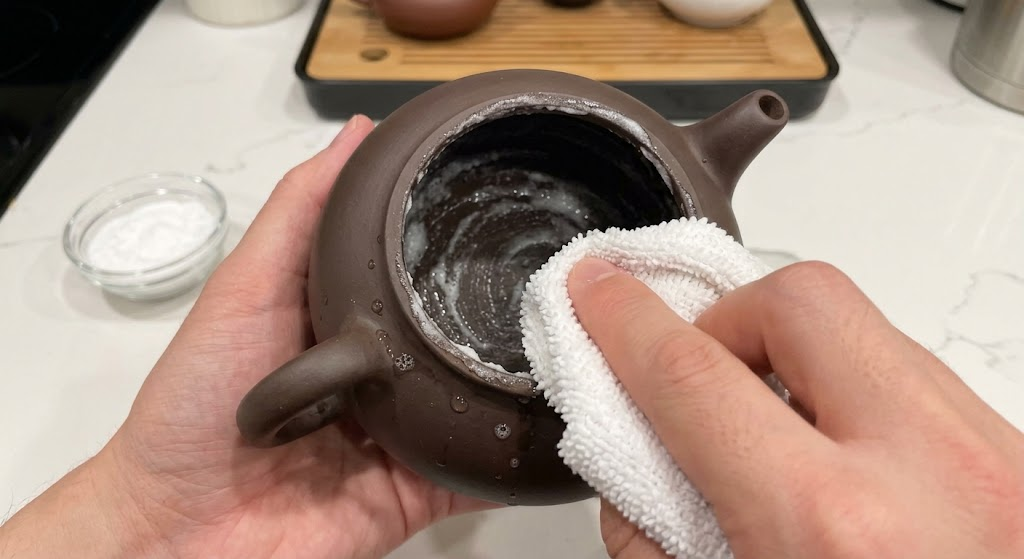
- Teapot: Yixing clay is highly praised for its natural porous characteristics, which allow the traditional Chinese teapot to gradually absorb the essential oils and flavor compounds from the tea leaves (Learn more from The Clay Studio). This “seasoning” process can eliminate the astringency of the tea and make the tea liquor taste richer and mellower.
However, because the clay absorbs flavors, a porous teapot is best dedicated to brewing only one type of tea.
Brewing Precision: Pour Speed and Leaf Observation
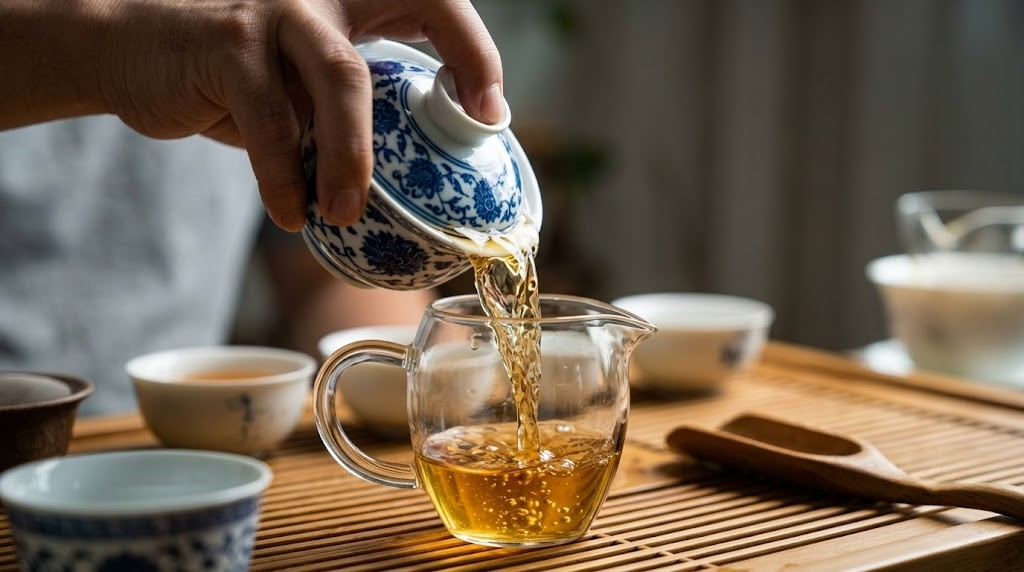
- Gaiwan: By adjusting the gap between the lid and the bowl, you can precisely control the pouring speed.
Due to its structure, the wide bowl opening allows you to pour out all the tea liquor in one breath within a short time. This makes it easy to observe the tea color, liquor hue, and wet leaves.
However, when pouring, tea leaves and debris can easily flow out with the liquid.
- Teapot: The water flow is mainly influenced by the spout, acting like a steady trickle, which requires sufficient pouring time.
The teapot is equipped with filter holes that can block some tea debris. However, to ensure a crisp and pure tea liquor, a tea strainer can still be added over the Gongdao cup (fairness pitcher).
To learn more about teapot pouring mechanics, please read: Guide to Perfect Yixing Teapot Pour: Stop Dripping and Sputtering
Learning Curve & Grip Safety (Avoiding Burnt Fingers)
- Gaiwan: It has no handle. You need to directly grip the rim to use it; Gongfu tea beginners might find it a bit difficult to handle at first.
- Teapot: It comes with a handle, making it easy to hold. There is almost zero risk of burning your fingers.

How to Choose: Which Vessel Fits Your Brewing Style
Choose a Gaiwan If You Want Versatility, Aroma Tasting, and Value
A gaiwan has a slightly higher learning curve and can easily burn your hands. However, its fast heat dissipation allows for better temperature control, and it is very easy to clean.
If you are an advanced tea drinker who pursues layers of flavor, enjoys tasting multiple tea types, and has a moderate budget, or if you can perceive subtle changes in tea flavors (for example, you enjoy Wuyi Rock Tea or Raw Pu-erh), then choosing a gaiwan to brew your tea is ideal.
To learn more about gaiwan usage, please read: How to Use Gaiwan Tea Set: Best Guide to Brewing Gongfu Tea
Choose a Teapot If You Want Convenience, Heat Retention, or Clay Craftsmanship
A teapot is easy to operate and beginner-friendly. It has excellent insulation performance but requires regular cleaning as it easily accumulates tea stains.
If you frequently drink aged or fermented teas, value the tactile feel and the experience of “raising” a clay pot, and enjoy a rich, mellow taste, then this type of teapot is the right choice for you.
FAQ
Is a gaiwan better than a teapot for beginners?
Structurally, it is more suitable (it doesn’t mix flavors and works universally for all tea types), but operationally, it is not as easy to handle and burn-proof as a teapot with a handle.
It is recommended to start with a 100-150ml white porcelain gaiwan to train your palate.
How do you prevent burning your fingers when using a gaiwan?
Never overfill the water (keep the rim of the bowl dry), and use the traditional “three-finger grip”—pinch the edges of the bowl with your thumb and middle finger, gently press the lid knob with your index finger, and pour the tea smoothly.



2 thoughts on “Gaiwan vs. Teapot: Which Vessel Is Right for You?”