
Blog
Chinese Teapot vs. Japanese Teapot: 4Differences You Need to Know

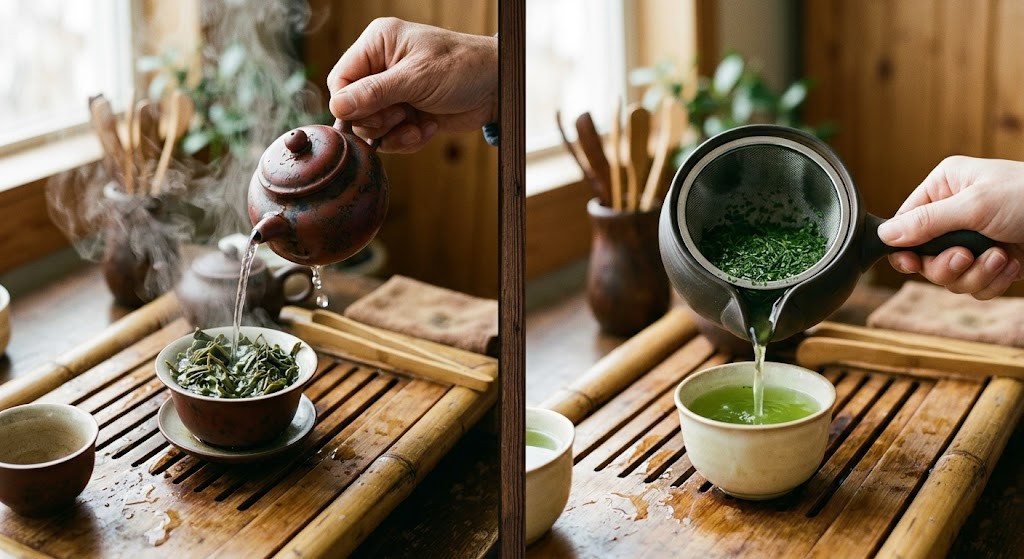
Table of Contents
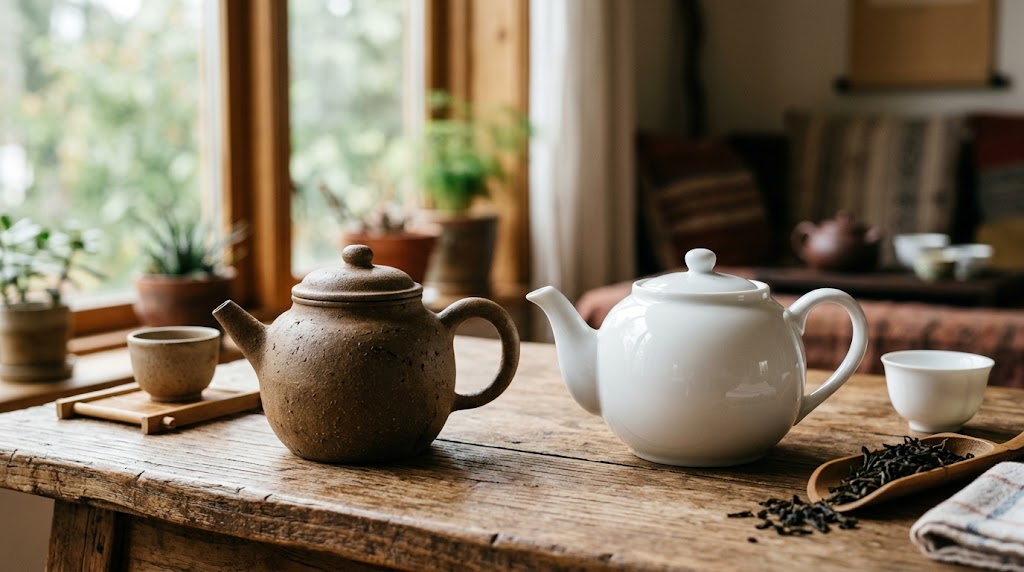
For tea enthusiasts, a teapot is never just a vessel—it is an instrument of flavor, a piece of living history, and the focal point of a daily ritual. If you are exploring the world of East Asian teas, you will inevitably face a choice between two legendary teaware traditions:Chinese teapots and Japanese teapots.
While both cultures share a deep reverence for the leaf, their teapots have evolved along completely different philosophical and functional paths.
Whether you are looking to brew a robust rock oolong or a delicate, umami-rich sencha, understanding these four core differences will help you choose the perfect tool for your tea table.
Material Science: Zisha Teapot vs. Precision Iron & Clay
The most fundamental difference between Chinese and Japanese teapots lies in the raw earth used to create them and how that material interacts with water and tea leaves.
Chinese Teapots: The Magic of Living Clay
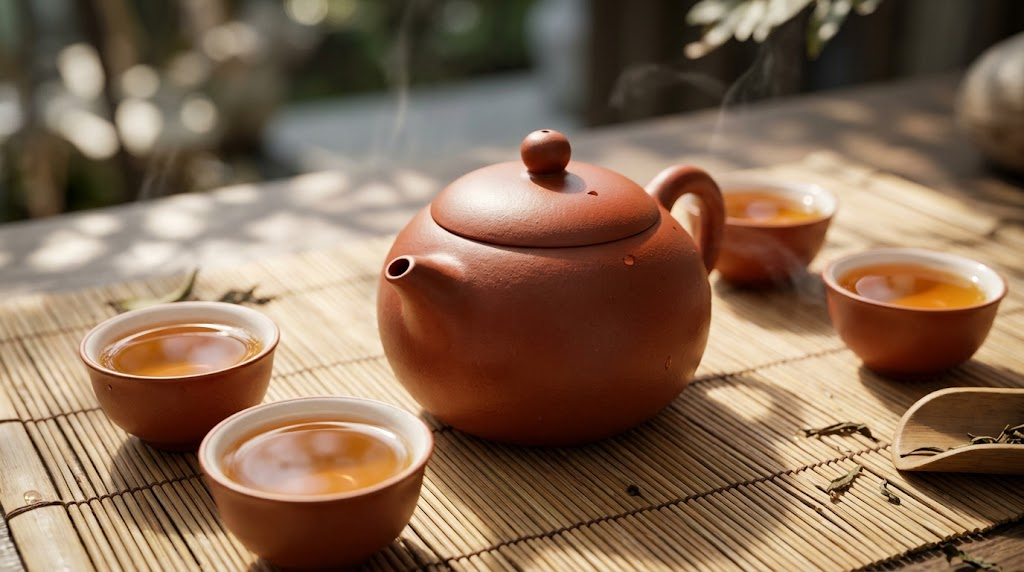
The crown jewel of Chinese teaware is the Yixing Zisha (Purple Clay) teapot, hailing from Jiangsu province.
- The Physics of Zisha: Yixing clay is unglazed and highly porous. On a microscopic level, it contains a dual-pore structure that allows the teapot to “breathe.”
- The “Seasoning” Process: Because it is unglazed, the clay absorbs the volatile tea oils with every brew. Over months and years, the teapot develops a glossy patina and actively rounds out the bitter notes of heavy-firing teas. For this reason, a Chinese Zisha teapot is traditionally dedicated to one specific category of tea (e.g., Raw Pu-erh, Ripe Pu-erh, or Roasted Oolong).
- Other Materials: China also relies heavily on Chaozhou red clay (excellent for high-aroma Dancong Oolongs) and inert porcelain (such asGaiwanwhich reflects flavor with absolute neutrality).
Japanese Teapots: Iron-Rich Earth and Cast Iron
Japanese teaware focuses heavily on mineral composition to balance the sharp, grassy notes of steamed green teas.
- Tokoname and Banko Clay: The most iconic Japanese clay teapots are Tokoname ware (often rich in iron oxide) and Banko ware (high in silica). The iron in Tokoname clay chemically interacts with the tannins in Japanese green tea, softening the astringency and amplifying the savory umami profile of sencha.
- Tetsubin (Cast Iron): While authentic, heavy Tetsubin are traditional kettles used strictly for boiling water (mineralizing it to make it sweeter), modern Japanese Tetsubin teapots feature enameled interiors designed specifically for brewing, offering incredible heat retention.
Anatomy and Design: The Physics of the Pour
You can spot the difference between a Chinese and Japanese teapot from across the room just by looking at the silhouette, particularly the placement of the handle.
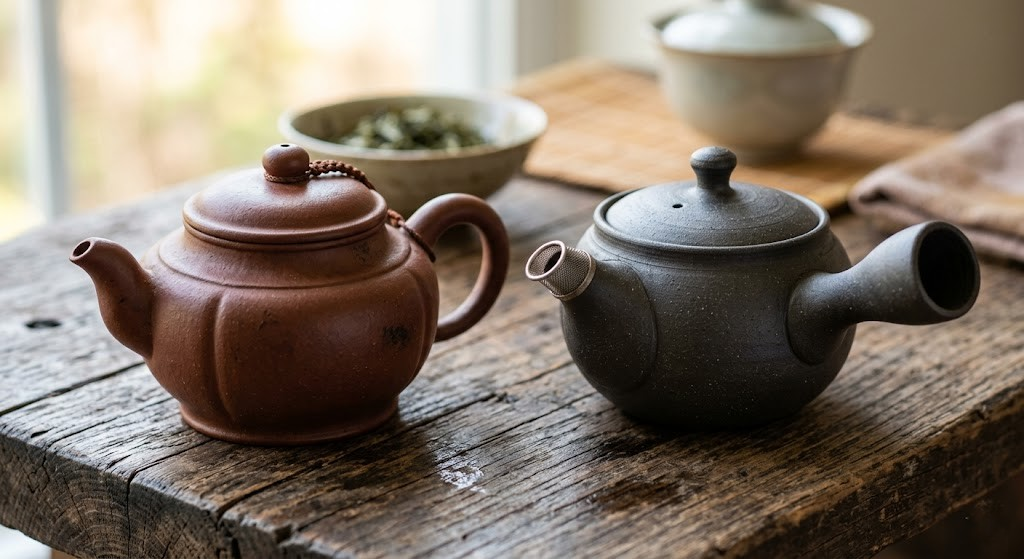
| Feature | Chinese Teapots (e.g., Yixing Zisha) | Japanese Teapots (e.g., Kyusu) |
| Primary Handle Style | Top/Rear Arched Handle: Traditional loop style (like the classic Shi Piao or Xian Piao shapes). Designed for a top-down grip using the thumb to steady the lid button. | Side Handle (Yokode Kyusu): A distinct handle protruding at a 90-degree angle from the spout, allowing a natural, ergonomic wrist-rotation pour. |
| Alternative Shapes | Overhead handle (Ti Liang). | Handleless (Houhin / Shiboridashi) for ultra-low temperature brewing; Rear handle (Ushirode). |
| Filter Infrastructure | Traditional ball filters or multi-hole wall filters drilled directly into the clay body. Optimized for larger, whole-leaf teas. | Fine stainless steel mesh liners (Obi-ami) or detailed ceramic mesh (Sasame) covering the inner spout to catch tiny, fragmented needle-like green tea particles. |
Brewing Philosophy: Gongfu Tea Ritual vs. Wabi-Sabi Precision
The physical design of these teapots directly dictates the tea ceremonies they were built to serve.
- Chinese Gongfu tea: Focuses on Evolution (High Leaf-to-Water Ratio, 5-10+ Short Infusions)
- Japanese Sencha-do: Focuses on Extraction (Precise Geometry, Uniform 2-3 Steeps)
Chinese Functionality: The Fluidity of Gongfu Tea
Chinese teapots are typically small, often ranging from 100ml to 200ml. They are designed for Gongfu tea (making tea with skill).
In this method, you pack a high volume of leaves into a small space and flash-brew them for 10 to 30 seconds, repeating the process for up to 10 or 15 infusions. The ergonomics favor quick, high-angle pours, repeated emptying, and splashing water over the exterior of the unglazed clay pot to maintain internal brewing temperatures.
Japanese Functionality: The Precision of the Kyusu
Japanese teapots are engineered primarily for steamed green teas (Sencha, Gyokuro, Fukamushi), which consist of fragile, needle-like leaves that break easily.
The signature side-handle Kyusu allows the brewer to pour with a gentle, rocking motion of the wrist. This ensures that the leaves inside sit flat and extract evenly without clogging the spout.
Furthermore, because Japanese green teas are brewed at much lower temperatures (60°C – 80°C / 140°F – 176°F), handleless designs like the Houhin or Shiboridashi can be held comfortably by the rim without burning your fingers.
Cultural Roots: Scholar Status vs. Zen Mindfulness
The aesthetic presentation of each teaware style stems directly from historical and philosophical foundations.
The Chinese Scholar Aesthetic
During the Ming Dynasty, Yixing teapots became the ultimate status symbols for scholars, poets, and officials.
They were viewed as collaborative art pieces. It is common to see Chinese teapots engraved with exquisite calligraphy, poetry, or landscape paintings.
The shapes often celebrate geometric symmetry, natural forms (like pumpkins or bamboo sections), and individual master craftsmanship.
The Japanese Zen & Wabi-Sabi Ethos
Driven by the principles of Chanoyu (the traditional tea ceremony) and refined by tea master Sen no Rikyū,
Japanese teaware embraces Wabi-Sabi—finding beauty in imperfection, simplicity, and natural rustic textures.
Many Japanese teapots feature asymmetric forms, natural wood-fired ash glazes, or unornamented matte finishes that quiet the mind and encourage introspection.
Which Teapot Should You Choose?
If you are stuck choosing between these two iconic styles, let your favorite tea leaves guide your decision:
Choose in a Chinese Teapot If:
- Your daily drinkers include Oolong (Anxi Tieguanyin, Wuyi Rock Tea, Dancong), Pu-erh (Raw or Ripe), or Dianhong Black Tea.
- You want a vessel that will grow with you, “memorize” your favorite tea, and develop a personalized seasoning over time.
- You enjoy the interactive, multi-steep rhythm of Gongfu tea brewing.
Choose in a Japanese Teapot If:
- Your primary teas are Japanese Green Teas (Sencha, Fukamushi, Gyokuro, or Genmaicha).
- You want a highly precise tool that catches fine leaf particles effortlessly and extracts clean, vivid green liquors.
- You lean toward a minimalist, rustic aesthetic and appreciate ergonomic, single-handed pouring mechanics.
Ultimately, both traditions offer a masterclass in how form meets function. Adding either a Chinese Zisha tea pot or a Japanese Kyusu to your collection is not just a structural upgrade to your brewing—it is an invitation to experience tea as it was meant to be savored.
FAQ
How should I prepare and “season” (open) a newly purchased Chinese Zisha teapot before its first use?
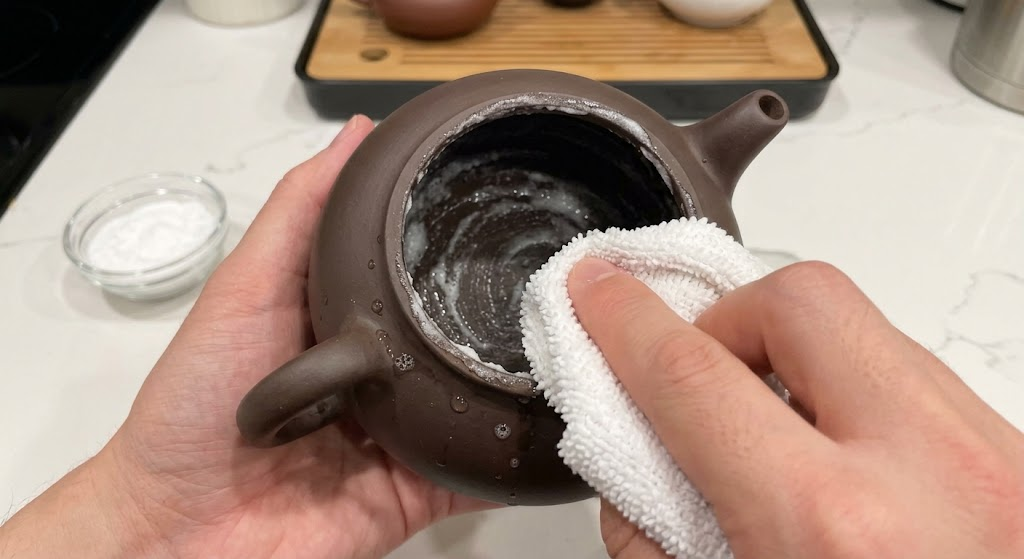
Traditionally, because Chinese Yixing teapots retain quartz sand and kiln ash during the firing process, they need to be thoroughly washed with clean water.
Then placed in boiling water with the type of tea you plan to brew, and simmered over low heat for 10-20 minutes (this is a streamlined, safer version of the traditional “tofu and sugarcane” method) to fully awaken the pores of the clay.
Can I use a Chinese Yixing teapot to brew Japanese sencha?
It’s not recommended unless you’re using a porcelain teapot with a glazed inner wall.
The internal holes or perforated mesh of traditional Chinese Yixing teapots are designed for whole, large Chinese tea leaves, which are easily clogged by broken leaves from Japanese green tea. This results in a very slow pour, and may even cause the green tea to over-brew, turn yellow, and become bitter.



2 thoughts on “Chinese Teapot vs. Japanese Teapot: 4Differences You Need to Know”