Blog
Spiritual Symbolism of Chinese Teacup Patterns


Table of Contents
When you hold a delicate Chinese teacup, you aren’t just looking at beautiful artwork—you are holding a piece of visual meditation. Every brushstroke on these vessels is deeply rooted in Taoist, Buddhist, and Confucian philosophies.
So, what do these intricate designs mean? From sacred guardians to the mesmerizing flow of kiln-fired glazes, this guide decodes the hidden spiritual language of traditional teaware, helping you choose the perfect piece for your gongfu tea ceremony.
Sacred Meanings of Chinese Porcelain Patterns
Lotus and Peony Floral Tea Cups
- Lotus: As one of the earliest decorative motifs on porcelain, it is also a quintessential religious symbol. It represents innocence, steadfast purity, loyalty in love, aloofness, and unworldly freedom. In Buddhism, it symbolizes the ultimate spiritual awakening and Zen tranquility—”rising from the mud yet remaining unstained.”
- Peony: Highly revered during the Tang and Song dynasties, the peony was regarded as the flower of wealth. Peony motifs are prevalent on gold, silver, and porcelain wares, signifying wholeness, deep affection, prosperity, and supreme elegance.This warmth and vitality can be tangibly felt when holding a 3D-sculpted Relief Peony Traditional Tea Set, where the soft dogwood pink gradient and multi-layered carved edges offer a calming, therapeutic visual experience while you sip.
Explore More: The Metropolitan Museum of Art (The MET) offers a fascinating look into how floral motifs like the peony have shaped Chinese decorative arts and porcelain history.
Dragons, Phoenixes, and Sacred Guardians
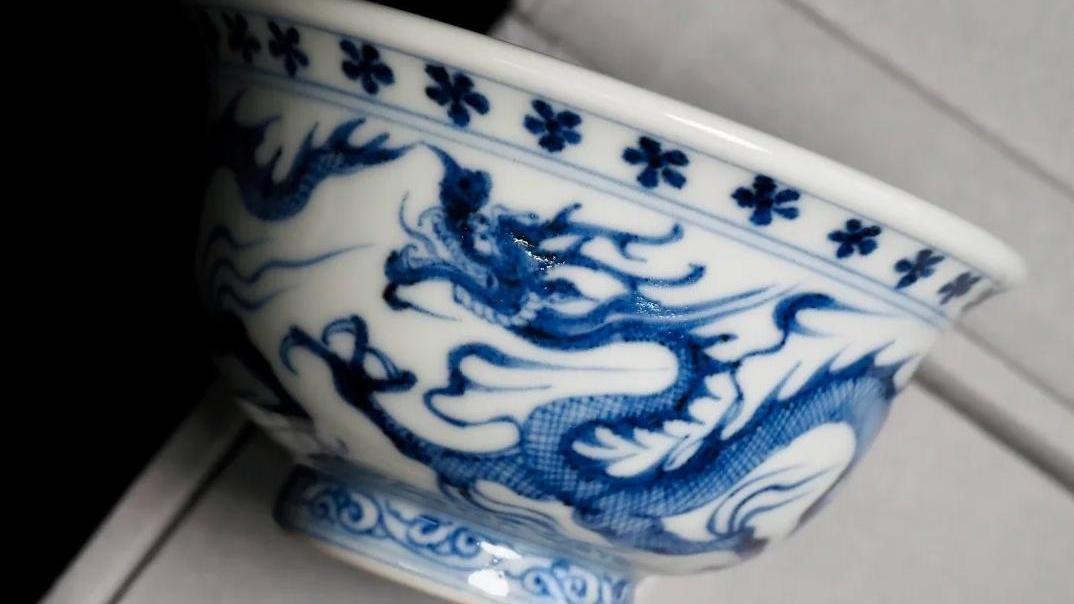
- Dragon: The dragon is the most iconic sacred beast in Chinese culture and the ultimate symbol of auspiciousness. Dragon patterns often feature smooth, continuous lines paired with cloud and water motifs, representing nobility, supreme authority, good fortune, and prosperity.
- Phoenix: Often appearing in pairs with the dragon, the phoenix symbolizes Yin-Yang harmony and family prosperity. In teaware decoration, the phoenix is depicted in graceful, outstretched postures, highlighting elegance and agility.
- Crane: Considered a fairy bird since ancient times, the crane represents self-cultivation and peaceful longevity. Crane teaware typically incorporates ample blank space and clean lines, offering a transcendent and unearthly aesthetic—like on a translucent Jingdezhen Porcelain Gongfu Tea Cup fired at a staggering 1360°C—the hidden patterns dynamically reveal themselves in the light, seamlessly blending ancient spiritual art with your everyday tea ritual.
Koi Fish and Zen Landscapes
- Koi Fish: Fish patterns are incredibly common in teaware, especially the koi. Often combined with water motifs and lotuses, these vivid scenes symbolize a continuous flow of good luck and abundance.
- Zen Landscapes (Shan Shui): A complete landscape pattern usually consists of mountains, water, clouds, and trees. The composition emphasizes the balance of density and blank space, allowing a small vessel to contain a vast, poetic atmosphere. With mountains and water relying on each other, heaven and earth unite, symbolizing balance, harmony, and the Taoist way of nature.
They invite the tea drinker to practice visual meditation, a tranquility you can experience directly when sipping from a Zen Landscape Tea Cup. As artisans use five shades of ink to compress vast mountains onto an exquisitely thin, magnolia-bud-shaped cup wall, the polished inner surface serves as the perfect reflective canvas for your tea’s vibrant colors.
Symbolism of Blue and White Porcelain
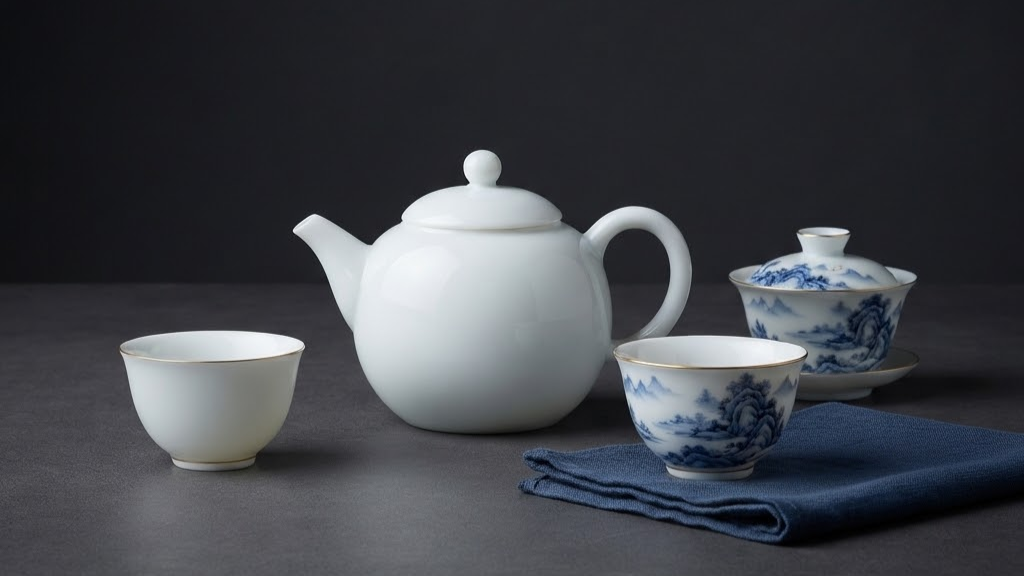
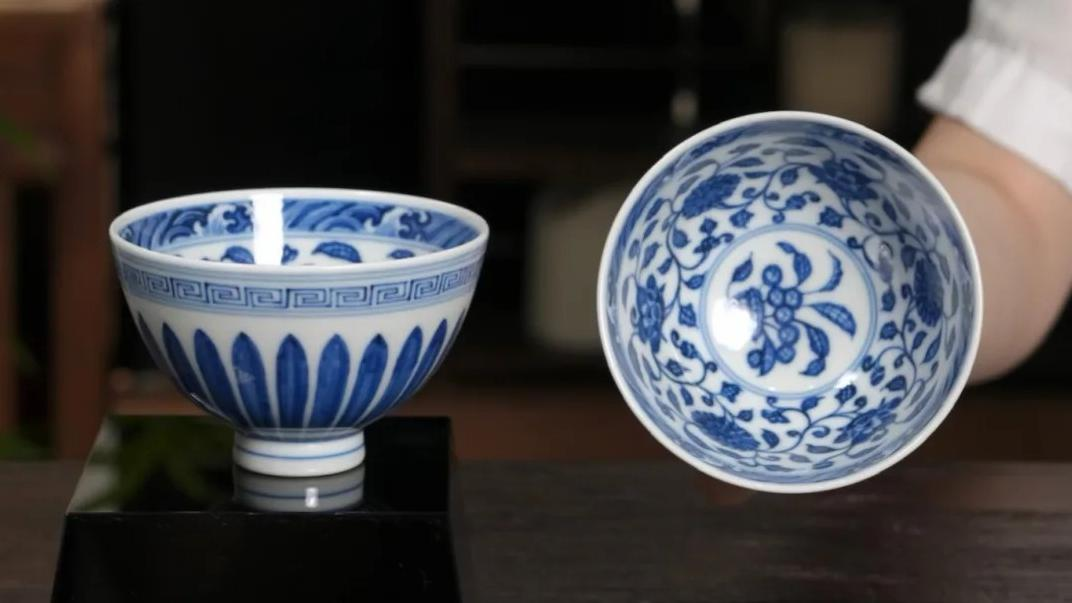
The Classic Blue and White Pattern
Blue and white porcelain is created using cobalt ore as the raw material. The decorative patterns are painted onto the ceramic body, covered with a layer of transparent glaze, and fired once at a high temperature in a reduction flame.
The charm of chinese blue and white porcelain lies in its flawless, pure white clay body, its brilliant stroke of bright blue, and its diverse array of blue white china patterns.
Did You Know? The iconic cobalt blue pigment used in these ceramics historically traveled along the Silk Road. Learn more about its global impact at The British Museum’s Asian Ceramics Collection.
The white clay body represents purity and Emptiness (Wuwei), while the cobalt blue motifs symbolize the deep universe, the sky, and still waters running deep. This perfect harmony of elements is beautifully preserved in authentic Jingdezhen Blue And White Tea Cups.
When underglaze red (Oxblood) dots the blue and white porcelain, it creates a striking interplay of red and blue—harmonizing subtle elegance with vibrant beauty, balancing warm and cool tones, and uniting stillness with motion.
Ice Crackle and Crystalline Glazes
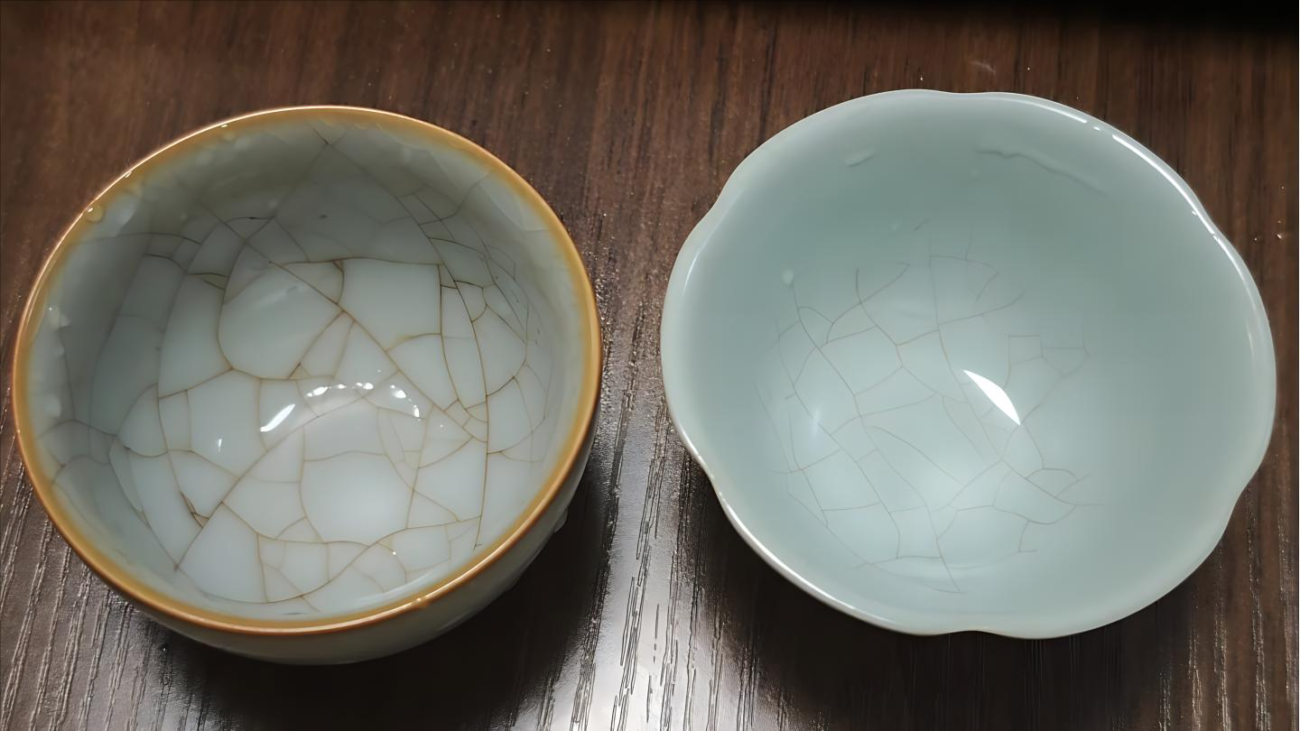
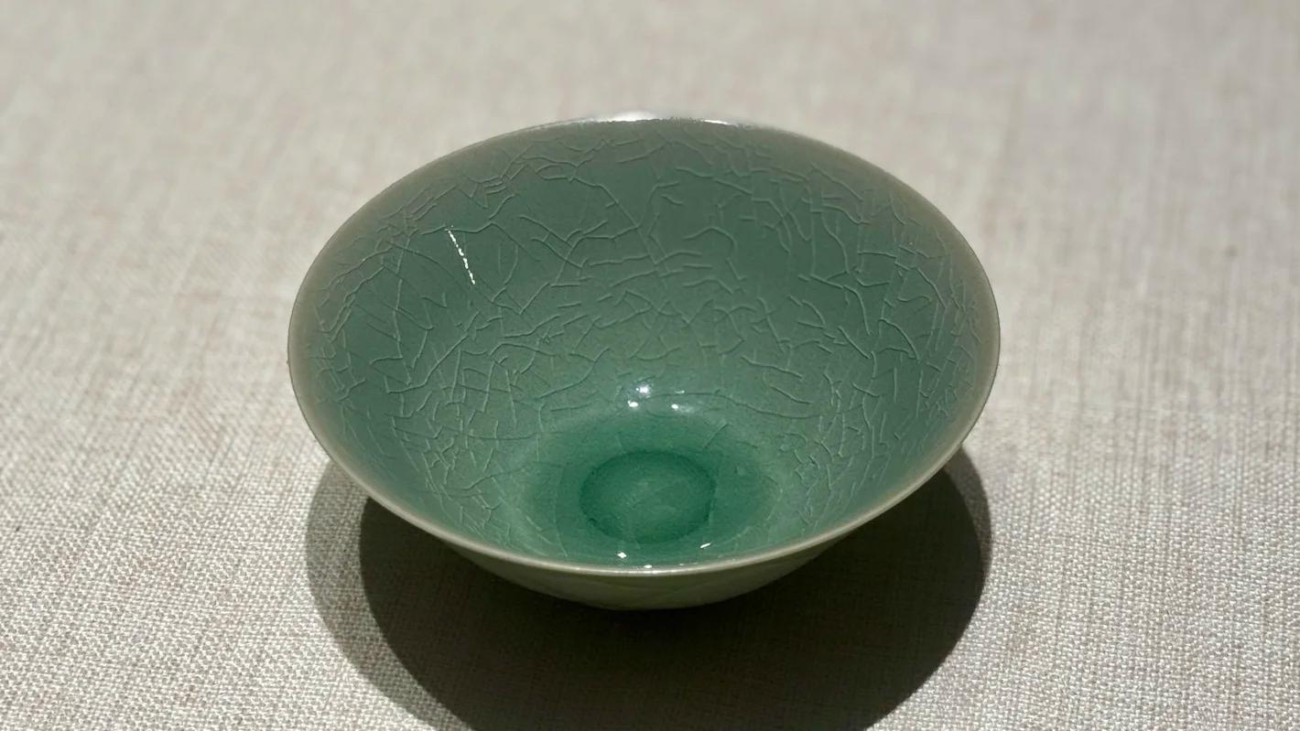
- Ice Crackle Glaze: This is a naturally occurring cracked texture on the porcelain glaze, primarily formed by the sudden cooling and cracking of high-temperature ceramics. The appearance of shattered ice that still maintains its overall structural integrity symbolizes an indomitable spirit and unbreakable resilience. Every sip from Handmade Tea Cups with Ice Crackle Kiln Glaze (wood-fired at 1300-1350°C) is a completely unique encounter with this unpredictable dance of fire and clay.
- Crystalline Glaze: This highly complex firing process coaxes natural, snowflake-like crystal blooms to form visibly on the surface. Because the kiln’s temperature is unpredictable, every crystal pattern is completely unique, symbolizing rarity, purity, and the wonderful beauty of natural transformation. Brewing with a Crystalline Glaze Ceramic Gaiwan not only retains heat perfectly with its dense porcelain body but adds profound visual depth to your ritual through these organic, snowflake-like textures.
Learn the Science: The intricate chemistry behind crystalline glazes and kiln transformations is a celebrated subject in modern ceramic studies. Read more about ceramic material science at The American Ceramic Society.
Choosing Teacups for Gongfu Tea Ceremony
Matching Patterns to Your Intention
How you choose a teacup can set the tone for your entire day:
- Morning Meditation & White/Green Tea: We recommend a thin-walled porcelain cup featuring a lotus or a blue and white landscape pattern to clear the mind and sharpen focus.
- Afternoon Inspiration & Oolong/Pu-erh: Opt for teaware adorned with dragon motifs, tortoiseshell glazes, or kiln-fired tiger-stripe crackles to gather your energy and enhance concentration.
- Gifting & Well Wishes: Peony patterns or Millefleurs (thousand flowers) enamel are highly recommended to convey feelings of abundance, gratitude, and prosperity.
Wondering which teacup pairs best with your favorite brew? Read What Kind of Teacup Brings Out the Best in Different Tea?
Gaiwan Tea Cups vs. Tasting Cups
A Gaiwan is deeply philosophical: the lid represents Heaven, the saucer represents Earth, and the bowl represents the Human in between.
When a sacred pattern (like a dragon or landscape) is painted on a Gaiwan, you are literally holding the harmony of the universe in your hands during the brewing process.
Tasting cups, on the other hand, are the vessels where you internalize that spiritual energy.
New to the Gaiwan? Read: How to Use Gaiwan Tea Set: Best Guide to Brewing Gongfu Tea
Elevate Your Tea Ritual Today
A Chinese teacup is far more than a vessel—it is a piece of heritage, a work of art, and a companion for your mindfulness journey. Whether you resonate with the Zen tranquility of a blue and white landscape, the resilience of an ice crackle glaze, or the prosperity of a hand-carved peony, the right pattern is waiting for you.
Explore our OURIOO Teacup and find the spiritual motif that speaks to your soul today.
FAQ
Why are Chinese tea cups so tiny?
Small cups ensure that the tea is consumed while it is at its optimal temperature and flavor peak. In Gongfu tea culture, taking multiple small, mindful sips from a tiny cup encourages you to focus on the evolving aroma and taste of each infusion, rather than simply quenching thirst.
How to hold a Chinese teacup?
For a tasting cup, use your thumb and index finger to hold the rim, and support the bottom with your middle finger. If holding a Gaiwan, place your thumb on the lid’s knob, your index and middle fingers on the flared rim of the bowl, and avoid touching the hot belly of the cup.