
Blog
What Is A Crackle Glaze?

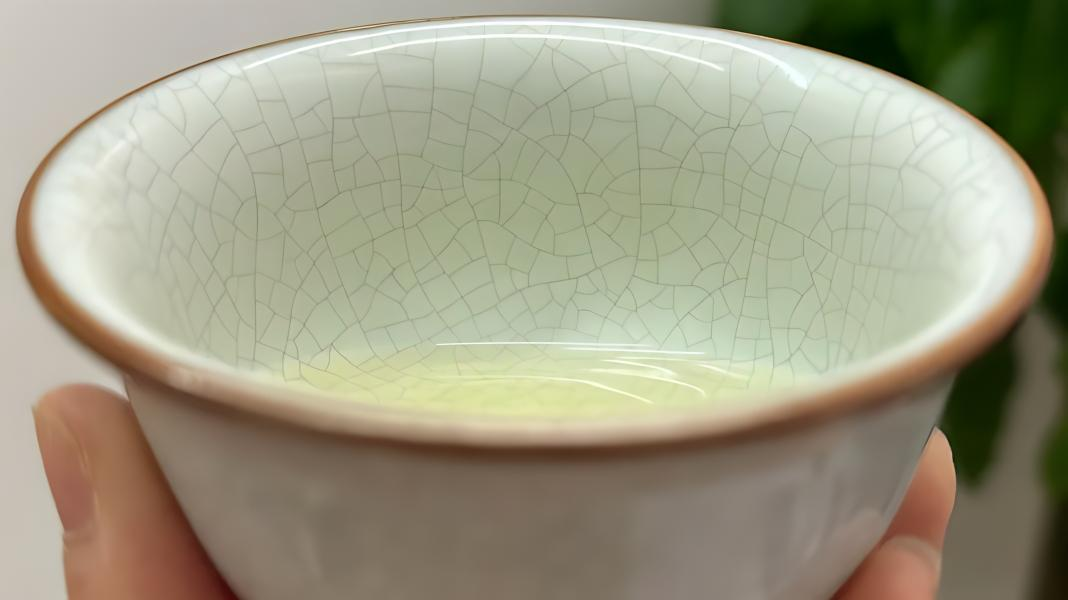
Table of Contents
A crackle glaze is a specialized ceramic firing technique in which fine surface fissures form as the glaze shrinks faster than the clay body beneath it during kiln cooling. Unlike a broken cup, authentic crackle lines sit entirely within the glaze layer, transforming thermal stress into a prized and unique aesthetic celebrated in fine ceramics and traditional Chinese tea culture.
If you are considering buying or using crackle glaze ceramics, two questions immediately come to mind: Is this a defect? And is it actually safe to drink from?
How Crackle Glaze Pottery Works
Crackle glaze pottery works by intentionally mismatching the thermal contraction rates of the clay body and the glaze layer. As the kiln cools, the glaze shrinks more than the rigid clay body underneath can accommodate, releasing accumulated tensile stress to form a controlled network of decorative cracks.
Thermal Expansion and Kiln Cooling: How the Crackle Pattern Forms
The essence of crackle is the natural fissuring caused by unsynchronized shrinkage rates between the glaze layer and the clay body after porcelain is fired.
The clay body is typically made from a blend of kaolin and porcelain stone, with a shrinkage rate of about 3%–5%; the glaze contains ingredients such as quartz and feldspar, with a shrinkage rate typically 1%–2% lower than that of the clay body.
When the kiln temperature drops to room temperature, the glaze layer is “pulled” by the clay body, generating tension that ultimately releases energy in the form of fissures, creating distinctive crackle glaze patterns.
Potters control glaze thickness, kiln atmosphere, and cooling speed to achieve two iconic visual styles of crackle glazes for pottery:
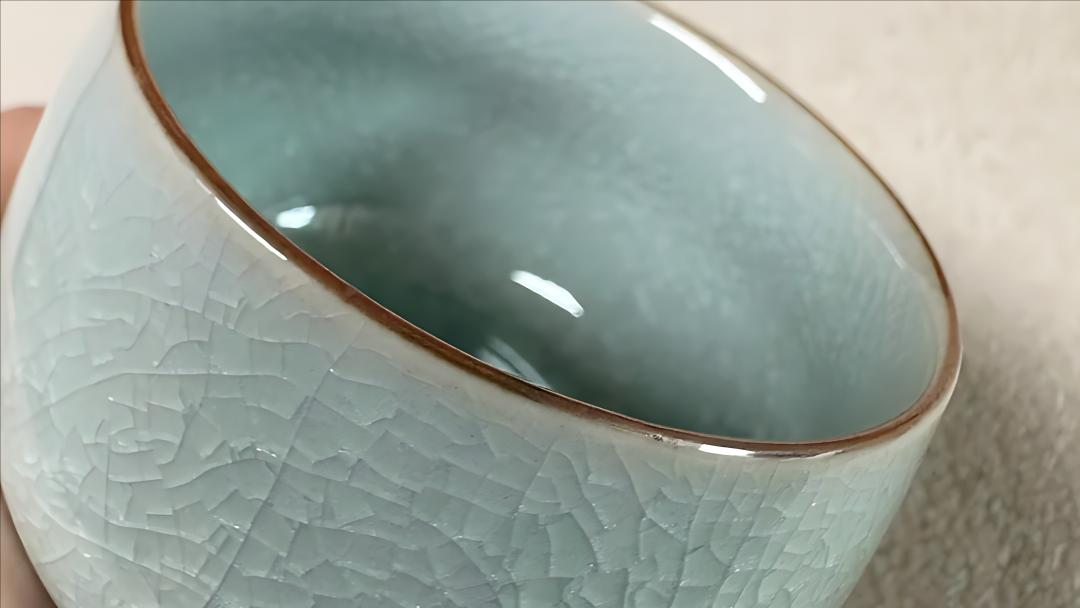
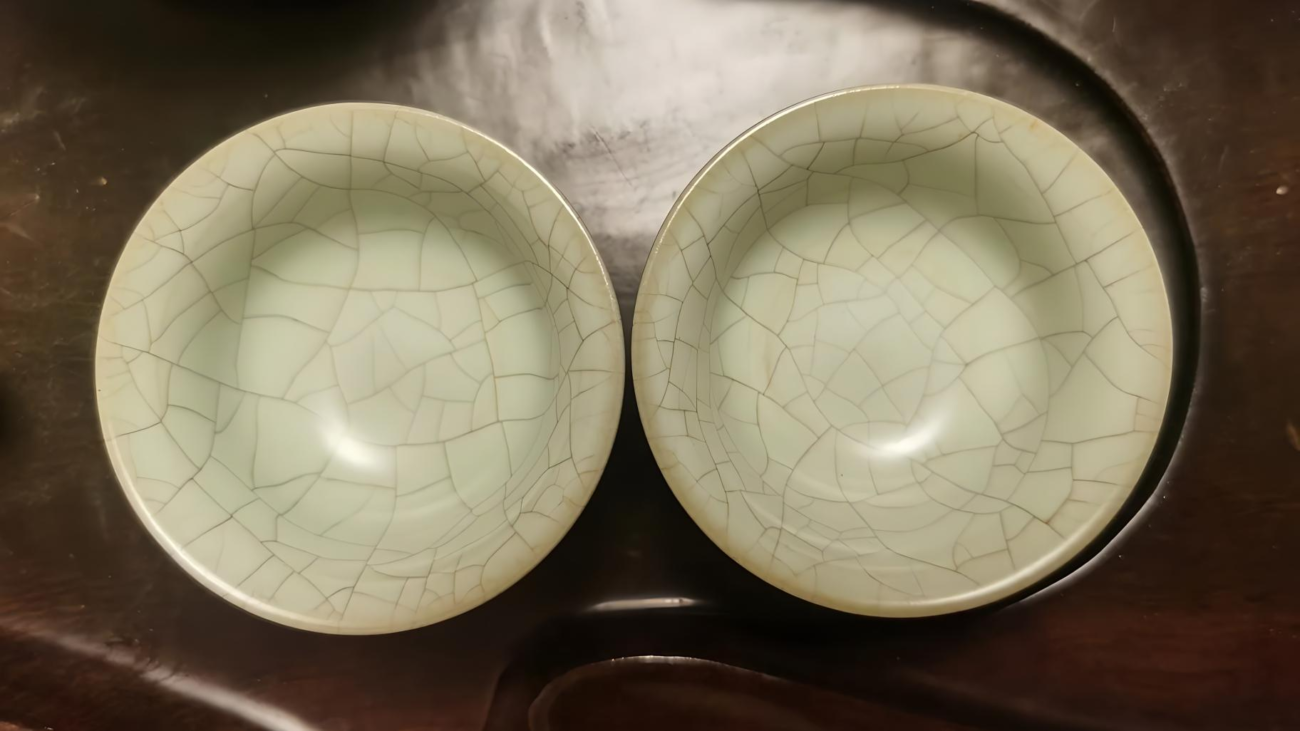
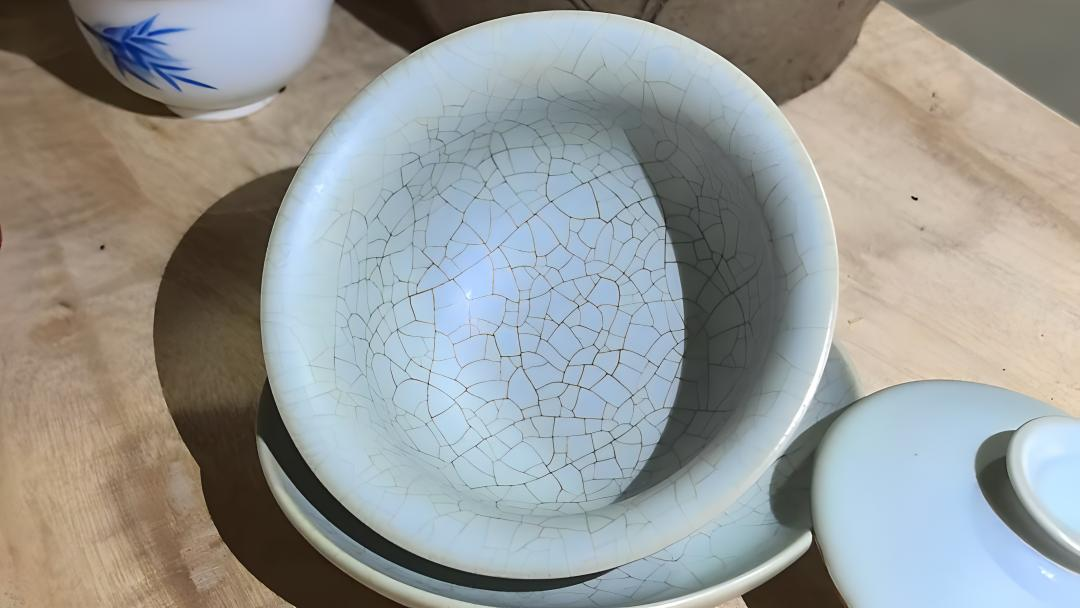
“Gold Thread and Iron Wire” is a layered network of bold dark fissures crisscrossed with fine amber lines. “Ice Crackle” consists of multi-dimensional, translucent fissures resembling shattered winter ice suspended deep within a thick glaze layer.
In traditional wood-fired pieces—such as Handmade Tea Cups with Ice Crackle Kiln Glaze fired between 1300°C and 1350°C—the interplay of open flame and thermal contraction ensures no two crackle webs ever repeat.
Intentional Crackle Glaze Ceramics vs. Accidental Crazing
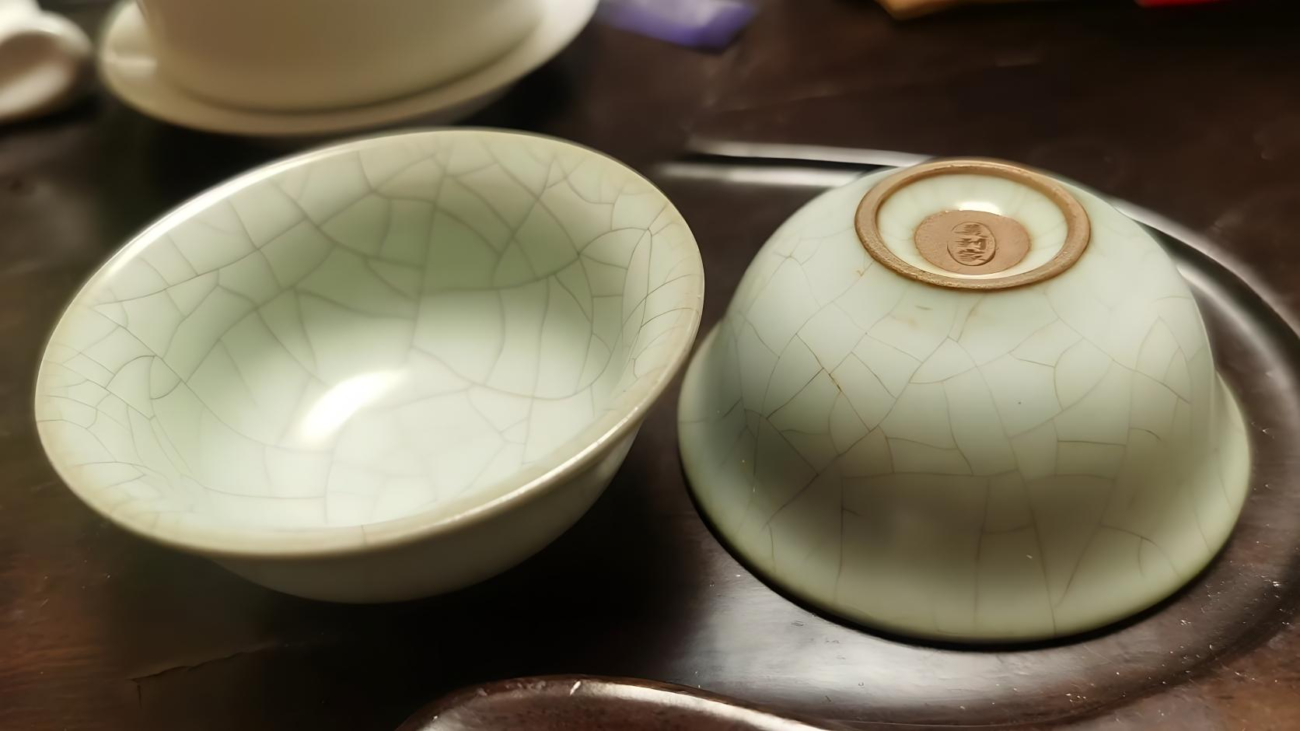
Intentional crackle is natural or crafted shallow fissuring in the glaze surface and serves as an aesthetic feature; structural breakage is a fracture through the clay body and constitutes physical damage.
Artisans during China’s Song and Yuan dynasties perfected the art of intentional crazing at legendary kiln sites such as Ru and Ge ware. As showcased in the Metropolitan Museum of Art’s collection of Ge ware porcelain, these alternating dark and light fissures are revered as the pinnacle of ceramic artistry rather than flaws.
Renowned Song Dynasty kilns such as Ru and Ge ware used crackle glaze as decoration, creating iconic patterns like “Gold Thread and Iron Wire” and “Crab Claw” without compromising structural strength.
Modern revivals of the Ge ware tradition uphold this exact philosophy. On an Ice Crackle Glazed Porcelain Gaiwan Tea Cup fired at 1300–1350°C, tiny iron spots, pinholes, or subtle variations in glaze thickness are natural hallmarks of kiln craftsmanship rather than defects.
Structural cracks are caused by external impact or knocks, penetrating both the clay body and the glaze and compromising the vessel’s structure.
High-Fire Porcelain Crackle vs. Raku White Crackle Glaze
Chinese high-fired porcelain crackle glaze ceramics are crafted for daily tea brewing; Western raku white crackle glaze ware is porous low-fire earthenware meant for display only.
High-fire porcelain crackle results from the release of tensile stress in the glaze layer caused by mismatched cooling shrinkage between the clay body and the glaze.White crackle raku glaze is a coarse earthenware technique that originated in 14th-century Arita, Japan, featuring diverse glaze colors; among them, raku white crackle glaze typically uses a white glaze base where shrinkage differences between clay and glaze form dense or sparse fissures on the surface.
Its crackle effect follows the same underlying principle as high-fire porcelain crackle, yet it remains distinct in glaze formulation, firing atmosphere, and cooling control.
Because Raku clay cannot reach vitrification temperature, it remains porous, fragile, and unsuitable for holding food.
By contrast, high-fired stoneware and porcelain (1300°C–1380°C) fuse into a dense, non-porous, glass-like body that can be used directly with boiling water.
Still deciding which clay surface best suits your brewing habits? Check out our guide: Glazed vs Unglazed Ceramic Teacups: Which Is Right for You?
Is Crackle Glaze Food Safe
Yes—if a crackled teacup is made from high-fired, vitrified porcelain coated with a lead-free glaze, it is safe for drinking plain tea. However, low-fired decorative crackle glaze pottery should never be used to hold food or beverages.
Food Safety, Vitrified Clay, and Everyday Durability
High-temperature sintering densifies the clay body, forming stable crystals such as mullite alongside a glassy phase that drastically reduces water absorption; meanwhile, lead-free glaze forms a continuous, low-surface-tension glass network at high heat that chemically bonds tightly to the body—working together to achieve both “watertightness” and “thermal shock resistance.”
Laboratory microscopy and bacterial testing published by Ceramic Arts Network confirm that while glaze fissures do exist, simply washing with hot water and drying thoroughly keeps porcelain hygienic for everyday drinking.
At the same time, avoid storing high-fat, strongly acidic, or dairy-based beverages in crackle glaze ceramics for extended periods, as these vessels can easily undergo chemical reactions, absorb contaminants, or release harmful substances, posing food safety risks.
Worried that an old mug in your cupboard might grow mold? Read our safety analysis: Can Mold Grow in a Cracked Ceramic Teacup? Safe or Toss?
Why Tea Stains Transform a Crackled Teacup Over Time
The fissures in an ice-crackle tea cup are so fine that water molecules can seep in and fill the cracks, making the lines appear to vanish. This is a phenomenon unique to ice-crackle teacups and an essential part of their artistic value.
Many tea lovers worry that darkened cracks mean the cup is dirty. In fact, for certain teas (such as Pu-erh and dark tea), it is completely normal for the crackle lines on a Chinese teacup to deepen in color.
However, if the color turns dull, murky, and develops an unpleasant odor, it indicates improper cleaning or oil contamination—you should stop using it immediately and clean it thoroughly.

Best Teas to Pair With Crackle Glaze Porcelain Teacups
To season an ice-crackle porcelain teacup into higher-value golden threads, choose suitable tea leaves—generally green tea, white tea, or oolong tea, whose liquor is relatively light with a subtle golden-yellow hue, deliver the best steeping results.
For black or other dark-toned ice-crackle tea cups, use dark tea, black tea, or Pu-erh for seasoning—note that ice-crackle teacups are most commonly made in light color palettes.
For example, a Black Ice Crackle Glaze Gong Dao Bei looks understated and deep when dry, yet reacts instantly upon meeting hot, dark tea liquor—revealing layered, rose-petal-like ice patterns, while its faceted body provides both an anti-slip grip and a smooth, jade-like hand feel.
How to Season, Care for, and Choose Crackle Glaze Ceramics for Gongfu Tea
To let crackle glaze ceramics accompany you through a lifetime of gongfu tea, dedicate each piece to a single tea family, rinse only with hot water, and avoid sudden temperature drops.
Step-by-Step Guide to Seasoning Your Crackle Glaze Teaware
Seasoning new porcelain: Soak the vessel in dark tea liquor such as Pu-erh or rock oolong for 24 hours so tea pigments penetrate the fissures; afterward, rinse with hot water after every session to prevent crusty tea buildup.
Avoid thermal shock: Crackle porcelain is sensitive to sudden temperature changes—when lifting it from your gongfu tea tray, rest it on a warm cloth first rather than placing it directly on a cold tabletop.
Daily Cleaning Habits to Protect Your Crackle Glaze
Skip the dishwasher and dish soap completely—hot water and air-drying are all your glaze needs.
Never use chemical detergents: Surfactants and synthetic fragrances seep into the fine fissures and ruin the aroma of future brews.
Rinse immediately after brewing: Rinse the vessel with hot water right after your gongfu tea ceremony to prevent dried tea stains from building up unevenly.
Air-dry upside down: Let the tea cup dry completely in a well-ventilated area—never seal a damp crackled teacup inside a closed cabinet or travel pouch.
Gentle deep cleaning: If staining becomes too heavy, soak the vessel in warm water with 1 teaspoon of food-grade baking soda, wipe gently with a soft cotton cloth, and rinse thoroughly.
What to Look for When Buying a Crackle Glaze Gongfu Tea Set
- Natural Crackle vs. Artificial Imitation
Authentic craft: The fissures resemble gnarled old tree roots—varying in thickness, branching organically, and offering a three-dimensional feel (like the classic Ru-ware “Crab Claw” pattern). For example, a Jun Ware Crackle Reactive Glaze Gaiwan undergoes 72 meticulous steps and is fired at high temperatures of 1350°C to 1380°C, resulting in flowing, agate-like glaze layers.
Fake imitations: The lines look ruler-straight and rigid like temporary tattoos, and the color rubs off when wiped firmly.
- Sound Test
Light fingernail flick: Natural crackle rings like an ancient guqin (“dong~”), while artificial knockoffs sound like a plastic bowl (“clack!”). Ge-ware “Gold Thread and Iron Wire” crackle can even produce a crisp, metallic shimmer!
- Fingernail Scratch Test
Natural fissures: No powdery residue comes off when scratched; the cracks sit deep beneath the glaze surface.
Chemical glazes: Flakes off like dandruff when scratched and gives off a pungent odor.
- Tea Soak Test
Genuine crackle: Tea liquor seeps into the fissures, revealing “Gold Thread and Iron Wire” lines after 24 hours—like tattooing your gongfu tea set.
Fake crackle: Even after soaking in tea for three days, the lines remain starkly, artificially white.
FAQ
What is crackle glaze made of?
Crackle glaze is made from standard ceramic minerals, including silica (glass former), alumina (stabilizer), and a high proportion of alkali fluxes such as feldspar or nepheline syenite.
Does kiln ice glaze run?
No—standalone kiln ice crackle glazes for pottery are specially formulated to stay stiff and will not run on their own.