

Blog
How to Pouring Water into A Gaiwan: 5 Methods for Beginners

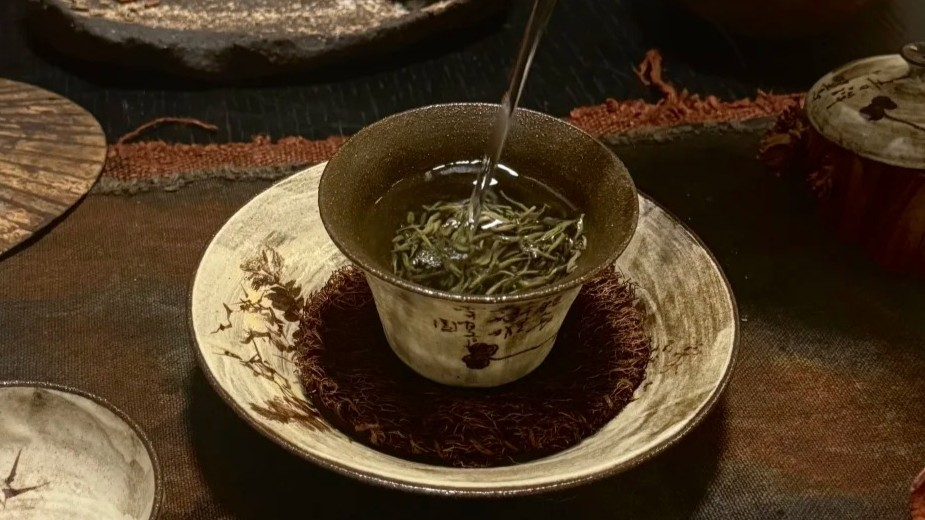
Table of Contents
Many beginners focus entirely on water temperature or tea to water ratio, completely overlooking a crucial variable: the pouring method. The speed, height, and angle of your water stream directly dictate the extraction efficiency of polyphenols, caffeine, and aromatic compounds.
In this comprehensive guide, we will explain exactly how water dynamics affect your brew, share five essential pouring techniques, and help you avoid the dreaded “burnt fingers” that plague every novice.
Why Gaiwan Pouring Mechanics Matter for Gongfu Tea
The Thermodynamics of Your Gaiwan Design
A standard gaiwan features an inverted cone shape—wide at the top and narrow at the bottom. This elegant geometry, perfected over centuries, solves the core challenge of tea brewing: ensuring optimal and even water contact.
When hot water is poured into a gaiwan like the Sancai Glazed Porcelain Gaiwan , the stream naturally forms a vortex along the sloping walls, causing the tea leaves to tumble evenly. This tumbling is not chaotic; it follows a circular motion along the wall, allowing every single leaf to hydrate evenly and release a uniform flavor.
In contrast, a standard tea pot often creates dead zones where bottom leaves over-steep while top leaves remain dry.
Water Temperature vs. Tea Leaf Type
Your pouring speed acts as a temperature regulator. According to research published by the National Institutes of Health (NIH) on tea extraction, water temperature and agitation significantly alter the release of antioxidants and aromatics.
Fast Pour (High Agitation): A rapid, forceful stream tumbles the leaves aggressively in high heat. This rapidly extracts high-boiling-point aromatic compounds, resulting in a highly fragrant, robust cup.
Slow Pour (Gentle Extraction): A soft, slow stream keeps the leaves relatively still. The internal compounds dissolve gently layer by layer, enhancing the thickness, sweetness, and layered mouthfeel of the tea upon decanting at a slightly lower temperature.
How to Pouring Water into A Gaiwan: 5 Methods for Beginners
If you are searching for exactly how to pouring water into a gaiwan: 5 methods for beginners, mastering these five specific fluid dynamics will instantly elevate your tea brewing experience.
Method 1: The Ring Pour (Circular Motion for White & Green Tea)
The water stream flows smoothly along the inner edge of the gaiwan in a continuous clockwise circle.
If your kettle has a high flow rate, rotate quickly; if you are using a gooseneck kettle with a slow pour, rotate slowly to ensure at least one full circle to wet all the leaves.
The hot water cools slightly as it travels down the porcelain walls, protecting delicate buds from being scorched. For advice on heat retention, read: Gaiwan – Thick or Thin?
This method is highly recommended for Silver Needle white tea, delicate green teas, and Jasmine pearls.
Method 2: The Center Strike (High Pour for Oolong)
Elevate your kettle and target a fixed point near the edge of the gaiwan. The high drop creates powerful kinetic energy, forcing the tea leaves to tumble vigorously from top to bottom.
The high-temperature initial contact and increased friction with the air instantly awaken deep aromatic profiles that rush to the nose.
It is the perfect technique for highly aromatic teas like Tieguanyin or Dancong Oolongs.
Method 3: The Wall Pour (Gentle Edge Pour)
Keep the kettle spout close to the rim of the gaiwan and pour slowly into one fixed spot along the wall.
This allows the water to gently engulf the leaves, resulting in a much softer brew and preventing over-extraction and bitterness.
It is ideal for broken leaf grades or when using a high leaf-to-water ratio. Wondering about ratios? Check out: How Much Tea Is in a Gaiwan?
Method 4: The Fixed Point Pour (Consistent Extraction)
Bring the spout as close to the tea leaves as possible and pour a steady, slow stream directly into the dead center. This forces compressed teas to open up from the inside out, allowing the flavor to diffuse steadily.
This is the preferred method for compressed cakes like Aged White Tea, Puerh tea or Zhangping Shui Xian.
Method 5: The Spiraling Pour (Full Agitation)
The spiral pour technique. Begin pouring in the center of the leaves, slowly spiraling outward to the edge of the bowl, and then spiral back into the center.
This top-down shower ensures that fluffy, lightweight teas that tend to float receive immediate and equal hydration for faster flavor release.
Use this method for loose white teas or raw (Sheng) Puerh maocha.
Essential Teaware to Pair with Your Gaiwan
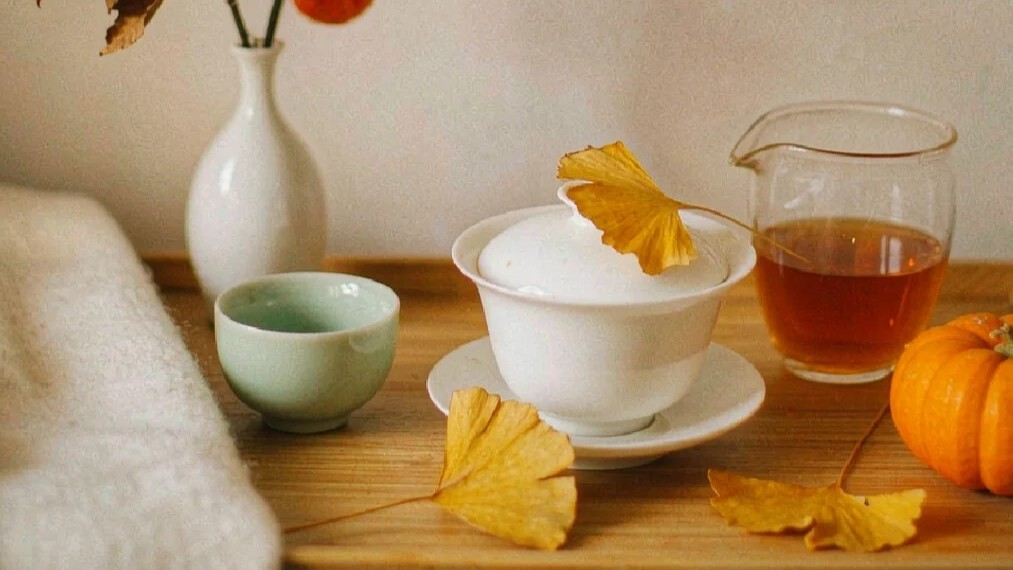
As noted by industry experts at Serious Eats in their comprehensive guide to Gaiwan brewing, the gaiwan is only one half of the gongfu tea ceremony. To maximize your pouring techniques, proper companion teaware is non-negotiable.
Using a Fairness Cup (Gongdao Bei) for Even Distribution
In Gongfu tea, decanting timing is critical. You must pour the brewed tea from the gaiwan into a Fairness Cup (Cha Hai) before serving it into individual cups.
If you were to pour directly from the gaiwan into three separate cups, the first cup would be weak and watery, while the last cup would be dark and bitter.
A vessel like the Rustic Flower Rim Cha Hai equalizes the brew, ensuring every guest receives the exact same flavor profile.
Choosing Traditional Tea Cups (Tasting Cups)
The shape of your tasting cup amplifies the aromas you worked so hard to extract.
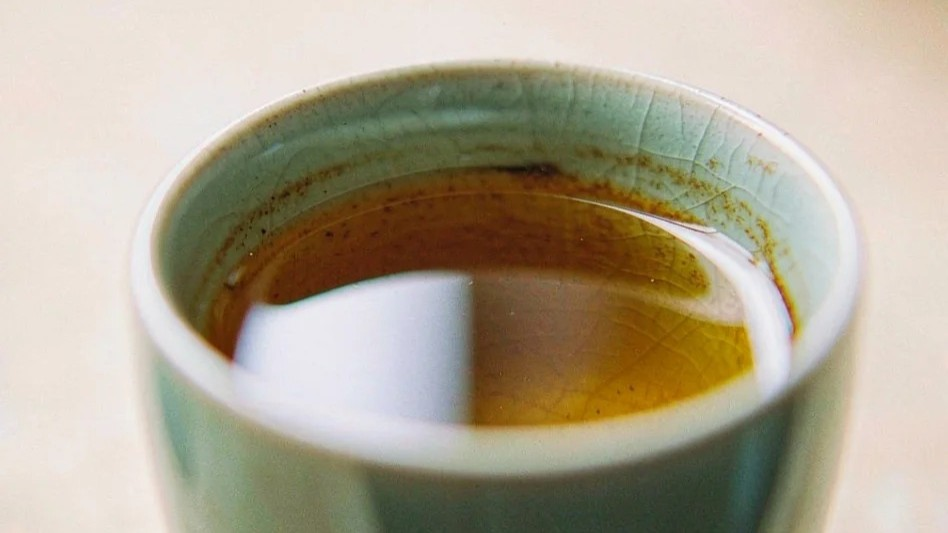
Traditional Chinese porcelain cups are designed with slightly flared rims to deliver the tea to the perfect zone on your palate while trapping aromatics in the bowl.
Historically, as seen in the vast Asian ceramics collections at the Smithsonian National Museum of Asian Art, blue and white porcelain has been the gold standard for appreciating the true color of the tea liquor.
Pair your setup with authentic Blue And White Porcelain Handmade Tea Cups for a complete sensory experience.
Common Beginner Mistakes When Pouring from a Gaiwan
Burning Your Fingers (The Finger Placement Trick)
The Three-Finger Grip (Sancai Grip): Place your thumb and middle finger exclusively on the flared outer rim, and let your index finger rest lightly on the lid knob, forming a stable triangle. For more details, read: How to Use Gaiwan Tea Set
Do Not Touch the Bowl: The thin porcelain belly transfers boiling heat instantly; never touch the main bowl to avoid getting burned.
Do Not Hook the Knob: Your index finger should only gently press the lid; do not press deeply into the hollow of the knob, as steam gathers there.
Over-Steeping and Uneven Pours
Your steeping time begins the second water hits the leaves, not when you finish pouring.
A true “flash steep” requires the entire process—from the start of your pour to the final drop decanted into your fairness cup—to be completed in 7 to 8 seconds.
If your water pour was too slow, or you fumbled with the lid and took 15 seconds to decant, simply compensate by shortening the steeping time of your next infusion to prevent the tea from turning bitter.
FAQ
How much tea do I put in a gaiwan?
It is recommended to use closer to 5 grams for rolled oolongs that need room to expand, and up to 8 grams for dense, dark teas like Puerh.
How big should my gaiwan be?
For beginners, a gaiwan with a capacity of 100ml to 130ml is highly recommended. It fits comfortably in one hand, reduces the risk of burns, and is the perfect volume for solo drinking or sharing with one to two friends.