Blog
What Tea to Use for Gongfu Tea? Guide for Your Tea Ceremony

Table of Contents
Beginners often ask: what tea should be used for tea gongfu? Not all tea leaves are suitable for this traditional brewing method. The secret lies in selecting the right tea leaves and pairing them with the right gongfu tea set.
Whether you are trying this style tea brewing for the first time, or looking to elevate your daily tea drinking experience, this ultimate guide will take you through the best teas, essential techniques, and the perfect gong fu tea equipment to help you fully enjoy your fragrant tea journey.
The Essence of Gongfu Tea: Why the Right Tea Matters
What Makes a Tea Suitable for Gongfu Tea
Unlike Western brewing methods, gong fu tea requires whole-leaf tea that can withstand multiple infusions.
When brewed, whole-leaf tea releases its contents more evenly, with clearer aromatic layers, significantly less bitterness than broken tea, and a more pronounced sweet aftertaste.
Intact leaves are more durable for brewing than broken tea, allowing for multiple water refills; the flavor profile of each steep is also richer, ultimately offering better value for money.
Want to learn how to brew gongfu tea? Please read: The Ultimate Gongfu Tea Brewing Guide
Teas to Avoid in Your Tea Gongfu Practice
Avoid using broken leaves, tea bags, or overly tender green teas that easily and quickly produce bitterness at high temperatures.
Broken leaves and tea bags: These will release tannins too quickly, resulting in an overly astringent and bitter first steep.
Delicate early spring green tea: Highly delicate green teas are easily “cooked” in the high temperatures and enclosed spaces of gong fu tea ceremony brewing, becoming bitter and hard to swallow.
Best Types of Tea for a Traditional Gongfu Tea Ceremony
Oolong Tea: The Heart of Gongfu Brewing
The semi-fermented nature of Oolong tea gives it the richest flavor variations across multiple steeps, making it the classic first choice for gong fu cha.
Premium Oolong tea, such as the highly floral Tieguanyin or roasted Wuyi Rock Tea, is rich in substance and highly durable, gradually releasing different layers of aroma and taste across multiple gongfu tea infusions.
From the soaring orchid aroma of the first steep to the mellow sweet aftertaste of subsequent ones, it perfectly matches the core requirement of “slow brewing and careful sipping” in gongfu, making it the top tea choice for beginners.
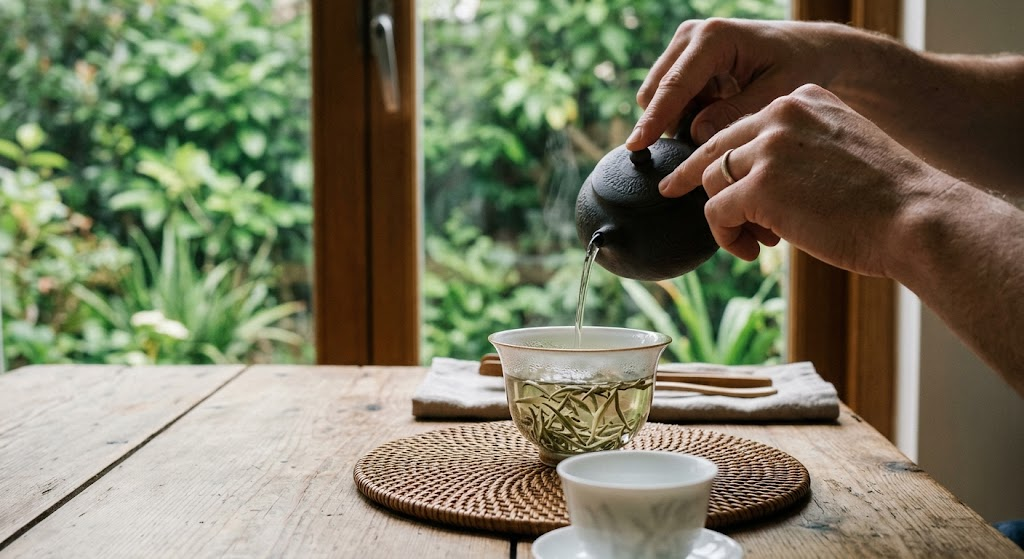
Pu erh Tea: Deep Flavors for Your Gongfu Tea Set
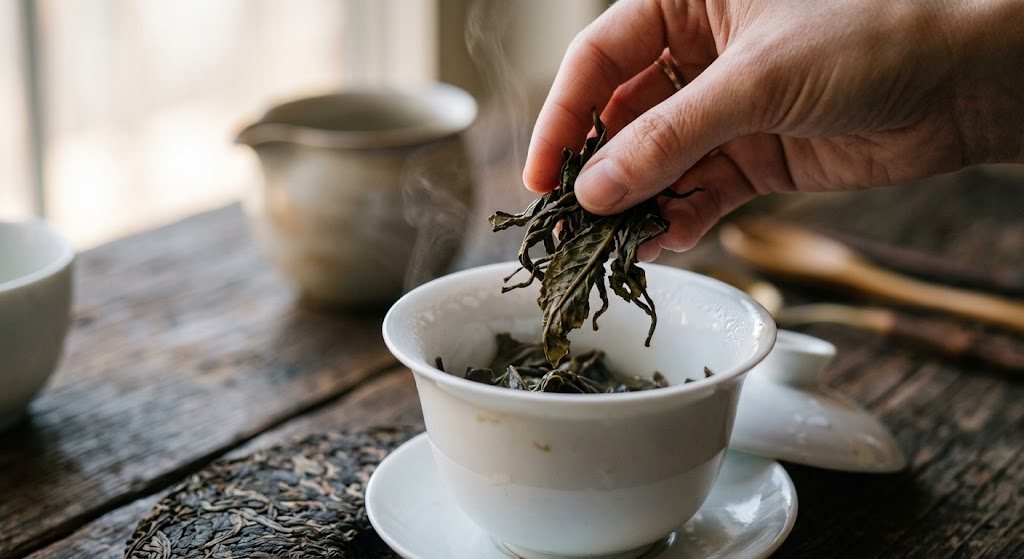
Ripe Pu erh tea, a fully fermented tea, is also highly suitable for tea gongfu.
Raw Pu erh is the “natural growth type,” transforming slowly over time and growing more fragrant as it ages; ripe Pu-erh is the “artificially matured type,” with its flavor profile largely set upon leaving the factory, requiring no long wait.
Having undergone full fermentation, ripe Pu erh tea offers a mellow, mild taste with low astringency; using the gong fu tea brewing method can stimulate a richer honey and aged aroma.
It can maintain a stable sweetness even after multiple infusions, making it ideal for tea lovers who prefer a thick, heavy flavor.
For more on the science of tea oxidation and fermentation, check out this guide by the Tea Association of the U.S.A.
Black & White Teas: Expanding Your Gong Fu Cha Experience
Do not limit yourself to Oolong and Pu-erh teas. Premium Chinese black teas (like Lapsang Souchong) and white teas (like Silver Needle) also perform exceptionally well in gongfu tea ceremony brewing.
Using high temperatures and extremely short steeping times (flash brewing), these teas reveal a unique sweetness, malt aroma, and delicate floral scent—flavors that often disappear in a standard Western teapot.
Matching Your Tea with the Right Gongfu Tea Set
Chinese Tea Cups and Gaiwans for Light Teas
For light, highly aromatic teas like Oolong and white tea, a porcelain Gaiwan paired with small chinese tea cups is the best combination.
The core of a traditional Gaiwan lies in its ability to quickly and thoroughly separate the tea liquor from the leaves, preventing the leaves from being stewed and producing bitterness, thus effortlessly yielding a light and refreshing tea.
High-fired porcelain has a smooth, non-porous surface that absorbs neither aromas nor flavors, faithfully presenting the original fragrance and elegant taste of the tea leaves.
It won’t absorb aromas and alter the tea flavor like an yixing zisha teapot, making it particularly suitable for brewing light teas and tasting the original flavor.
Enhancing Dark Teas with Yixing Zisha Teapots
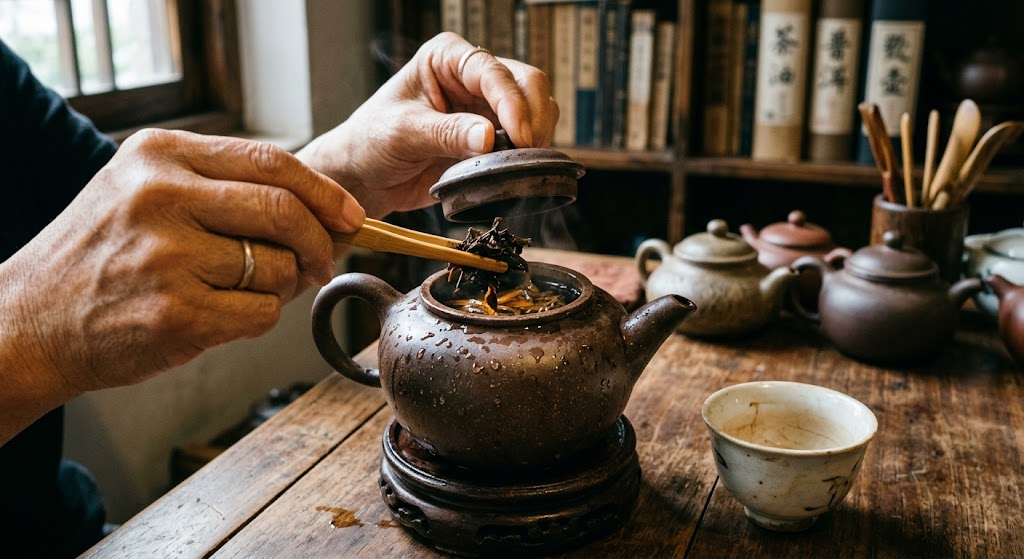
An yixing teapot is suitable for brewing dark teas; its unique double-pore structure provides “absorption” and “heat retention” functions, enhancing the mellowness of dark tea and adding more layers as you drink.
This structure provides excellent heat retention (allowing amino acids and polyphenols to fully extract, making the tea liquor thicker), and effectively absorbs off-notes, mustiness, and bitterness from the leaves.
After years of use, the unglazed purple clay will absorb the oils from the tea leaves.
Eventually, the teapot itself will enhance the tea’s flavor—a wonderful phenomenon known as “the tea nourishes the pot, and the pot nourishes the tea.”
How to Clean a Teapot After Gongfu Brewing
The golden rule of tea brewing is to clean the teapot immediately after drinking.
While the gongfu tea set is still warm, discard the used tea leaves and thoroughly rinse the teaware with warm water.
Because the tea residue has not yet dried and hardened, a gentle rinse is usually enough to remove most of the residue.
Never use dish soap to clean a teapot, as its main function is to remove oil stains; using it to wash a teapot can not only leave chemical residues that affect your health but also corrode the yixing zisha teapot.
Want an in-depth guide on how do you clean a teapot? Please read: What Is The Best Way to Clean a Teapot?
Water Temperature and Leaf-to-Water Ratio
A precise leaf-to-water ratio will elevate your tea gongfu experience, helping you taste the perfect tea flavor.
Want to know how to allocate the leaf-to-water ratio? Please read: How Much Loose Leaf Tea Per Teacup?
The Importance of “Washing” the Tea
“Washing” the tea is mainly to awaken the tea leaves’ aroma, initially release the fragrance, and wash away any tea dust or debris.
Before the first drinkable steep, you should perform a quick “tea wash.”
Pour hot water over the tea leaves, and then immediately pour it out.
Most teas only need to be rinsed once. Aged Pu-erh tea may require rinsing twice.
FAQ
How much tea should I use for gongfu?
Generally speaking, use 5 to 8 grams of dry tea leaves per 100 ml of water, with the specific amount depending on the types of tea. Tightly rolled Oolong tea may require fewer leaves, while fluffy white tea will visually fill the Gaiwan.
Why are Gongfu tea cups so small?
Small chinese tea cups allow the tea to cool quickly to a suitable drinking temperature, letting you sip slowly to appreciate the aroma; they can also accommodate a large number of short infusions (usually 7-10 rounds) without over-hydrating the drinker.