Blog
10 Types of Chinese Tea Cups: Are You Drinking It Right?

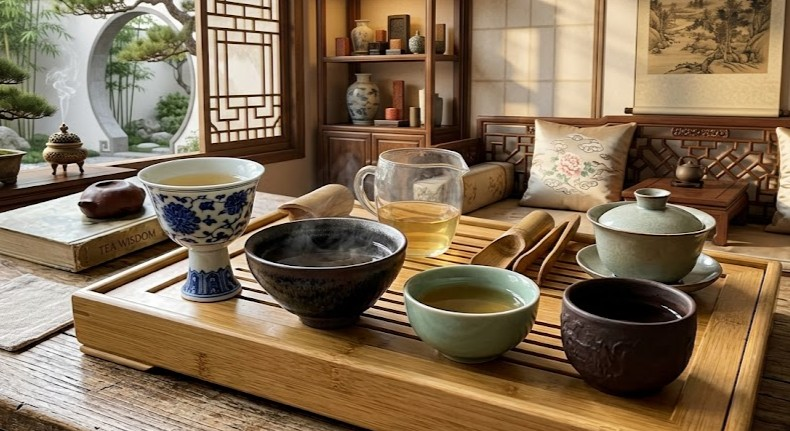
Table of Contents
Tea tasting begins with the cup. A true tea connoisseur is not only selective about the origin and vintage of the tea leaves but also highly particular about the vessel that holds the tea liquor. The material, thickness, and width of your Chinese tea cups go beyond visual aesthetics—they directly influence the temperature, aroma, and flavor profile of the brew.
This comprehensive traditional Chinese teaware guide for tea tasting will take you on a deep dive into 10 types of Chinese tea cups. We will teach you how to identify and choose the best Chinese porcelain tea cups tailored to different types of tea.
Why Do Chinese Tea Cup Shapes Affect the Tea Tasting Experience
The geometric shape of your teacup directly determines the heat dissipation rate and aroma-retaining ability of the tea liquor. According to Tea Guardian, a globally recognized independent research institute for tea culture (Tea Guardian: Teaware and Taste), a vessel’s surface-area-to-volume ratio is the core factor affecting the cooling curve of the tea and the release of aromatic hydrocarbons
The Principle of Aroma Retention
Teacups with an inward-curving rim (such as the Yuanrong Cup) effectively reduce the evaporation area of aromatic molecules, “locking” the fragrance of highly aromatic teas (like Oolong tea) inside the cup.
Temperature Control
The thickness of the cup walls and the clay material (e.g., the thick walls of Jian ware black glaze) impact heat insulation. Thick walls help maintain the mellow, full-bodied taste of fermented teas (like Pu’er and Black tea).
Conversely, thin-walled, wide-mouthed cups (like the Douli Cup) facilitate rapid heat dissipation for Green teas, preventing high temperatures from stifling and ruining the tender leaves.
An Illustrated Guide to 10 Classic Chinese Tea Cup Shapes
These 10 types of Chinese tea cups can be categorized into three main functional groups: the Aroma-Retaining Faction for locking in fragrance and heat (e.g., Jian Zhan, Bell-shaped Cup), the heat-dissipating faction for rapid cooling (e.g., Douli Cup, Chicken Cup), and the Ergonomic Faction that balances heat protection with a comfortable grip (e.g. Zheyao Cup). Let’s break them down one by one to help you understand if you are drinking it right:
Zhan (Jian Ware / Tenmoku)
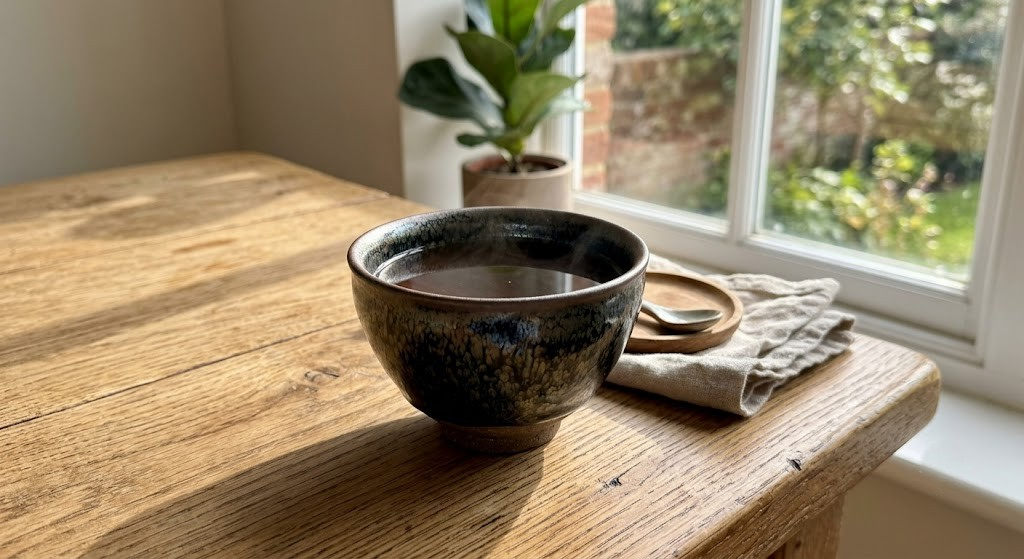
- Features: Wide mouth, slanted body, deep belly, and ring foot; slightly small in size. In the Song Dynasty, tea bowls featured black, white, soy-brown, celadon, white, and bluish-white glazes, with black glaze being the most prized. Because they were fired upright, the glaze layer at the rim is thinner, while the glaze gathers thickly at the inside bottom. The outer wall is often half-glazed to prevent sticking to the kiln bottom during firing. Due to the glaze flowing easily at high temperatures, a “glaze hanging” phenomenon occurs, commonly known as “glaze tears” or “glaze drops.”
- Historical Origins: Originally imperial teaware for the Song Dynasty royal family, explicitly born for the Song Dynasty tea-whisking method. The National Palace Museum in Taipei houses Song Dynasty Jian Zhan literature of extremely high historical value, confirming its core status in Song Dynasty tea ceremonies.
- Usage: Perfect for Wuyi Rock Tea (Da Hong Pao), Pu’er tea (especially aged), Black tea (Dianhong / Keemun), and aged White tea. The black glaze highlights the tea liquor’s color, while the thick walls insulate heat and retain aroma, making it excellent for “seasoning” or “raising” the teacup.
Yashou Cup (Press-Hand Cup)
- Features: Flared rim, almost vertical belly walls, and a ring foot. When held, the rim presses perfectly against the purlicue (the web between the thumb and index finger). With a lowered center of gravity, moderate size, and perfectly balanced weight, it rests stably and comfortably in the hand—hence the name “Press-Hand Cup.”
- Origins: Originated during the Yongle period of the Ming Dynasty, created by the imperial kilns in Jingdezhen as royal teaware. The Ming Yongle Blue and White Yashou Cup is the most famous.
- Usage: Best suited for Green tea and White tea. Its shape retains temperature while the wide mouth makes sipping easy and prevents burning your lips.
Douli Cup (Conical / Bamboo Hat Cup)
- Features: Shaped like a fisherman’s bamboo hat (Douli). It has an extremely wide mouth, a very small base foot, and clean, elegant lines. Because of its wide open mouth, it is highly prone to deformation during firing, resulting in a low yield rate and high firing difficulty.
- Origins: The mainstream vessel shape during the Tang and Song dynasties, deeply tied to the tea-whisking and tea-tasting competitions (Dou Cha) of the Song era.
- Usage: Dissipates heat incredibly fast. It is highly suitable for observing the unfurling of tea leaves during brewing. Commonly used for tasting Oolong tea and tender raw Pu’er tea.
Zheyao Cup (Pinched-Waist Cup)
- Features: The middle of the tea cup’s belly has distinct inward-folding lines, giving the shape a layered feel. The folded angle at the waist physically plays an excellent role in gathering both aroma and flavor.
- Historical Origins: Gained widespread popularity as a tea cup during the Qing Dynasty and later, highly praised by literati and scholars.
- Usage: Mostly made of porcelain or glazed ceramics. Widely popular in casual and semi-formal tea-drinking settings, making it a highly versatile, all-match cup shape.
Yuanrong Cup (Rounded Harmony Cup)
- Features: The belly slightly bulges outward, while the rim curves slightly inward. It offers excellent aroma and flavor retention, providing the best overall mouthfeel. Its “big belly that can contain” shape symbolizes perfection and completeness, making it deeply loved by tea enthusiasts.
- Historical Origins: Mostly evolved from traditional Luohan cups or inward-rim cups. Its naming is heavily influenced by the Zen and philosophical thoughts of traditional Chinese culture—representing harmony, adaptability, and an accommodating nature. It is an innovative, improved cup shape widely favored by modern tea drinkers in recent years.
- Usage: The wide belly helps the tea liquor breathe, while the gathered rim locks in the aroma, aiming to soften spicy, bitter, or astringent notes. Most suitable for tasting ripe Pu’er, strong-aroma Oolong teas, and mellow aged teas.
Liufang Cup (Hexagonal Cup)
- Features: The cup body is hexagonal with an upright posture, clean lines, and distinct edges. When coated with Ru glaze, it feels rounder and smoother in use. The six hexagonal lines run straight and tilt slightly upward, combining angularity with subtle curves. It requires extremely high craftsmanship in throwing and trimming the clay.
- Origins: Originated in the Song Dynasty and became popular in the Qing Dynasty, heavily influenced by Ming and Qing Zisha (purple clay) square ware craftsmanship.
- Usage: If it’s a Zisha Hexagonal Cup, due to slightly weaker aroma retention and a tendency to trap heat, it is better paired with ripe Pu’er, Dark tea, or heavily roasted Oolong. If it is a Porcelain/Ru Kiln Hexagonal Cup, it is perfect for Green tea, White tea, Yellow tea, and light-aroma Oolong to observe the color and smell the fragrance.
Gaozu Cup (Stem Cup)
- Features: The cup body is supported by a tall stem, giving it an elegant silhouette. The rim is slightly flared, the lower belly is plump, and it rests on a high foot. The stem can be shaped like bamboo joints, cylindrical, or square.
- Origins: Its origins trace back to the Neolithic Age. It was prevalent among Tang Dynasty gold and silver wares and began being used as teaware in the Ming Dynasty. Varieties include Blue and White, Doucai, etc.
- Usage: Stem cups are primarily used in formal tea ceremonies or high-end teaware displays, symbolizing classic elegance and nobility.
Zhongshi Cup (Bell-shaped Cup)
- Features: Shaped like an inverted bell, with a tall, handsome profile that is easy to hold and smell the aroma from. Integrating aroma-locking, aroma-smelling, and tasting functionalities, it is one of the most trending styles in recent years.
- Origins: Also known as the “Lingdang Cup” (Jingle Bell Cup) or “Yangzhong Cup” (Upright Bell Cup). It was created in the Ming Dynasty and reached its peak during the Kangxi and Yongzheng periods of the Qing Dynasty.
- Usage: Some of the absolute best tea cups for highly aromatic teas (such as strong-aroma Tieguanyin, Rock Tea, and Dancong), but also universally great for Black tea, White tea, and raw Pu’er.
Mati Cup (Horseshoe Cup)
- Features: Inverted, it resembles a horse’s hoof. It has an open mouth, sloped belly, concave base, and small flat bottom. Official kiln pieces mostly have reign marks on the bottom. The cup walls feature smooth, graceful lines.
- Origins: Originated in the Western Jin Dynasty, making it a classic cup style with a long history. It was mainly popular during the Ming and Qing dynasties.
- Usage: Traditionally used for milk tea (influenced by Mongolia), but today it is highly favored for brewing roasted Oolong teas.
Jigang Cup (Chicken Cup)
- Features: Wide mouth, shallow belly, and a flat recumbent foot. It dissipates heat quickly and struggles to retain aroma. The cup is painted with Doucai (contrasting colors) depicting roosters, hens, and chicks, interspersed with rocks, orchids, and peonies—hence the name “Chicken Cup.”
- Origins: Extremely legendary. The Ming Dynasty Chenghua Doucai Chicken Cup was once wildly famous, and many reproductions were made during the Kangxi and Yongzheng periods of the Qing Dynasty.
- Usage: Historically used mostly for royal etiquette, today it serves primarily as a top-tier collectible or for tasting the absolute highest-grade premium teas. At the 2014 Sotheby’s Spring Auction, a Ming Chenghua Doucai Chicken Cup sold for an astronomical price of over 280 million HKD, cementing its supreme status in the history of Chinese ceramics (Sotheby’s Chinese Works of Art).
Great Tea Deserves Great Teaware – Unlock Your Tasting Aesthetics
Figuring out how to choose a tea cup shouldn’t stop at just looking “pretty.” You should pay close attention to the physical interaction between the vessel and the tea liquor. For modern individuals seeking a high-quality lifestyle, a premium set of Chinese porcelain tea cups is both a tasting tool and a piece of art on your dining or tea table.
Out of these 10 types of Chinese tea cups, which one is your current go-to? Or which shape are you most eager to add to your collection next to pair with your fine teas?
Feel free to leave a comment below to share the “centerpiece” of your tea table! If you have any questions about how to pair your specific tea leaves with the right teaware, drop a comment anytime, and I will answer you one-on-one!
FAQ
Why are Chinese teacups so small?
Small cups allow the hot tea to cool down quickly to an optimal drinking temperature. This is also intentionally designed for the traditional Gongfu tea brewing method, where high-quality tea is steeped multiple times. Taking small sips allows you to appreciate the shifting flavor profiles of every single infusion.
What is the best material for a Chinese tea cup?
Ceramic and porcelain teacups are the best choices. Porcelain is non-porous and won’t absorb flavors, making it absolutely perfect for delicate teas like Green tea or White tea. Thicker, glazed ceramics hold heat for a much longer time, making them highly ideal for fermented teas like Pu’er or Oolong.
One thought on “10 Types of Chinese Tea Cups: Are You Drinking It Right?”