Blog
How Gaiwan Shape Changes Tea Flavor?

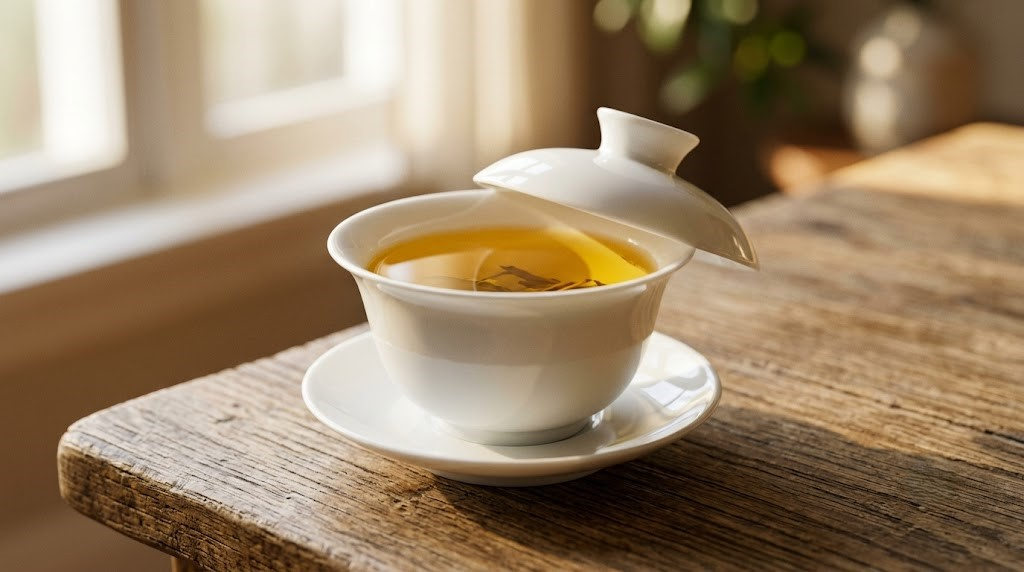
Table of Contents
Have you ever brewed a premium tea in a new Chinese tea set, only to find the taste completely different from your memory? It is not your imagination. In the world of Gongfu tea, the brewing vessel you choose is just as important as the tea leaves themselves. AGaiwan tea cup is by no means just a standard tea cup—its specific shape, curvature, and material dramatically alter the thermal dynamics during brewing, directly changing the aroma, sweetness, and texture of your tea liquor.
Whether you are searching for the perfect loose leaf tea vessel for delicate green teas or picking a partner for roasted oolongs, understanding the physics behind Gaiwan shapes can instantly elevate your daily tea ritual.
The Anatomy of a Gaiwan: More Than Just a Traditional Tea Cup
In traditional Chinese tea culture, the Gaiwan is a classic Han Chinese teaware consisting of a lid on top, a saucer at the bottom, and a bowl in the middle. Also known as the “Sancai Bowl” or “Sancai Cup,” the lid represents Heaven, the saucer represents Earth, and the bowl represents Human, implicitly conveying the harmony of Heaven, Earth, and Humanity.
The Bowl (Wan): Heat Retention and Leaf Expansion
The bowl is the “Human” element of the Gaiwan tea set, serving as the container for the tea leaves and tea liquor.
The rim is mostly flared (curved outward) or folded, and the body is wider at the top and narrower at the bottom, facilitating a comfortable grip and an effortless pour.
The base often features a foot ring or short foot ring, which enhances stability, prevents the tea from spilling, and protects your fingers and the table from high-temperature burns.
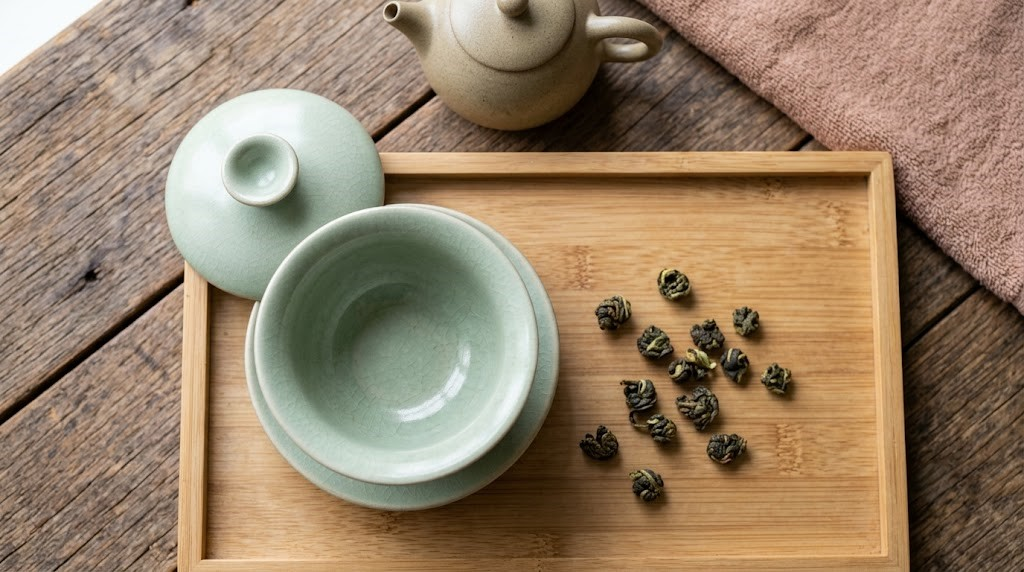
The bowl comes in various materials—commonly white porcelain, Zisha (purple clay), celadon, and Jun ware. Different ceramic materials impact the presentation and mouthfeel of the tea.
The Lid (Gai): Aroma Trapping and Pour Control
The lids are the “Heaven” of the Gaiwans, typically domed or inverted bowl-shaped, fitting snugly inside the rim, while some styles rest on the outside of the rim.
The top usually has a ring-shaped knob for easy holding, and the lid’s edge prevents the tea from overflowing.
The lid’s function is to seal in the tea aroma and isolate it from the air. During the tea tasting session, it can be slightly tilted to create a half-open, half-closed gap, allowing the tea to trickle out slowly while keeping the leaves back, so you can smell the fragrance and observe the color.
The Core Physics: How Gaiwan Shape Changes Tea Profiles
Tall and Narrow Gaiwans: Amplifying Aroma
Tall and narrow Gaiwans have a higher profile and a more compact opening. Compared to the common squat teacup shapes, they offer unique characteristics in both practicality and the tasting experience.
This deep, narrow chamber reduces the surface area of the tea liquor exposed to the air. While this shape is incredibly effective at trapping and amplifying high-pitched, fleeting aromas (similar in principle to a champagne flute), it can sometimes trap too much heat for delicate tea leaves.
When your main goal is to experience the intense fragrance of a highly aromatic Dancong Oolong, this is an excellent vessel.
Wide and Shallow Gaiwans: Rapid Cooling and Sweetness
If you are looking for a highly functional everyday brewing tool, a Gaiwan with a wide, flared rim is indispensable.
The wider the rim extends outward, the lower the temperature at the edge, which drastically reduces the chances of burning your hands. The wide rim acts like the eaves of a roof, providing a clear directional flow for the tea, ensuring the liquid pours out in an orderly stream rather than splitting into messy multiple streams.
Shallow Gaiwans allow for a fast pour, flexible water control, and easy observation and aroma smelling, making them suitable for brewing various types of tea. They are perfect for tea drinkers who seek a crisp, refreshing brew with pure aromatics.
For me, the most important aspect of a Gongfu Gaiwan is the smoothness of the pour. Among my personal teaware collection, my favorites can all dump tea effortlessly and rapidly without dripping, and the lid tilts easily to form a perfect small gap.
Wall Thickness: Insulation vs. Heat Dissipation
The thickness of the Gaiwan’s walls determines its temperature profile.
Thin-Walled Gaiwans: Their greatest advantage is rapid heat dissipation. The heat quickly transfers to the outside through that thin porcelain layer. The Gaiwan itself accumulates very little heat, so it doesn’t feel hot in your hand.
Thick-Walled Gaiwans: These act like insulation layers. Because the walls are thick, the heat cannot easily escape and instead accumulates entirely inside the bowl, gradually spreading to the rim. They are highly suitable for coaxing out the deep flavors of tightly rolled oolongs or aged Pu-erh tea, but you must be extra careful when handling them to prevent burns.
I found a lot of useful information in this Reddit thread (How Gaiwan Shape Changes Tea); you might want to check it out to see if it has the answers you’re looking for.
Pro Tips for Handling Different Gaiwan Designs
Mastering the Pour with Flared Edges
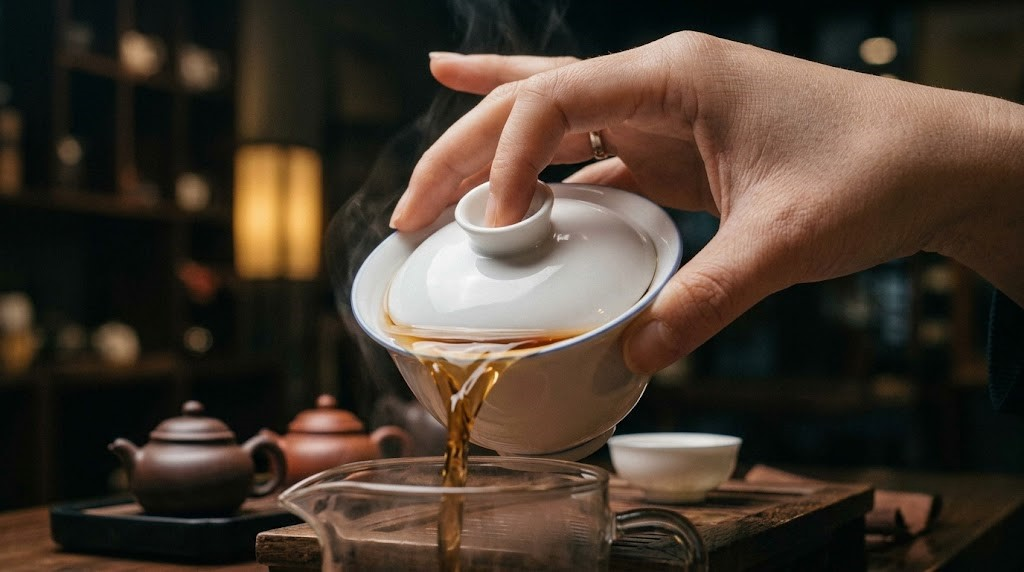
The “Three-Finger Grip” is the key to brewing tea with a Gaiwan without burning your hands.
Specifically, first rest your index and middle fingers on the flared edges on both sides of the Gaiwans, and then lightly rest your other index finger (or thumb) on the lid knob.
Note that it is “resting,” not “hooking.” If you dig your finger into the knob, you will very likely be burned by the continuously rising steam from inside the bowl during brewing.
Once you’ve adjusted the size of the pouring gap, apply slight pressure with your fingers, and coordinating with your arm, you can easily lift the Chinese Gaiwan.
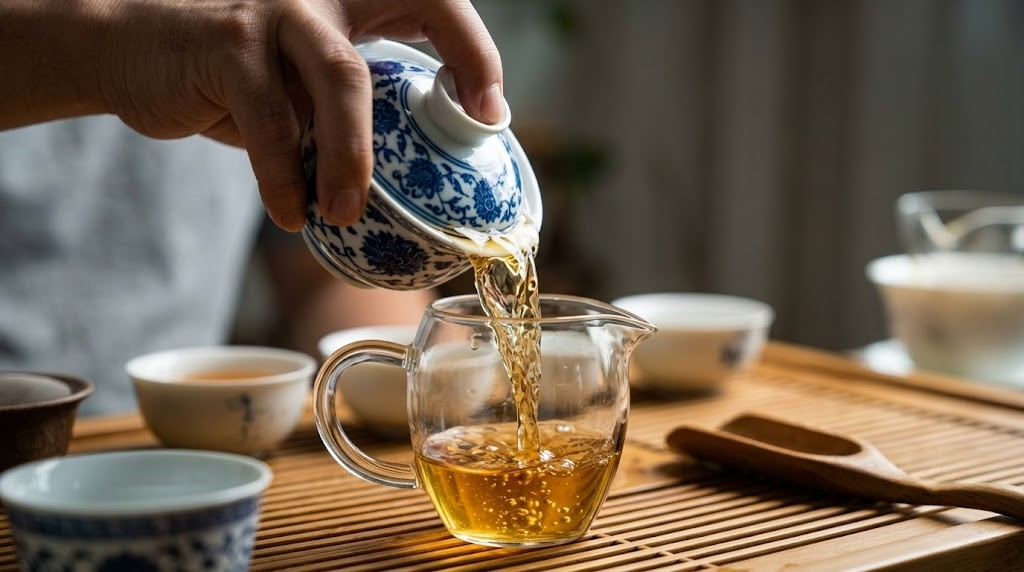
Aim the pouring gap at your fairness pitcher (Gongdao Bei), invert your wrist, and pour out the tea—completing the pour in one go.
A good pour requires one smooth, continuous motion. Hesitating or shrinking back actually increases the risk of burning your hands.
For beginners just starting with this traditional Chinese tea set, you can practice by adding cold water to the Traditional Gaiwan to simulate the pour, moving on to actual brewing only after you are basically familiar with the process.
Adjusting Your Technique for Thicker Rims
Thick-rimmed or straight-edged Gaiwans (where the edge does not extend outward) leave almost no safe resting space for your fingers, as the heat travels directly up the bowl walls to the very edge.
When handling these teaware designs, you need to adjust your technique:
Pinch your fingers higher up on the rim, maintaining only slight contact with the very top edge of the porcelain.
Another more practical method is to lower your water volume—only fill the water to about 70% or 80% of the Gaiwan’s capacity, rather than filling it all the way up to the lid line. This leaves a lower-temperature “buffer zone” around the top.
Conclusion: Elevating Your Daily Tea Ritual
The charm of Gongfu tea lies within the details. A Gaiwan is not just a cup; it is a precision tool where physics and art perfectly blend. By understanding how a wide, flared edge prevents burns and enhances tea sweetness, or how wall thickness determines heat insulation, you can match the most suitable tea accessories to different types of tea just like a true professional. If you would like to learn more about how teacups affect the aroma of tea, please read: What Kind of Teacup Brings Out the Best in Different Tea?
Next time you sit down to enjoy your tea ceremony, take a moment to notice the shape of the vessel in your hands. If your green tea tastes a bit bitter, try switching to a thinner, wider Gaiwan. Ready to find the perfect match for your favorite teas? Explore our carefully curated collection of professional-grade teaware to unlock the ultimate flavor in every brew.
FAQ
Why does my Gaiwan burn my fingers?
You might be overfilling it. Fill only to 80% capacity and use a Gaiwan with a wide, flared edge for a safe grip.
Do I drink directly from the Gaiwan?
Usually, no. It is primarily a brewing vessel. Pour the tea into a pitcher first, then into tasting cups.